What Is a Tire Wear Bar?
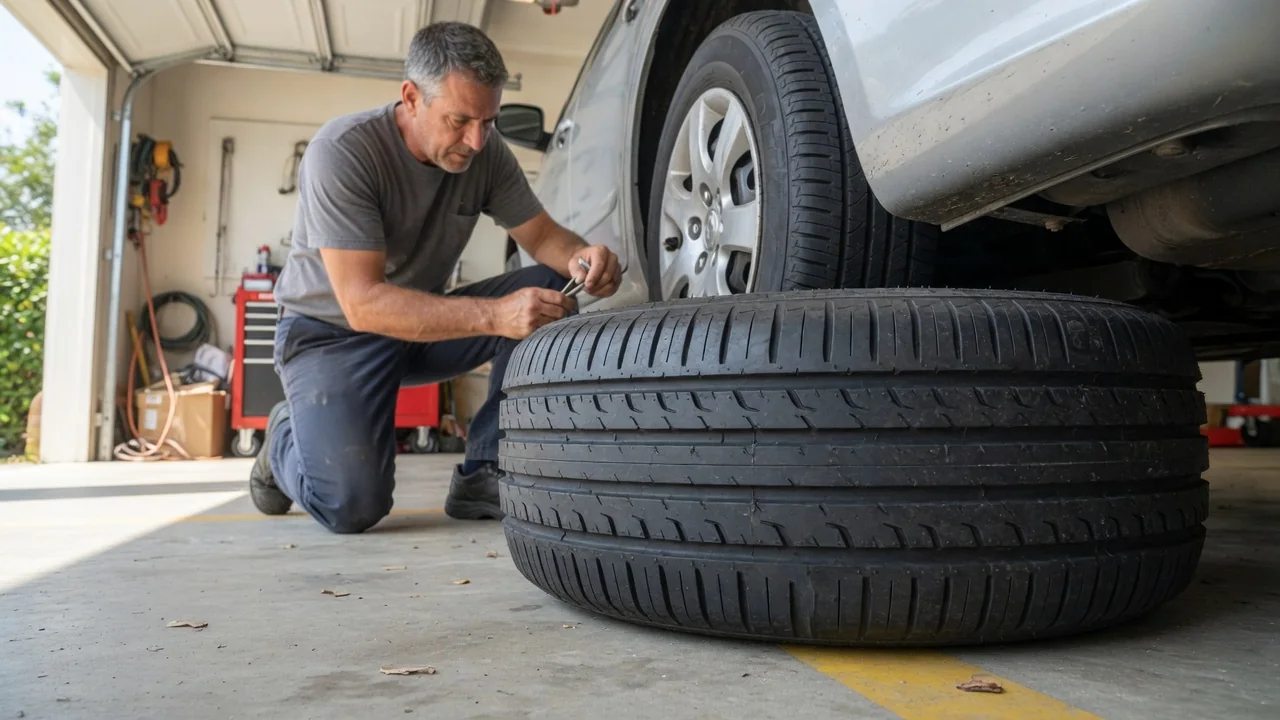
If you've asked what is a tire wear bar, the short answer is a small raised strip of rubber molded into the bottom of a tire's main grooves. These tread wear indicators sit below the surface of a new tire and become flush with the tread as it wears, giving drivers a built-in visual signal that the tire is nearing the end of its usable life.
Find the bars
Wear bars run across the main circumferential grooves, perpendicular to the direction the tire rolls. On a tire with plenty of tread they look like low bridges of rubber sitting deep in the channel, easy to miss unless you are looking for them. Each tire has several sets spaced around its circumference, so you usually do not need to roll the vehicle far to bring one into view. Turning the front wheels to full lock exposes the tread face and makes them easier to spot.
Many manufacturers mold a small marker on the sidewall shoulder to show where each row of bars sits. Depending on the brand, that marker may be a tiny triangle, the letters TWI, or a company logo, and following it straight across the tread leads to the indicator. Winter and some all-weather tires may carry a second, taller set of indicators that signals reduced snow performance before the tire is fully worn. The tire maker's documentation confirms which markings apply to a particular tire.
Interpret wear
Reading the indicator is a comparison between the bar and the tread blocks beside it. When the blocks stand clearly taller than the bar, usable tread remains. As the gap shrinks, the tire is approaching its limit, and once the bar is level with the surrounding tread, forming a continuous band of rubber across the groove, the tire is worn out. In the United States the bars are commonly molded at about 2/32 of an inch, the minimum depth many states use as a legal threshold.
Check every main groove across the tread, not just the one that is easiest to see. A tire can be flush with its bars on the inner shoulder while the outer grooves still look healthy, and the worn section governs the tire's condition. Tread worn level in the center alone often points to overinflation, wear on both shoulders suggests underinflation, and wear on one edge can indicate an alignment or suspension issue. Those patterns are clues worth confirming with an inspection rather than firm diagnoses.
Other damage signs
Wear bars measure only tread depth, so a tire can pass that check and still be unfit for service. Look at the sidewalls for bulges or bubbles, which can indicate internal structural damage from a pothole or curb impact, and for cuts deep enough to expose fabric or cord. Fine cracking in the sidewall or between tread blocks suggests the rubber has aged and hardened, something that happens on low-mileage vehicles and trailers stored outdoors even when the tread looks nearly new.
The tread surface itself tells a story beyond depth. Scalloped dips around the circumference, often called cupping, can accompany worn shocks or struts or a balance problem, while a sawtooth feel when you run a hand across the blocks, known as feathering, is frequently associated with toe misalignment. Embedded nails, screws, or stones deserve attention too, as does a new vibration or a steady pull. Any of these signs warrants a professional look regardless of how much tread stands above the bars.
Everyday Use and Observations
A quick look at the indicators fits naturally into routines like fueling up or checking tire pressure. Good light helps, and a flashlight aimed along the groove makes the raised bridge stand out against the channel floor. Rear tires are harder to see than fronts, so crouching behind the vehicle or checking while the car is on a lift during service gives a better view. Wide performance tires, truck tires, and compact spares can differ in groove layout, so the number and position of bars varies.
Drivers often notice changes in behavior before the bars reach the surface. Grooves exist to channel water away from the contact patch, and as they grow shallow the tire clears less water, so wet stopping distances lengthen and the car may feel light or skittish through standing water. Snow traction fades even earlier. For that reason many tire professionals suggest planning replacement before the indicators are flush, particularly in rainy or wintry climates, treating the wear bar as a final limit rather than a target.
Limits and Next Steps
The indicator is a pass-or-fail signal, not a measuring tool. It cannot tell you how many miles remain, and it says nothing about the tire's age, internal condition, or repair history. A tread depth gauge gives an actual reading across each groove and lets you track wear over time, which is more useful for planning a purchase. Rotation at the interval in your owner's manual helps the set wear evenly, so all four tires approach their indicators at roughly the same pace.
When any groove shows a bar level with the tread, schedule replacement promptly and drive conservatively in wet weather until then. If the wear is uneven, ask the shop to check inflation, alignment, and suspension components so the new tires do not repeat the pattern. Vehicles with all-wheel drive may have manufacturer guidance about replacing tires in sets or matching tread depth, so consult the owner's manual. Matching the size, load index, and speed rating listed on the door-jamb placard keeps the replacement appropriate for the vehicle.