Why Does a Tire Valve Stem Matter?
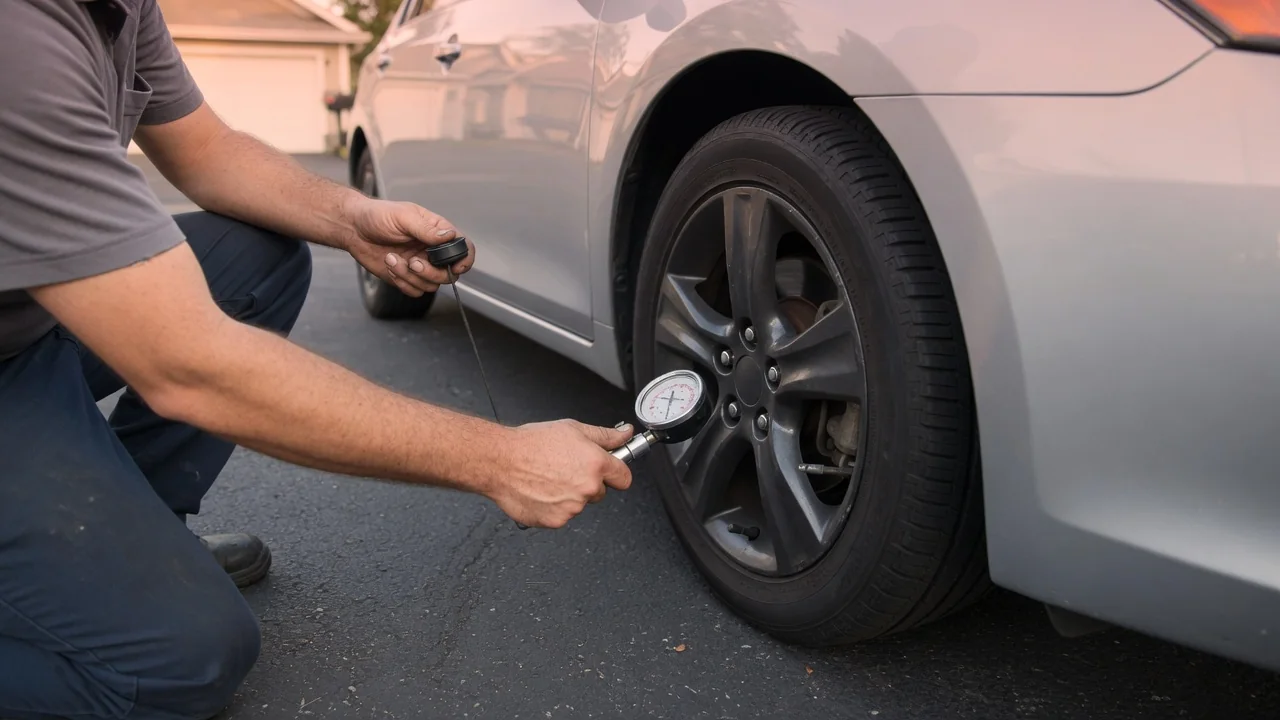
Why does a tire valve stem matter? It is the only planned opening in an otherwise sealed wheel and tire assembly. This small part lets air in when you inflate, holds pressure the rest of the time, and gives a gauge somewhere to connect. When it ages, cracks, or loosens, pressure can slip away slowly, affecting handling, tire wear, and fuel economy.
Valve core
Inside the stem sits the valve core, a small threaded insert with a spring-loaded pin and a tiny seal. The spring and the air pressure inside the tire both push that seal closed, so the tire holds air without any help from the driver. Pressing the center pin, as an air chuck or gauge does, lifts the seal off its seat and opens a path. That simple arrangement is what makes inflation and pressure checks possible without dismounting anything.
Because the core is so small, a little contamination goes a long way. A grain of grit lodged on the seat, a hardened seal, or a core that has backed out slightly in its threads can allow a slow seep that is easy to mistake for a puncture. Readers can sometimes hear a faint hiss right after removing a gauge if the pin sticks. Core designs and materials differ between wheels, and stems attached to pressure sensors may call for specific cores, so replacements should be matched to the vehicle.
Cap
The cap looks decorative, but its main job is to keep road grime, salt, water, and brake dust out of the stem opening. Dirt that reaches the core can be pushed onto the sealing seat the next time air is added, and moisture can encourage corrosion or, in cold weather, freeze around the pin. Many caps also include a small rubber gasket inside, which gives the stem a secondary seal should the core weep a little.
A missing cap rarely causes a flat by itself, yet it leaves the core exposed through every puddle and car wash. It is worth looking at what the caps are made of as well. Metal caps threaded onto metal stems, which are common on wheels with direct pressure sensors, can corrode in place and become difficult to remove without damaging the stem. Plastic caps avoid that problem. Checking that all four caps are present, snug by hand, and uncracked takes only a moment.
Leak clues
A stem leak usually announces itself gradually. One tire that needs topping up more often than the other three, with no nail or screw visible in the tread, is a common hint. On rubber snap-in stems, look at the base where the stem meets the wheel: fine cracks, a dried or chalky surface, or a stem that feels stiff rather than flexible suggest the rubber has aged. Gently flexing the stem sideways may reveal cracking that is hidden when it sits upright.
A simple observation uses soapy water applied to the stem tip and around its base. Bubbles that keep growing at the tip point toward the core, while bubbles at the base point toward the stem body or its seat in the wheel. On clamp-in metal stems, white or green corrosion around the retaining nut or sealing grommet deserves attention. A pressure warning light is only evidence that pressure is low or a sensor has reported a problem; it does not identify the stem as the cause.
Everyday Use and Observations
Most drivers touch the valve stem only when checking or adding air, and those moments are good opportunities to notice its condition. The gauge should seat squarely and release cleanly, with just a brief puff of air. A chuck that has to be forced, a stem that bends sharply under light pressure, or air that keeps escaping after the gauge comes off are all worth noting. Pressure should be compared against the figure on the vehicle's tire placard, usually found in the driver's door opening.
Daily conditions affect stems more than their size suggests. Sunlight, ozone, heat from braking, road salt, and curb contact all work on rubber and metal over the years, and at speed the stem is flung outward by wheel rotation with every mile. Stem layout also varies: some wheels use short rubber stems, others use rigid metal ones attached to sensors, and certain wheel covers or deep wheel designs make access awkward. Trucks with dual rear wheels may use extensions, which add further joints that can seep.
Limits and Next Steps
There are limits to what a driveway inspection can prove. Bubbles at the stem show where air is escaping, not why, and a slow loss can also come from the bead, a corroded wheel seat, a porous or cracked wheel, or a small tread puncture. Tightening or swapping a core requires the correct tool and a light touch, and replacing a snap-in stem normally means breaking the tire loose from the rim, which is work for a tire shop with proper equipment.
If a tire keeps losing pressure, keep it inflated to the placard value, avoid driving on it when visibly low, and have it inspected soon. Many shops fit new rubber stems, or new seals and cores on sensor-type stems, whenever tires are replaced, and it is reasonable to ask whether that is included. Parts and procedures for sensor-equipped wheels depend on the vehicle, and some systems need a relearn step afterward, so the owner's manual or a qualified technician should confirm the details.