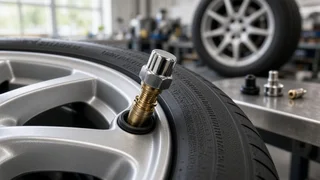
How to Clean a Tire Valve Stem
A tire valve stem is the small passage that lets air enter the wheel and keeps it sealed under inflation pressure. Dirt, brake dust, road grime, and dried sealant can collect on the stem, cap, and core area, masking leaks and making pressure checks less reliable. Cleaning the stem restores a clear view of the valve body and threads and helps a gauge or inflator seat properly. The basic method uses soapy water, a soft brush, and drying, but the exposed Schrader valve core and its cap must be protected from water and debris.
Direct answer
The essential answer is that a dirty tire valve stem should be cleaned gently with soap and water, a soft brush, and a clean cloth, then dried and resealed with a clean valve cap. You are not cleaning the inside of the air passage; you are clearing the visible metal or rubber stem and the area around the threads. That removal of grit helps you spot slow seepage, a cracked base, or a loose core before a low tire becomes a roadside problem. Work only when the wheel is cool and the vehicle is parked on a firm surface.
The condition of the stem changes the task. A rubber snap-in stem may have cracking at the base, while a metal clamp-in stem is more durable but can collect corrosion around the nut and core. If the cap is missing, use a moisture-resistant valve cap after cleaning to keep water and grit out. The stem works with the tire size, load index, speed rating, and inflation pressure shown on the vehicle placard, so keeping it clear helps you maintain the correct pressure for the drivetrain compatibility of the vehicle.
How to proceed
Begin by parking on a level spot and letting the tire cool because heat raises pressure and can make any escaping air easier to misread. Remove the valve cap and inspect the opening without pressing the core pin. Mix a small amount of mild soap in clean water, dip a soft brush, and wipe the stem and threaded area. Do not spray water directly at the core opening, and do not use a pressure washer. After scrubbing, blot the stem dry with a cloth and briefly observe the thread area for bubbles that could indicate a leak.
When the area is dry, reinstall a clean cap and check the inflation pressure with a gauge that seats squarely on the valve. A slow needle drop or a faint hiss when the inflator chuck is removed may point to a dirty or failing core, not simply surface dirt. That is evidence to interpret, not proof of a bad part. If the leak continues, have the stem and core checked with a soap solution or by a tire service, especially on a wheel where a metal stem supports a tire pressure monitoring sensor.