Why Does a Tire Look Low Even When the Gauge Is Normal?
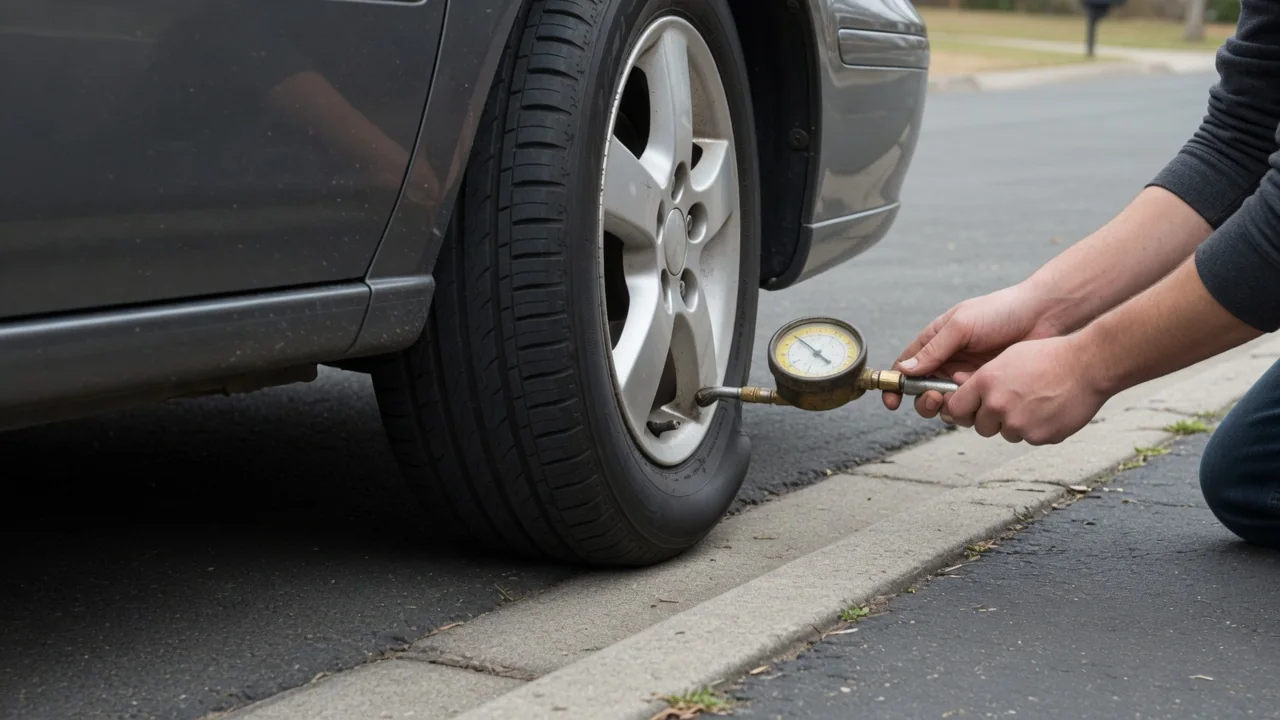
A tire that seems to sag at the bottom while the pressure reading checks out is a common puzzle. So why does a tire look low even when the gauge is normal? Usually the answer lies in how a radial sidewall flexes under the vehicle's weight, and in how poorly the human eye judges inflation. The sections below explain what that bulge means and when it deserves a closer look.
Load and tire design
Modern radial tires pair a stiff, belted tread with comparatively flexible sidewalls. When the vehicle's weight presses the tread flat against the pavement, the sidewall just above the contact patch bows outward. That bulge is part of how the tire carries load and absorbs bumps, so it appears even at the correct pressure. Tires with tall sidewalls show it clearly, while low-profile tires have short, stiff sidewalls that barely change shape, even when they have lost a meaningful amount of air.
Weight distribution changes the picture from one corner of the vehicle to the next. On a front-engine car, the front tires carry more mass and often look flatter than the rears at the same pressure. A full trunk, a loaded pickup bed, or a trailer on the hitch makes the rear tires squat in the same way. Reinforced, extra-load, and run-flat constructions have stiffer sidewalls and bulge less, so the same reading can look quite different across vehicles and tire types.
Measure cold
A normal gauge reading only means something when the tire is cold. The recommended pressure on the door-jamb placard assumes the tire has been sitting, not rolling. Driving flexes the rubber and heats the air inside, which raises the pressure, and direct sunlight on one side of the car can do the same. A tire checked right after a highway run may read fine and still be low once it cools, which explains a sagging look the next morning.
The reading also depends on the tool and the target. Inexpensive or worn gauges can drift, so comparing two gauges, or the gauge against the dashboard pressure display, is a sensible cross-check. The number to match is the vehicle maker's recommendation, not the maximum pressure molded into the sidewall. Some vehicles specify different front and rear pressures, or higher values for heavy loads, and pressure falls as outside temperatures drop, so a seasonal recheck is worthwhile.
Inspect damage
Normal load deflection has a recognizable pattern: it sits at the bottom of the tire, looks similar on both tires of the same axle, and stays at the bottom as the wheel turns. A bulge that travels around with the tire is different. A localized bubble or blister on the sidewall usually suggests that internal cords were damaged, often by a pothole or curb strike, and that air is pushing against the weakened area even though the pressure reads normal.
Other clues are worth a slow walk around the car. Look for cuts, cracking, or scuffing in the sidewall rubber, a nail or screw in the tread, and a bent or dented rim edge where the tire seats. A slow leak can hide behind a normal reading taken shortly after a top-up. Any tire with a sidewall bubble or exposed cords should be examined by a tire professional before further driving, since that kind of damage cannot be judged by appearance alone.
Everyday Use and Observations
Where and how the car is parked affects what the eye sees. A wheel resting in a dip, pressed against a curb, or sitting on soft ground looks flatter than one on level pavement. Turning the steering wheel shifts the contact patch and exaggerates the bulge on the front tires. Looking down from a standing position also distorts the shape. A fair comparison means level ground, wheels pointed straight, and a view from the same low angle at each corner.
It helps to learn what the tires look like when they are known to be correctly inflated, because that becomes the reference for later glances. Even then, a moderate pressure loss is hard to see, particularly on stiff low-profile tires, which is why a gauge check on a regular schedule matters more than appearance. Tire pressure monitoring systems typically alert only after a noticeable drop, with thresholds that vary by vehicle. Wear concentrated on both shoulders over time hints at chronic underinflation.
Limits and Next Steps
Appearance is a prompt to measure, not a measurement, and one reading is only a snapshot. The tempting fix of adding air until the bulge disappears works against the tire. Inflating beyond the recommended figure shrinks the contact patch, stiffens the ride, can reduce wet grip, and tends to wear the center of the tread faster. If the cold pressure matches the placard and the bulge looks the same side to side, the tire is most likely doing what it was designed to do.
Further attention is warranted when the evidence goes beyond looks. A tire that keeps reading lower than the others over several cold checks probably has a slow leak at the tread, valve, or bead and should be inspected. The same applies to a new vibration, a pull to one side, or one tire that looks different from its axle partner. Vehicles running non-original tire sizes or carrying unusual loads may need guidance from the owner's manual or a tire shop.