Why Does a Car Smell Damp Even When Carpets Feel Dry?
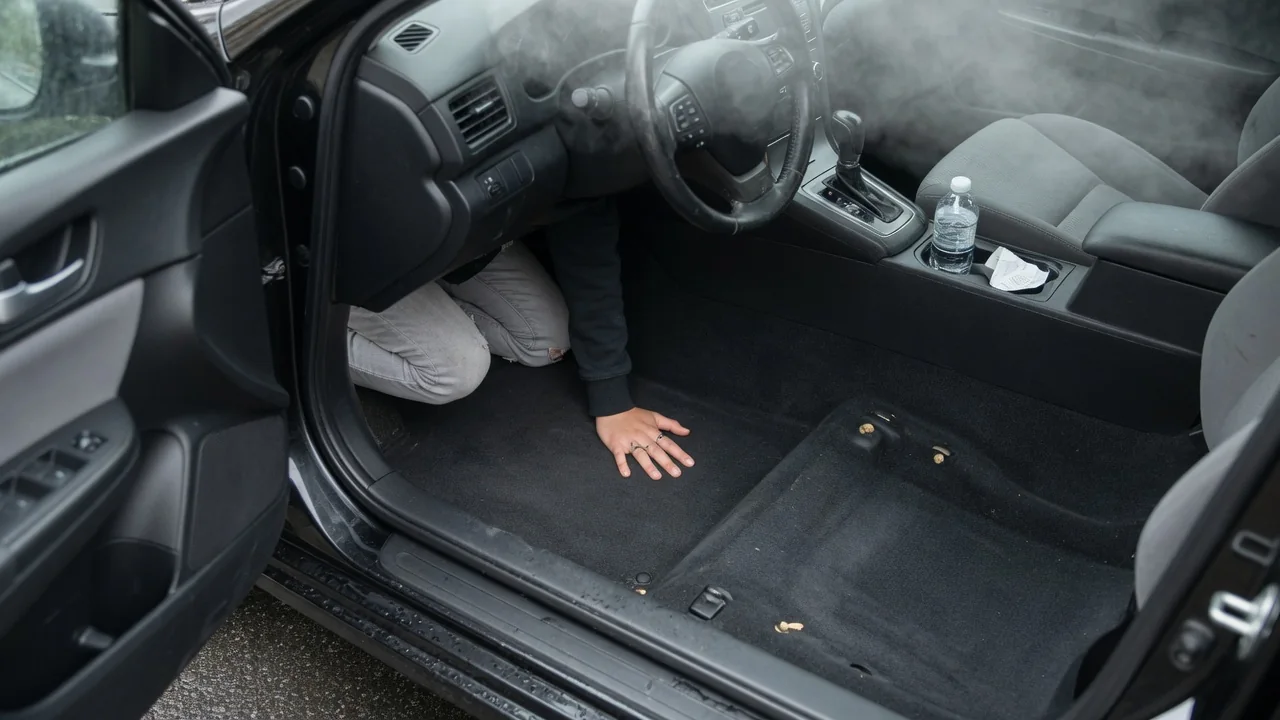
A musty cabin with a floor that feels dry to the touch is a common puzzle. If you are asking why does a car smell damp even when carpets feel dry, the answer usually lies beneath the surface: thick padding, sealed cavities, and the ventilation system can hold moisture long after the visible carpet pile has dried.
Concealed materials
Automotive carpet is only the top layer of a sandwich. Beneath the pile sits a molded backing, and under that a thick pad of foam or shredded fiber jute designed to block road noise and heat. That underlay behaves like a sponge. Water that reaches it spreads sideways and settles at the lowest point of the floor pan, while the carpet face above dries in moving cabin air within a day or two. Your hand reads the surface, but your nose reads the pad underneath.
Other hidden materials absorb water just as readily. Seat cushion foam, the felt behind door trim panels, the headliner backing, trunk side liners, and the fiber board over the spare tire well can all stay damp out of sight. Construction varies widely between vehicles: some use closed-cell foam that resists soaking, others use dense fiber mats that hold a surprising volume. Vehicles with heavy sound insulation generally have more material available to trap moisture, so the same small leak can produce a stronger and longer-lasting odor.
Locate moisture
Finding the wet area starts with pressure rather than a light touch. Pressing firmly on the carpet with a dry paper towel, especially in the footwells and along the door sills, can pull moisture up from the padding. Where the trim allows, lifting a carpet edge at the sill plate lets you feel the pad directly. Check the spare tire well, the corners of the trunk floor, and the area under the front seats, since water travels along the floor pan and often collects far from where it entered.
The pattern of dampness points toward the source. Moisture in a front passenger footwell often relates to a blocked air conditioning condensate drain or, if the fluid feels slick and smells sweet, a coolant leak from the heater core. Wetness near the pillars or headliner edges suggests clogged sunroof drains, while damp door bottoms point toward a failed vapor barrier inside the door. Trunk moisture commonly traces to tail lamp gaskets or body seam sealer. Drain routing and seal design differ by vehicle, so the likely suspects vary.
Dry thoroughly
Surface drying alone rarely solves the problem, because the padding sits pressed between a nearly waterproof carpet backing and a painted steel floor. With little air movement in that gap, evaporation is extremely slow. Effective drying means getting air to the pad itself: lifting the carpet where it can be raised without forcing trim, propping it up, and running a fan across the exposed underlay. A wet vacuum pressed firmly into the pad removes bulk water first, which shortens the time needed considerably.
Dry air does the rest. A household dehumidifier running inside a closed car, or moisture-absorbing desiccant products left in the cabin, pulls water vapor out of materials that cannot be reached directly. Warm, dry weather with the windows cracked in a secure place helps as well. Padding that stayed saturated for a long time may keep its odor even after drying, because mildew has already grown into the fibers, and in that case replacing the affected section is often more effective than repeated cleaning.
Everyday Use and Observations
Daily habits offer useful clues. Windows that fog heavily on the inside, particularly on cool mornings, indicate excess humidity in the cabin air even when nothing feels wet. An odor that is strongest after the car has sat closed in the sun suggests trapped moisture evaporating from padding. A smell that appears mainly in the first moments after switching on the fan or air conditioning points instead toward the evaporator housing and cabin air filter, where condensation naturally forms and can support microbial growth.
Ordinary use also adds moisture gradually. Wet shoes, snow carried in on boots, damp umbrellas, gym bags, and spilled drinks all feed water into the floor, and rubber mats can hide a pool underneath them. Driving constantly in recirculation mode keeps humid air inside rather than exchanging it. Noting when the smell worsens, whether after rain, after a car wash, or after air conditioning use, narrows the cause: weather-related odor suggests a body leak, while use-related odor suggests the ventilation system or everyday tracked-in water.
Limits and Next Steps
Drying has limits when the water source remains. If the smell returns after each rainfall, the leak path needs to be found and corrected, which may involve water testing, clearing drains, or resealing body seams, and those jobs often require removing trim or seats. Seats in many vehicles carry airbag wiring and occupancy sensors, and wiring harnesses and control modules frequently run under the carpet, so extensive disassembly is better left to a qualified shop that can disconnect and reconnect those systems correctly.
Certain findings deserve prompt attention rather than patience. Coolant on the floor, a greasy film on the windshield, or a dropping coolant level calls for cooling system inspection. Visible mold, corrosion on the floor pan or connectors, electrical faults, or a history of flood exposure go beyond odor control and warrant professional assessment. Where the cause is simply residual dampness, a replacement cabin air filter, clear drains, and thoroughly dried padding usually resolve the smell, though the specific access points and procedures depend on the vehicle.