Why Does a Car Smell Bad After a Spill?
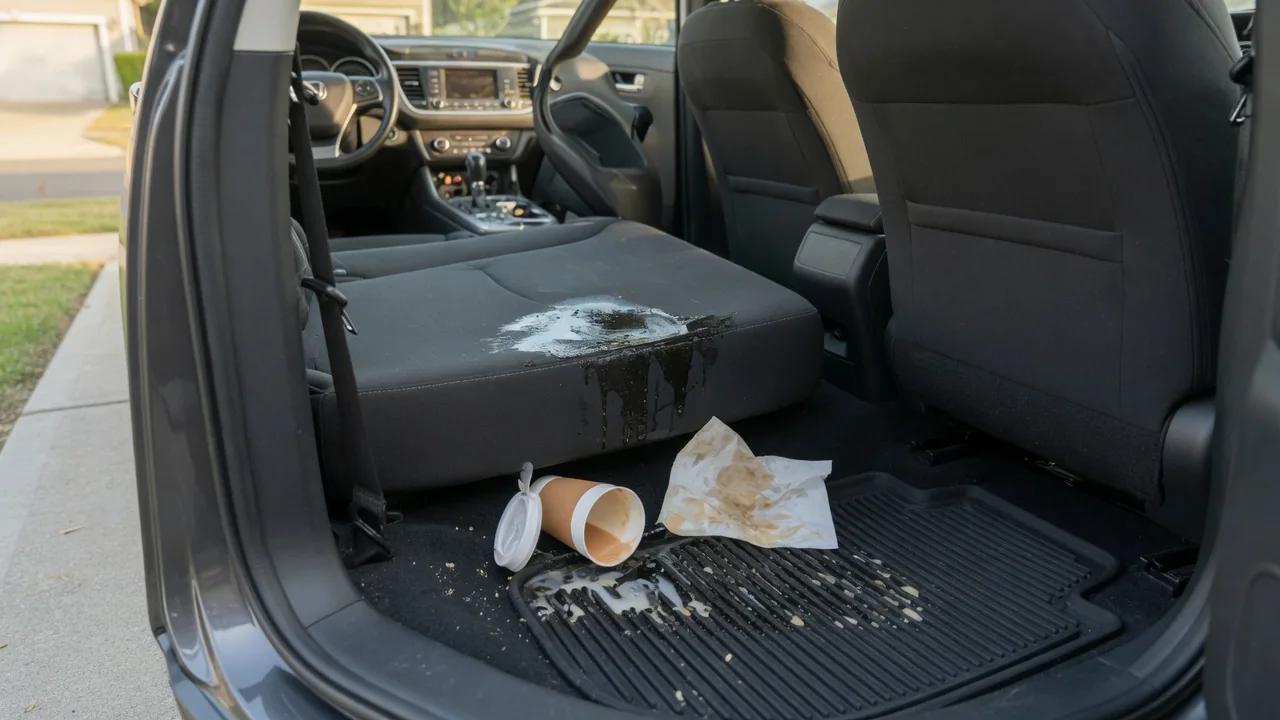
Anyone who has wondered why does a car smell bad after a spill usually finds the answer below the surface. Liquid soaks past the fabric into padding and insulation, where it stays damp long after the top feels dry. Bacteria and mold feed on that trapped moisture and whatever sugars, proteins, or fats came with it, and the closed cabin concentrates the odor.
Find affected layers
A car floor is built in layers: carpet on top, a thick foam or fiber pad beneath it, and often sound-deadening material against the metal floor pan. Spilled liquid follows gravity through all of them, then spreads sideways along the low points of the floor. That is why the wet area underneath is often larger than the stain you can see. Pressing firmly on the carpet with a dry paper towel shows whether moisture is still coming up from the padding below.
Seats behave in a similar way. Cloth upholstery passes liquid straight into the foam cushion, while leather and vinyl tend to channel it into seams, perforations, and the gap between the cushion and backrest. Check under floor mats, along seat rails, and in the trunk well if a container tipped there. Construction differs between vehicles, so the thickness of the pad, the presence of wiring or ducts under the carpet, and how easily trim lifts will vary with the model.
Clean
Cleaning works best when it removes the spill rather than covering it. Blotting with absorbent towels pulls liquid out, while rubbing pushes it deeper into the fibers. A wet vacuum or extractor then lifts the diluted residue out of the carpet and pad. Milk, coffee with cream, juice, and soda leave behind proteins, fats, and sugars that keep feeding microbes, so rinsing only the surface leaves the real source of the smell sitting in the padding.
The cleaner should suit the spill and the material. Enzyme-based products are designed to break down organic residue such as dairy or food, while a mild upholstery cleaner often handles sugary drinks. Leather, suede-type fabrics, and seats with heating elements or sensors call for extra caution with moisture, and the owner's manual usually gives care guidance. Testing any product on a hidden spot first helps avoid discoloration, and using less liquid means there is less to dry afterward.
Dry completely
Drying is where many cleanups fall short. Carpet fibers dry within hours, but the dense pad underneath can hold moisture for days because air barely moves through it. As long as that layer stays damp, mold and bacteria keep growing and the musty odor returns. Airflow matters more than heat alone: open doors or windows in a secure, dry place, a fan aimed at the area, and repeated passes with a wet vacuum all move moisture out.
The climate control can help by running the air conditioning with fresh air selected, since the system removes humidity from the cabin as it cools. A dehumidifier or moisture-absorbing product left inside a closed car also draws dampness out over time. Where the trim allows, propping the carpet edge up lets air reach the pad directly. The area is dry only when firm pressure with a towel brings up nothing and the padding feels the same as an unaffected spot.
Everyday Use and Observations
Day-to-day patterns reveal whether liquid is still trapped. A smell that fades in cool weather and comes back strongly after the car sits in the sun points to residue or moisture warming up inside the upholstery. Sour notes suggest dairy or food breaking down, while an earthy, musty smell suggests mold in damp padding. Fogged windows on a morning without rain, or carpet that feels cool and clammy, are further signs that water remains in the cabin.
It also helps to notice where the odor is strongest. A smell concentrated near one seat or footwell fits a spill, whereas a smell that appears mainly when the fan runs may relate to the ventilation system instead. Dampness that returns after rain or car washes, even though nothing was spilled again, suggests water entering from outside, such as through a door seal or a blocked drain. Those causes need different attention than a one-time spill.
Limits and Next Steps
Home cleaning has limits. Air fresheners and deodorizing sprays only mask an odor whose source is still in the pad, and the smell usually wins once the fragrance fades. Padding that has been soaked with milk or left wet for a long time may not come clean at all, and replacing that section can be the practical answer. Visible mold, staining on the metal floor, or a smell that survives thorough cleaning and drying all point beyond a simple wipe-down.
A professional detailer has extraction equipment and can lift seats or carpet to reach the lower layers, which is worth considering for large spills or stubborn odors. Fuel, coolant, or other automotive fluids inside the cabin deserve prompt attention from a qualified shop because of the fumes and the possibility of a leak. Liquid that reached connectors, seat electronics, or modules under the carpet should also be inspected, since the layout and sensitivity of those components depend on the specific vehicle.