How to Clean Coffee From Car Upholstery
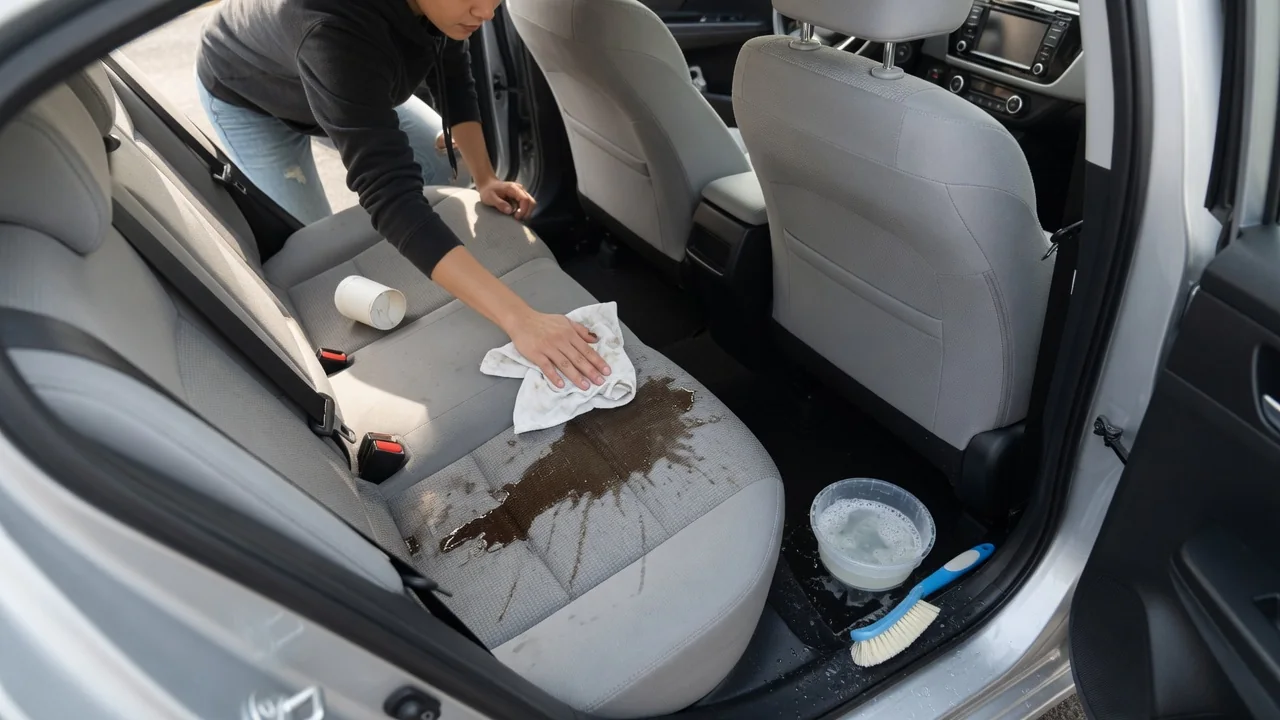
A tipped cup on the morning commute can leave a brown ring and a sour smell if the liquid sits in the seat. Knowing how to clean coffee from car upholstery comes down to three things done in order: lifting the spill quickly, treating the surface according to its material, and drying the foam underneath so moisture and odor do not linger.
Blot
Speed matters because coffee is a thin, dyed liquid that wicks through woven fabric and into the foam cushion within minutes. Press a clean, light-colored microfiber towel or plain paper towels straight down onto the wet area, hold for a few seconds, then lift and move to a dry section. Work from the outer edge toward the center so the spill does not spread. Rubbing or scrubbing pushes the liquid deeper and roughens the fibers, which makes the mark look larger afterward.
Keep blotting until the towel comes away nearly clean, which shows that the loose liquid has been removed. Check the places where coffee runs by gravity: the seam where the seat base meets the backrest, the stitching channels, the seat belt buckle pocket, and the carpet beside the seat rails. Perforated or ventilated seats, and seats with heating elements or occupancy sensors, deserve extra restraint with added liquid, since the openings lead directly toward components below the cover. The owner's manual usually notes those features.
Clean material
Cloth seats generally respond to a small amount of cool water mixed with a few drops of mild dish soap, or a fabric upholstery cleaner labeled for automotive interiors. Dampen a cloth rather than pouring onto the seat, dab the stain, then blot with a second cloth dampened with plain water to lift the soap residue. Cool water is the safer choice, since heat can help set the tannins that give coffee its color. Milk and sugar add a sticky, protein-rich residue that needs a thorough rinse-and-blot pass.
Leather, vinyl, and synthetic leather behave differently because the spill mostly sits on a coated surface. Wipe it away promptly, clean with a product intended for that material, and pay attention to seams and perforations where liquid sneaks in. Suede-like microfiber, often used on seat inserts, can stiffen or show water marks if soaked, so use minimal moisture and brush the nap gently once dry. Whatever the material, test any cleaner on a hidden spot first and follow the care guidance for that specific vehicle, since trim finishes vary by make and model year.
Dry padding
The fabric surface can feel dry while the foam padding beneath still holds moisture. That trapped dampness is what produces a musty or sour-milk smell days later, and it can draw dissolved coffee back up to the surface as it evaporates, leaving a ring around the original spot. Press a thick dry towel firmly into the area with your body weight to pull liquid out of the cushion, replacing the towel as it becomes damp. A wet/dry vacuum, if available, extracts considerably more.
Airflow finishes the job. Park in a shaded, ventilated spot with the doors or windows open when weather and security allow, or run the climate control with the air conditioning on and fresh air selected, since the system removes humidity from the cabin. A small fan aimed at the seat helps as well. Avoid concentrated heat from a hair dryer held close, which can damage fabric, adhesives, or leather coatings. Drying time depends on how much liquid soaked in, the foam thickness, and the ambient humidity, so check progress by pressing a dry tissue into the spot.
Everyday Use and Observations
Over the following days, the seat tells you how well the cleanup worked. A faint tan outline that appears after drying usually means some coffee remained in the fibers or wicked up from the padding; a second light cleaning and thorough blot often improves it. A stiff or slightly tacky patch points to leftover soap or sugar, which attracts dirt and darkens with use. Smell the cabin after the car has sat closed in the sun, because warmth makes lingering dairy odor far more noticeable.
Habits reduce repeat spills. Cup holders vary widely in depth and grip, so a tall travel mug that sits securely in one vehicle may tip in another during a hard stop or sharp turn. Lids that seal fully, cups seated before driving off, and drinks kept out of door pockets not shaped for them all help. Keeping a couple of microfiber towels in the glove box or seat-back pocket means blotting can begin at the next safe place to pull over rather than after the liquid has already soaked through.
Limits and Next Steps
Home methods have limits. An old stain that has dried for weeks, a large spill of sweetened latte that saturated the cushion, or an odor that returns after repeated cleaning may call for hot water extraction by a professional detailer, who can flush and recover liquid from deep in the foam. Light-colored cloth and delicate materials like suede-style inserts or uncoated leather are also easier to damage with repeated amateur attempts. Aggressive products such as bleach or strong solvents can discolor the cover and should be avoided.
Some situations go beyond appearance. If coffee ran into seat switches, a seat belt buckle, a center console with a shifter or charging pad, or under a seat where wiring connectors and modules may sit, watch for sticky buttons, a buckle that latches poorly, or new warning lights such as an airbag indicator. Those signs warrant inspection by a qualified technician instead of spraying cleaner into the mechanism, and covers should not be removed from seats with side airbags without proper guidance. Component locations differ between vehicles, so the owner's manual is the best reference.