How to Clean Makeup From Car Upholstery
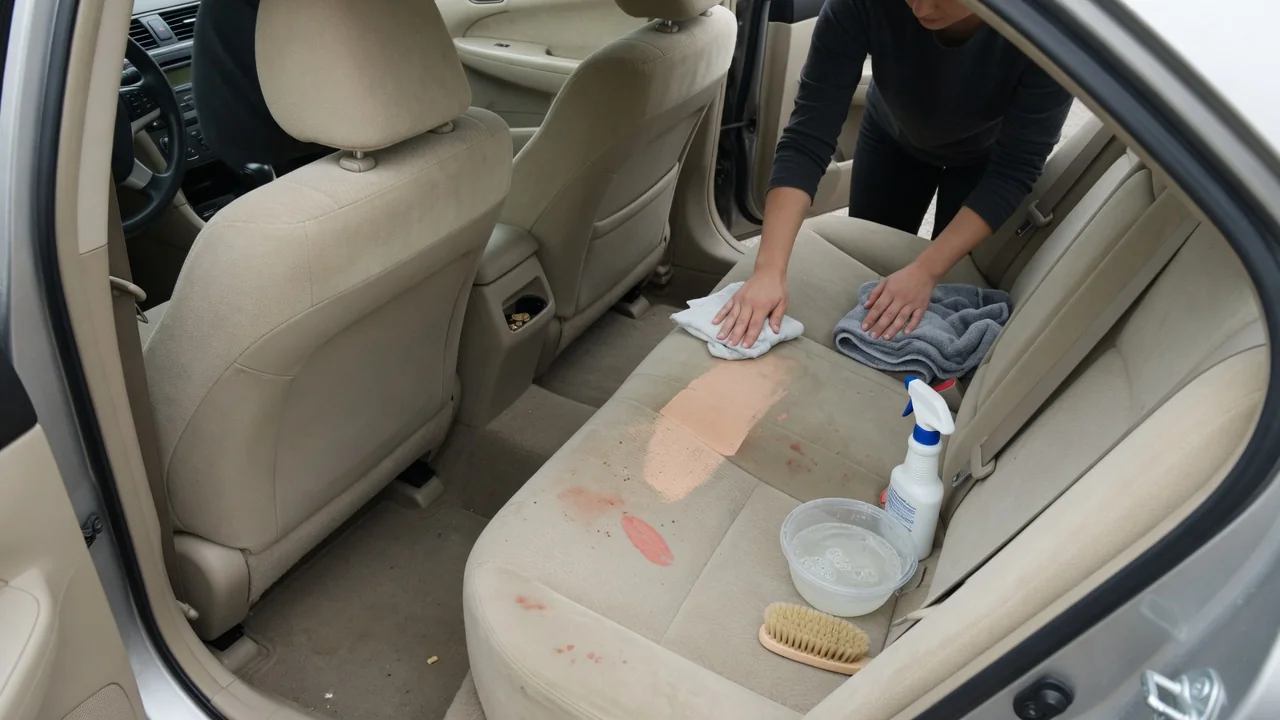
Foundation on a seat bolster, lipstick on a headrest, mascara on a door panel: cosmetic stains are common in vehicle cabins and easy to make worse. Learning how to clean makeup from car upholstery starts with patience rather than scrubbing. A test-first approach, where every cleaner is tried on a hidden spot before the visible stain, protects fabric, leather, and vinyl from avoidable damage.
Identify product and material
Makeup is not one substance, and the type determines how a stain behaves. Liquid foundation and concealer usually combine pigments with oils or silicones, so they smear and soak into fibers. Lipstick and cream blush are wax- and oil-based, leaving a greasy, strongly colored mark. Powder products such as eyeshadow or bronzer sit loosely on the surface until pressure or moisture pushes them in. Waterproof mascara and long-wear formulas are designed to resist water, which is why plain water alone often does little.
The seat surface matters just as much. Woven cloth absorbs liquids quickly, while suede-like microfiber materials can mat or change texture when rubbed. Coated leather and vinyl resist absorption but may have perforations and stitching that trap pigment. Many vehicles mix materials on a single seat, with different inserts and bolsters, so check the owner's manual or window-sticker description for the trim type. Its care section often lists which cleaners the manufacturer permits and which, such as strong solvents or bleach, it warns against.
Blot
Blotting removes as much product as possible before any cleaner touches the stain. For a thick deposit such as a lipstick smear or a blob of foundation, first lift the excess with a dull edge like a spoon or plastic card, working from the outside of the mark toward its center. Then press a clean white cloth or paper towel straight down and lift it away. White material matters because it shows how much pigment is transferring and cannot bleed dye of its own into the seat.
Rubbing is the mistake that turns a small spot into a wide shadow, because friction drives oils and pigment deeper into the weave and spreads them sideways. Rotate to a fresh section of cloth with each press so lifted makeup is not put back down. Loose powder is the exception: vacuum it with a soft brush attachment while it is still dry, since blotting or wiping grinds fine particles into the fibers. On perforated leather, use light pressure so product is not forced into the holes.
Clean and dry
Before cleaning the stain itself, apply the chosen product to a hidden area, such as the lower back of the seat or fabric beneath the cushion edge, and let it dry. Look for color transfer onto the cloth, fading, darkening, or stiffness. If the test spot looks unchanged, proceed. A cleaner labeled for the specific material is the safest choice; for cloth, a small amount of mild dish soap in cool water is a common gentle option, because its surfactants help loosen the oils that hold pigment in place.
Apply cleaner to the cloth rather than pouring it on the seat, and dab from the edge inward, repeating in light passes instead of one heavy soak. Too much liquid can reach the foam underneath, where it dries slowly and can leave a ring or a musty odor. Follow with a cloth dampened with plain water to remove residue, then blot dry with a towel. Open the doors or windows to let air circulate, and avoid high heat, which can set remaining oils and stress leather or vinyl.
Everyday Use and Observations
Most cosmetic marks in a cabin follow predictable patterns. Seat belts pick up foundation where they cross the collarbone, headrests collect it from the side of the face, and door armrests and center consoles catch whatever was on a hand. Sun visor mirrors invite touch-ups at stoplights, so powder often drifts onto the seat and the carpet below. Light-colored interiors show these marks immediately, while dark fabric can hide a buildup that only appears as a dull, slightly greasy patch in direct sunlight.
Timing changes the outcome. A fresh mark usually lifts far more readily than one that has sat through several hot days, since cabin heat softens waxes and lets them flow deeper into the material. Keeping a few plain white cloths and a small bottle of interior cleaner already tested on that vehicle's seats makes quick response realistic. After cleaning, check the area again once it is fully dry and in daylight, since damp fabric looks darker and can disguise both leftover pigment and a faint water ring.
Limits and Next Steps
Some stains will not come out completely with gentle methods, and recognizing that point prevents damage. Heavily pigmented long-wear lipstick, self-tanner, and lip or brow tints can bond with light fabric or stain the top coating of leather. If two or three careful passes stop transferring color to the cloth, more scrubbing mainly wears the surface. Escalating to household solvents such as nail polish remover or undiluted rubbing alcohol is risky, because they can strip dye, dull protective coatings, or damage the finish on vinyl.
At that stage, a professional detailer is the sensible next step, since they have extraction equipment and material-specific products and can judge what the trim will tolerate. Mention what the makeup was and what has already been applied, as that guides their approach. Extra caution applies to seats with heating elements, ventilation fans, or occupant sensors and side airbags built into the seat, where soaking is best avoided, and to seat belt webbing, which the owner's manual typically says to clean only with mild soap and water.