How to Clean a Car After a Food Spill
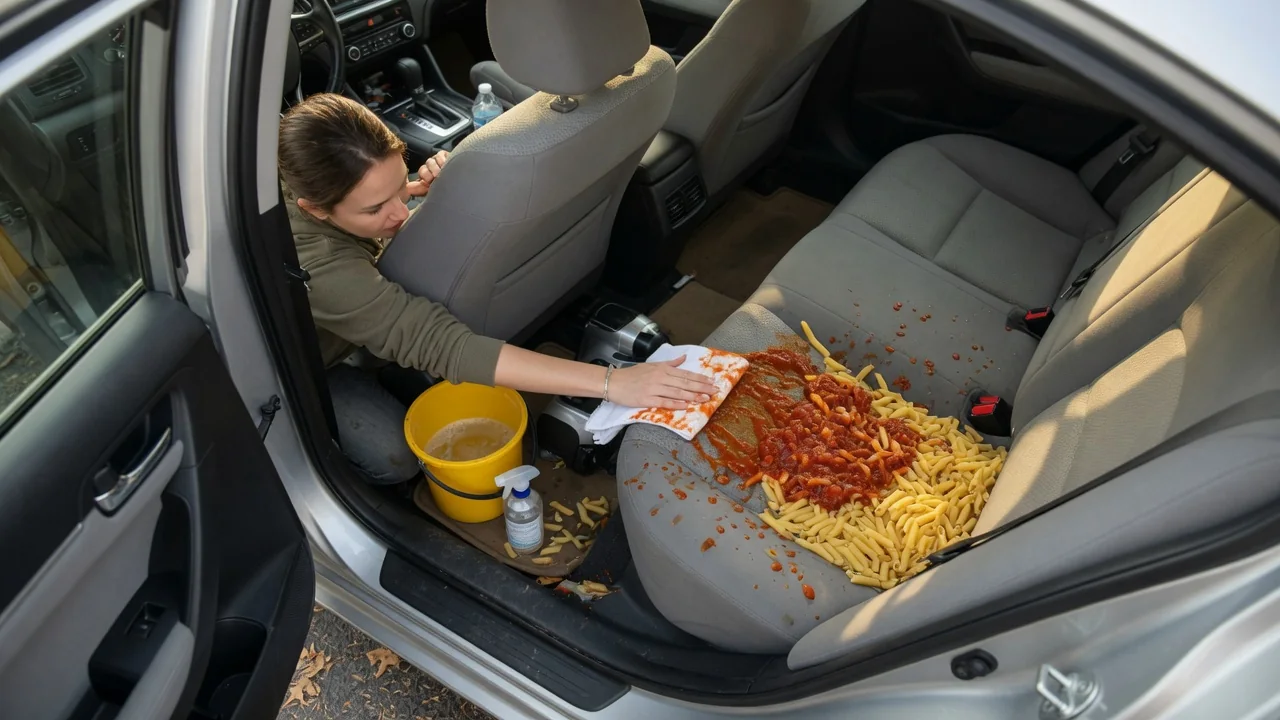
Knowing how to clean a car after a food spill starts with accepting that the visible mess is only part of the problem. Crumbs migrate into seat tracks and seams, while liquid soaks through fabric into foam and carpet padding. Working in order, from loose debris to surface cleaning to thorough drying, keeps a small accident from turning into a lingering odor or stain.
Remove loose food
Start by picking up anything solid before it gets ground in. Larger pieces come out by hand or with a paper towel, lifting rather than wiping so sauces and grease are not pushed deeper into the weave. Then slide the front seats fully forward and back to expose the tracks, where fries, cereal and wrappers tend to collect. A flashlight held low across the carpet makes small fragments cast shadows, which reveals far more than overhead cabin lighting does.
A vacuum with a narrow crevice attachment reaches the gap between seat cushion and backrest, the seam where the center console meets the seat, and the pockets around seat belt buckles. A soft brush loosens crumbs caught in carpet pile or perforated leather before suction lifts them. Layouts differ by vehicle: some rear benches fold or tip to expose the floor beneath, while others are fixed, and child seats usually need to come out because food packs underneath their bases.
Clean surfaces
Once debris is gone, treat what remains according to the material. Cloth upholstery and carpet respond to blotting with a clean, slightly damp microfiber towel, working from the outer edge of the stain toward the center so the mark does not spread. A mild fabric or interior cleaner suited to automotive upholstery helps with greasy or sugary residue. Testing any product on an inconspicuous patch first shows whether it will lighten the dye or leave a ring.
Leather, vinyl and hard plastics need less moisture and a gentler touch. Sticky drinks often run into cup holders, door pocket bottoms and the seams around shifter trim, where a thin film stays tacky and attracts dust. Many cup holder liners and floor mats lift out for washing, though this varies by model. Keep liquid away from switches, seat heater controls and wiring beneath the seats, using a dampened cloth rather than spraying cleaner directly onto those areas.
Dry
Drying matters as much as cleaning, because liquid that reaches seat foam or carpet padding can stay wet long after the surface feels dry. Press a dry towel firmly into the affected spot; if it comes up damp, more moisture is still below. Repeated blotting with fresh towels pulls out more than rubbing does. Lifting the floor mat and feeling the carpet beneath shows whether a spilled drink traveled past the mat edge and pooled in the footwell.
Airflow finishes the job. Open doors or windows in a dry, sheltered place, or run the climate control with the air conditioning on, since it removes humidity from cabin air. A small fan aimed at the damp area speeds things along. Dark upholstery in direct sun dries quickly, but strong heat can set certain stains, so clean first and dry afterward. Fogged windows the next morning or a musty smell suggest moisture is still trapped somewhere in the padding.
Everyday Use and Observations
Over the following days, the cabin itself reports how well the cleanup went. A sour or sweet odor that grows stronger when the car has been parked in the sun usually points to missed residue, with dairy and sugary drinks being common culprits. Stains that reappear after drying, sometimes called wicking, indicate that material deeper in the foam is rising back to the surface. Ants or fruit flies inside the vehicle are another sign that food remains hidden.
Everyday habits make hidden crumbs and liquid easier to find next time. Removable all-weather mats or seat covers catch most of a spill and can be rinsed outside the car. Keeping a few microfiber towels in the door pocket or cargo area allows blotting within minutes, before liquid reaches the padding. A quick look under the seats and into the seatback pockets during routine washing catches forgotten snacks early, particularly in vehicles that regularly carry children or pets.
Limits and Next Steps
Home cleaning has limits. A large volume of milk, soup or soda that soaked through to the padding may not come out with towels and a household vacuum, and the smell can persist no matter how clean the surface looks. Professional detailers use extraction equipment that flushes and pulls liquid from deep in the foam and carpet backing. In severe cases, carpet sections or seat cushions may need to be lifted or removed, which is work best left to a qualified shop.
Caution is also warranted around electronics. Many seats contain heating elements, occupancy sensors, side airbags and wiring connectors, and the arrangement differs widely between vehicles. If a warning light appears, a power seat or heater behaves oddly, or liquid clearly ran into a console or under-seat connector after a spill, have the vehicle inspected rather than probing connectors yourself. The owner's manual lists the cleaning products and methods the manufacturer approves for its particular upholstery and trim materials.