How to Pack a Car for a Picnic
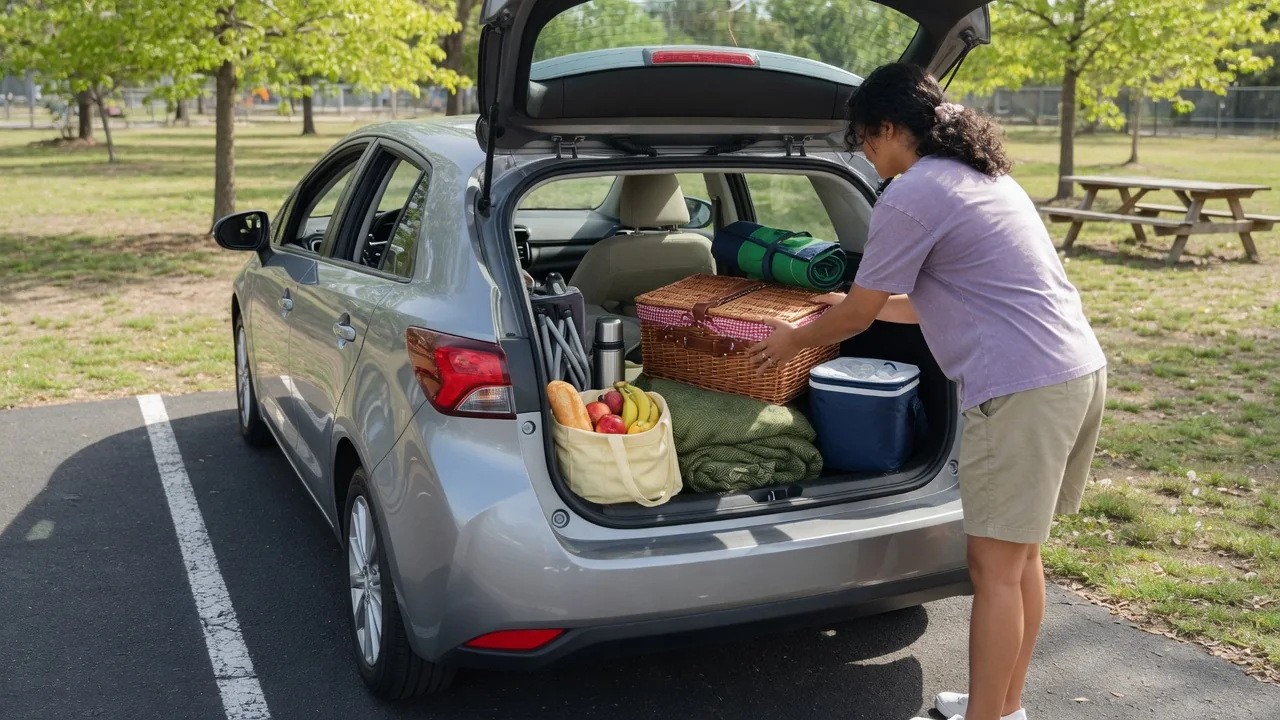
Knowing how to pack a car for a picnic comes down to three things: keeping cold food cold, stopping gear from sliding around, and having a plan for the mess afterward. A little thought about where each item rides in the cabin or cargo area makes the drive calmer and the setup at the park much quicker.
Separate cold items
Chilled food deserves its own container and its own spot in the vehicle. A cooler packed with ice packs, drinks, salads and meats should ride apart from dry goods such as bread, chips and paper plates, so condensation and meltwater never reach them. The cargo floor behind the rear seats is usually the most stable location, but in a hatchback or wagon that space sits under a large glass area, so sunlight can warm it quickly on a bright day.
In a sedan, the enclosed trunk is shaded but receives no air conditioning, so on hot days some drivers prefer placing the cooler on the rear footwell floor where cabin air circulates. Check that the lid latches and the drain plug is closed before loading, since a slow leak can soak carpet and leave a lingering odor. Keeping a second, smaller cooler for drinks means the food cooler stays shut for most of the outing, which helps it hold temperature longer.
Secure load
Loose items become a hazard under hard braking, so heavy pieces belong low and as far forward in the cargo area as possible, pressed against the rear seatbacks. The cooler, a folded table and camp chairs form a solid base, while lighter bags, blankets and cushions sit on top. Many vehicles provide tie-down rings, a cargo net or side hooks; their location and strength vary, so the owner's manual is the right place to confirm what they are meant to hold.
Avoid stacking anything above the top of the seatbacks in an SUV or hatchback unless a cargo barrier is fitted, because items can travel forward into the cabin and also block the rearview mirror. Glass bottles and serving dishes ride best wedged in a crate or laundry basket lined with a towel. After the first few minutes of driving, listen for rattles or thumps on turns; those sounds usually mean something has shifted and needs repositioning at the next safe stop.
Plan waste
Cleanup goes smoothly when the return trip is planned before leaving home. Pack a few trash bags, a separate bag for recyclables, paper towels and wet wipes in one easy-to-reach spot, such as a door pocket or a small bin near the tailgate. A lidded plastic tub is useful for dirty plates, utensils and sticky containers, because it keeps sauces and crumbs away from upholstery and carpet that are far harder to clean than a hard cargo liner.
Sealed garbage should ride in the trunk or cargo area rather than the cabin, tied shut so odors and liquids stay contained, and be removed as soon as you get home, since heat inside a parked car makes food waste smell quickly. A rubber cargo mat or an old sheet spread across the load floor catches grass, sand and drips from the emptied cooler. Vehicles with underfloor storage wells vary in how well they drain, so avoid putting wet items there.
Everyday Use and Observations
Loading order matters as much as placement. Items needed first at the park, typically the blanket, chairs and a shade canopy, should go in last so they come out first, while the cooler can stay reachable from the tailgate or a rear door. Split-folding rear seats let you carry long items such as an umbrella or folding table while still seating a passenger, though the split ratio and whether the seats fold flat differ from one model to another.
Watch how the car behaves once it is loaded. A noticeably lower rear stance, softer steering response or longer braking feel suggests the load is heavy or sitting too far back. Tire pressure recommendations for a loaded vehicle are usually printed on a placard in the driver's door jamb, and they can differ from the everyday figure. Check too that the rear window view is clear and that nothing rests against the tailgate, where it could fall out when the hatch is opened.
Limits and Next Steps
Every vehicle has a payload limit covering passengers and cargo together, and a full cabin of adults uses up much of it before any picnic gear goes aboard. The figure appears on the door jamb placard or in the owner's manual, and it applies to roof loads as well, which have their own separate limit. A cooler cannot keep perishable food safe indefinitely in a hot parked car, so long stops on the way are worth keeping short.
If the gear regularly exceeds what the cargo area holds comfortably, a roof box, a hitch-mounted carrier or simply a second vehicle may be more sensible than squeezing everything in, provided the equipment is confirmed as suitable for your specific model. After the outing, vacuum crumbs, wipe the cargo liner and let the cooler dry with its lid open. Noting what went unused, and what you wished you had brought, makes the next packing job faster and lighter.