How to Keep a Car Door Pocket Organized
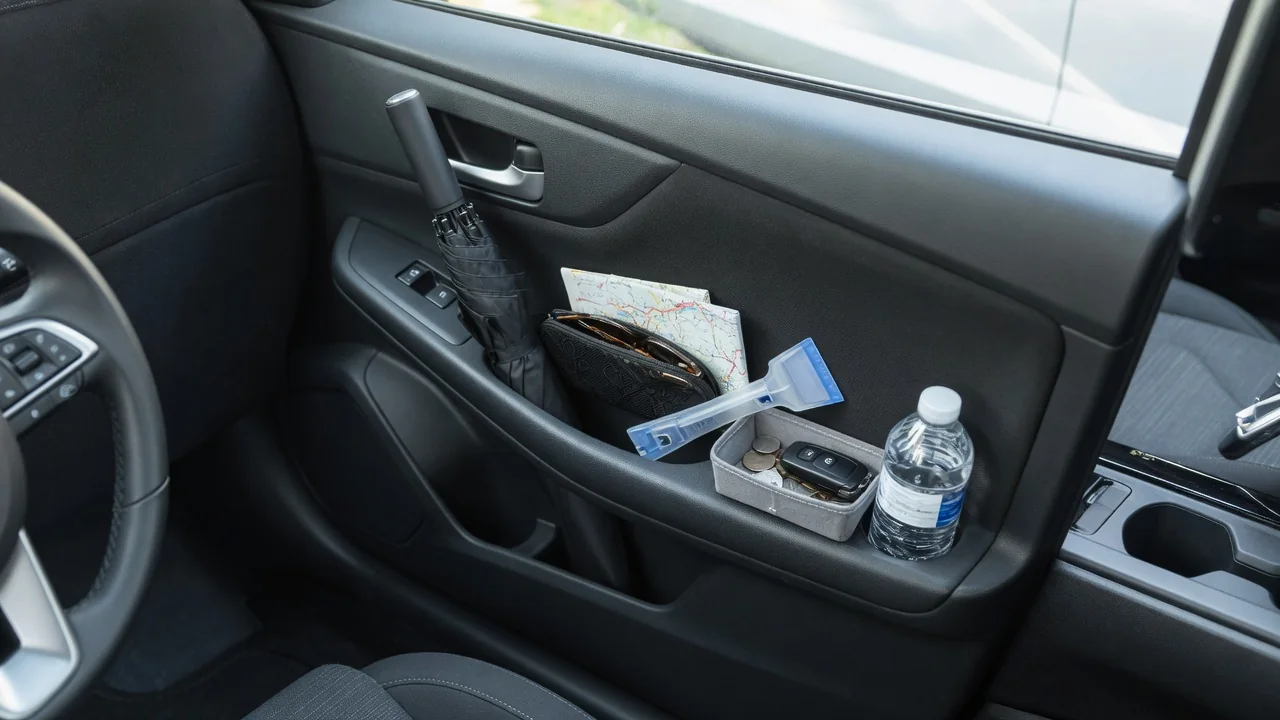
A door pocket sits within inches of the window switches, the door handle, and the sill you step across, so whatever collects there affects how easily you operate the car and get in or out. Learning how to keep a car door pocket organized comes down to deciding what belongs there, restraining loose pieces, handling spills promptly, and checking the space regularly.
Sort items
Start by emptying the pocket completely and laying everything on a seat or a towel. Most drivers find a mix of receipts, napkins, pens, an ice scraper, a tire gauge, sunglasses, and bottles in various states of emptiness. Group these by how often they are reached for while seated. Items used on nearly every drive earn a place in the door, while paperwork, spare chargers, and seasonal tools usually fit better in the glovebox, center console, or cargo area.
Pocket shape determines what fits sensibly. Some doors have a molded bottle holder at the front and a narrow slot behind it, others have a single long bin, and rear doors are often shallower still. Look at where the pocket sits relative to the speaker grille, the door pull, and the seat adjustment controls when the door is closed. Anything tall enough to brush the armrest or poke above the pocket lip can interfere with your hand or leg, so keep that item elsewhere.
Secure small objects
Coins, keys, pens, and charging adapters slide and rattle every time the door swings or the car corners, and they tend to migrate to the lowest point of the bin where they are hard to retrieve. A small zippered pouch or a lidded container sized to the pocket keeps them together and lets you lift everything out at once. A thin rubber or silicone liner cut to the pocket floor adds grip and quiets hard objects against the plastic.
Loose objects matter most at the door opening. Something that tips out when the door swings wide can land on the sill, drop into the gap by the seat track, or fall onto the ground unnoticed. On the driver's side, a rolling item reaching the footwell is a genuine hazard near the pedals. Check that nothing sits above the pocket rim and that bottles stand firmly in their molded recess. Because bin depth and rim height differ between vehicles, test the arrangement by opening and closing the door briskly.
Clean spills
Door pockets collect liquid more than most storage spots because they hold drinks and sit beneath a window that lets in rain when the door is opened. Sticky residue from soda or coffee traps grit and makes everything stored there tacky. Remove the contents, lift out any liner, and blot standing liquid with an absorbent cloth before wiping the surface with a damp microfiber towel and a mild interior cleaner suited to the material. Dry the pocket fully before reloading it.
Materials vary, and so does the right approach. Hard plastic bins tolerate wiping well, while pockets lined with carpet or felt hold moisture and odor longer and need blotting rather than scrubbing. Use liquid sparingly, since door panels house speakers, window switches, and wiring, and you do not want cleaner running into grilles or seams. A soft brush or vacuum crevice tool lifts crumbs from corners first. If a removable liner or insert came with the car, washing it separately is usually the easier route.
Everyday Use and Observations
Daily habits do more than occasional big cleanouts. Taking trash with you at each fuel stop or when you arrive home keeps wrappers and receipts from layering up, and returning the same items to the same position means you can find them by touch without looking away from the road. Notice what you actually reach for over a few weeks. An object that has not moved in a month is probably occupying space better used by something else, or by nothing.
The pocket also tells you things if you pay attention. New rattles over bumps usually point to a hard item that has shifted against the panel. Water pooling after rain or a car wash, rather than a spilled drink, may suggest that moisture is getting past the window seal or that the door's drain paths deserve a look. A bottle that catches your calf when you step in, or an item that knocks the sill as the door closes, signals the pocket is carrying too much.
Limits and Next Steps
A door pocket has practical limits. It is exposed to heat in a parked car and to view through the glass, so medications, aerosol cans, electronics, and anything valuable or bearing personal information are better stored out of sight elsewhere. Heavy or sharp tools do not belong there either, since they can become projectiles in a sudden stop and can scuff the panel. Treat the pocket as short-reach storage for light, frequently used items rather than as overflow for the whole cabin.
If the pocket still fills up, the next step is adding capacity elsewhere rather than packing it tighter. Seatback organizers, a console tray, or a small trunk bin can take the overflow, and the owner's manual often shows storage compartments that go unused. Aftermarket inserts can help, but fit depends on the vehicle, so measure the opening and confirm that nothing blocks the door pull, switches, or speaker. Persistent dampness, a loose panel, or a cracked bin is worth showing to a repair shop.