How to Keep a Dog's Gear Organized in a Car
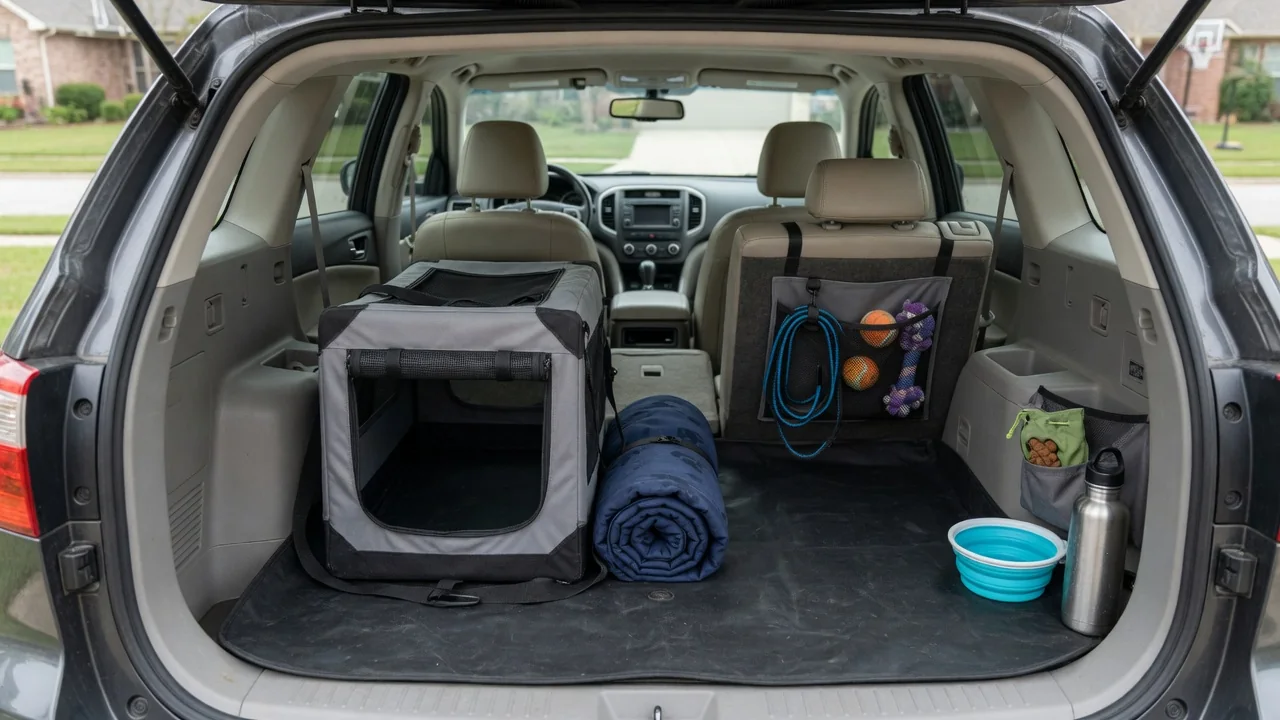
Leashes under the seat, a water bowl rolling around the cargo floor, towels stuffed wherever they fit: dog supplies spread through a cabin quickly. Learning how to keep a dog's gear organized in a car comes down to three habits, which are sorting items by purpose, anchoring them so they stay put, and resetting the vehicle after each trip. The approach works in a compact hatchback or a full-size SUV.
Group items
Start by sorting everything into categories based on when you reach for it. Items needed at every stop, such as a leash, waste bags, and a collapsible bowl, belong together in one small pouch near a door. Things used only at the destination, like a long line, toys, or a bed, can ride deeper in the cargo area. Cleanup supplies, including towels, wipes, and a spare seat cover, form a third group. Sorting by timing means you open one container per task instead of digging through all of them.
Where each group lives depends on the vehicle. A sedan with a separate trunk favors a door pocket or seatback organizer for the quick-access pouch, because the trunk is awkward to reach at a roadside stop. Wagons and SUVs often have underfloor compartments or side bins in the cargo area that suit rarely used items. Pickup owners may rely on under-seat storage in the rear of the cab. Look at what your interior already offers before buying containers, since built-in cubbies often hold a full category on their own.
Secure storage
Loose objects do not stay where you set them. Under hard braking or a sharp turn, a metal bowl or a heavy water jug slides forward, and in an open cargo area it can travel into the passenger space. Soft-sided bins with lids, zippered totes, and crates with latching tops keep contents contained, but the container itself also needs restraint. Many vehicles have tie-down rings in the cargo floor, and a short strap or cargo net across those points stops a bin from shifting.
Placement matters as much as fastening. Keep heavy items low and against the rear seatback, where they have the least room to build momentum, and reserve higher spots for light things like towels. Avoid stowing anything in the driver's footwell, where it could roll under the pedals, and keep seatback organizers clear of side airbag zones marked on the seat trim. Anchor locations, load limits, and cargo cover designs differ between models, so the owner's manual is the right place to confirm what your tie-down points are meant to hold.
Clean afterward
A storage system only lasts if it gets reset after each outing. Pull out wet towels, used bowls, and muddy leads the same day, because damp fabric sealed in a closed cabin leaves odor in the carpet and upholstery and can fog the windows on the next drive. Shake out seat covers and cargo liners away from the car, then vacuum the seams and seat tracks, where hair collects and works its way into sliding mechanisms. Wipe plastic bins before reloading them so grit does not grind into the cargo floor.
Material choices decide how hard this job is. Rubber or molded cargo trays rinse off with a hose, while carpeted load floors hold hair and need a stiff brush or rubber-edged tool to lift it. Leather and vinyl seats wipe down easily, yet cloth seats benefit from a washable cover that takes the dirt instead. Check that liners and mats still sit flat afterward, since a bunched mat can interfere with seat folding or a hatch seal. Returning each item to its assigned bin right away keeps the grouping intact for next time.
Everyday Use and Observations
Daily driving shows whether the arrangement works. Listen for rattles or thumps over bumps, which usually mean a bin has come loose or a hard item is knocking against trim. Notice whether you can reach the leash pouch without unbuckling or leaning across the cabin, and whether groceries or luggage still fit alongside the dog supplies. If you find yourself moving the same container every time you load something else, it is in the wrong spot. Small adjustments in the first few weeks settle most of these annoyances.
Watch how the gear interacts with the car's own functions. A tall crate or stacked bins can block the view through the rear window, making the interior mirror less useful and putting more reliance on side mirrors or a backup camera. Folding rear seats, sliding cargo covers, and power liftgates all need clearance to operate, so test them with everything loaded. Seasonal changes matter too: water jugs left in a hot cabin or a freezing one behave differently, and a winter kit with extra towels takes more room than a summer one.
Limits and Next Steps
Organization has practical limits. Storage bins and nets manage supplies; they are not designed to restrain an animal, and how a dog itself travels is a separate decision involving purpose-built equipment and its maker's instructions. A small car may not hold every item you own, so a pared-down everyday kit with a larger bag added for long trips is often more realistic than carrying everything all the time. Extra weight also counts against the vehicle's payload rating, which is listed on the door jamb placard.
From here, a short trial is the most useful step. Load the car as planned, drive a familiar route, and check afterward for anything that moved, spilled, or blocked a control. Aftermarket organizers, cargo barriers, and seat covers come in vehicle-specific and universal fits, so measure the cargo opening and seat width and confirm fitment for your exact model and year before buying. If an accessory attaches to seat belts, head restraints, or child-seat anchors, verify in the owner's manual that the mounting point is intended for that use.