How to Pack Snacks for a Car Trip Without Making a Mess
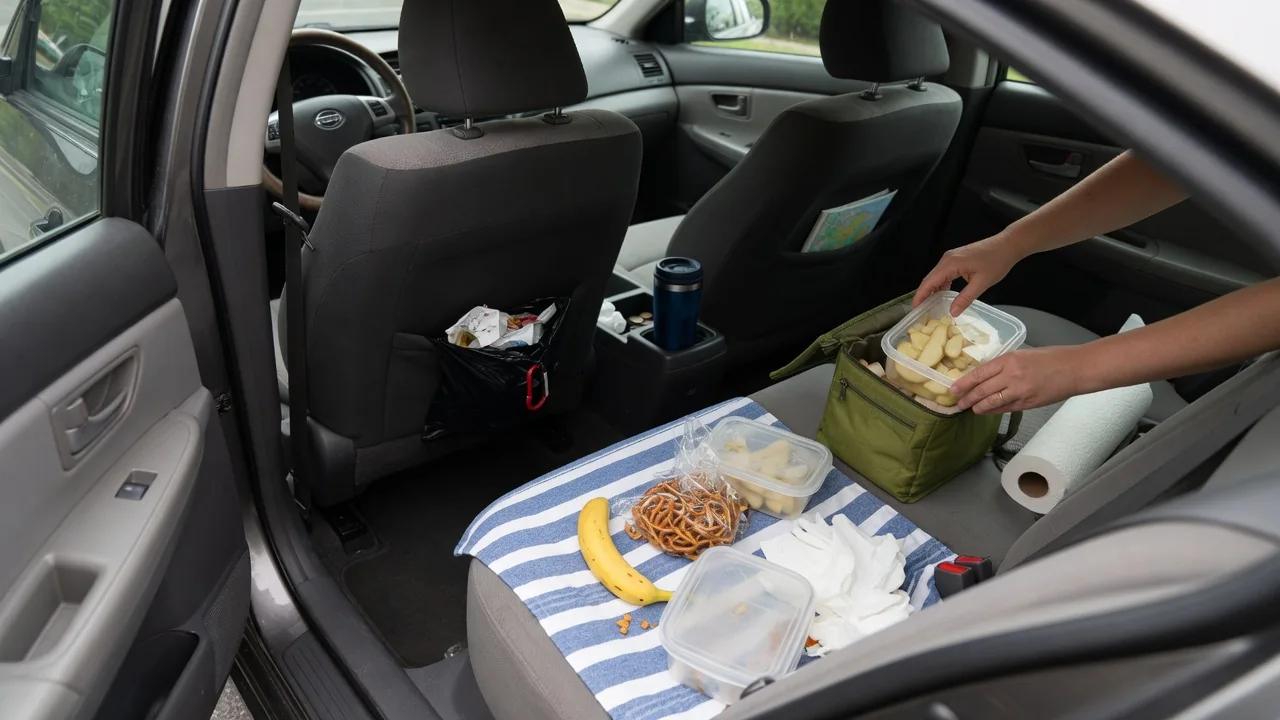
Learning how to pack snacks for a car trip without making a mess comes down to three habits: choosing containers that stay closed, storing food where passengers can reach it safely, and giving every wrapper a place to go. The cabin itself shapes those choices, because cup holders, door pockets, and upholstery differ from one vehicle to the next.
Choose containers
Rigid containers with latching or screw-on lids protect a cabin better than the bags snacks are sold in. A torn chip bag spills the moment it tips, while a lidded tub survives a hard stop or a sharp on-ramp. Portioning food into small containers before departure also means nobody opens a large package over the seats. Dry, bite-sized foods such as crackers, grapes, or cheese cubes suit this approach, because they leave little residue on fingers and do not shed flakes into seat seams or carpet.
Container shape matters as much as the seal. Cup holders vary widely in diameter and depth, so a snack cup that sits firmly in one vehicle may wobble or ride too high in another, and it is worth testing the fit in the driveway. Drinks deserve the same attention: bottles with locking spouts or straw lids tolerate bumps far better than open cups. Soft-sided insulated bags keep perishables cool and compress into a footwell, whereas a hard cooler holds its shape and can double as a flat surface.
Place within reach
Most spills happen when someone stretches, twists, or digs through a bag while the vehicle is moving. Placing snacks where each passenger can reach them from a normal seated position, with the seat belt worn properly, removes that cause. A center console bin, a door pocket, or a seatback organizer generally serves this purpose, although the size and location of these spaces differ by vehicle. Front passengers often have the easiest access to the console, so they are well placed to hand out portions on request.
Rear-seat passengers, especially children in car seats, need their own supply within arm's length, since they cannot lean forward to a shared bag. A small caddy on the middle seat or an organizer hung from the front seatback works in many cabins, provided it does not interfere with seat adjustment or a child restraint. The driver should not be unwrapping or sorting food at all; anything meant for the person behind the wheel is best opened in advance and saved for a stop.
Manage waste
Mess accumulates when trash has no destination. A dedicated waste container, set up before the first snack is opened, keeps wrappers, peels, and napkins out of door pockets and off the floor. A lined bin with a lid, or a sealable bag hung from a headrest post or kept in a footwell, contains both the clutter and the smell. Lids matter most with fruit cores and dairy packaging, which turn unpleasant quickly in a warm cabin and can attract insects when the vehicle is parked.
A small cleanup kit complements the trash container. Wet wipes, a roll of paper towels, and a few spare bags handle sticky hands and minor spills before they soak into fabric. Liquid waste deserves separate handling, so half-finished drinks are better capped and poured out at a stop than dropped into the trash bag, where they can leak onto carpet. Emptying the container at every fuel or rest stop keeps the volume manageable and prevents an overstuffed bag from tipping over.
Everyday Use and Observations
A few miles into a trip, the cabin shows whether the setup is working. Containers that rattle, slide across a seat, or tip in a corner need a more secure position, perhaps wedged in a footwell or set on a non-slip mat. Crumbs gathering along seat seams or around the buckle receivers suggest that a particular food is too flaky for the road. Condensation from cold drinks pooling in cup holders is another common sign, and a removable liner or a folded napkin underneath usually handles it.
Interior materials change how forgiving the vehicle is. Leather and vinyl surfaces generally wipe clean, while cloth upholstery and carpet absorb liquids and hold odors, so a seat cover or towel under young eaters adds useful protection. Rubber floor mats trap crumbs and can be shaken out at a stop, whereas carpeted mats need a vacuum. Temperature also plays a part: chocolate, frosting, and soft cheese melt in a sunny cabin, so they travel better in the cooler until the moment they are eaten.
Limits and Next Steps
No packing system makes eating in a moving vehicle entirely clean, and some foods are better saved for a stop. Soups, saucy sandwiches, powdered snacks, and anything requiring utensils tend to defeat even good containers. Loose items carry a further limit: a heavy cooler or hard bottle left unsecured can shift during hard braking, so it belongs in the cargo area or low on the floor rather than on a seat. Storage spaces, tie-down points, and cup holder designs vary, and the owner's manual describes what a given vehicle provides.
After the trip, a prompt cleanup prevents lasting stains and odors. Removing all food and trash the same day, shaking out mats, and vacuuming seat seams and the tracks beneath the seats takes care of most residue. Spills on upholstery respond best to quick blotting, and the manual's care guidance indicates which cleaners suit the vehicle's materials. Noting which containers leaked and which snacks caused trouble makes the next journey easier, since the packing plan can be adjusted to suit that specific cabin and its passengers.