Why Does a Car Smell Musty After Rain?
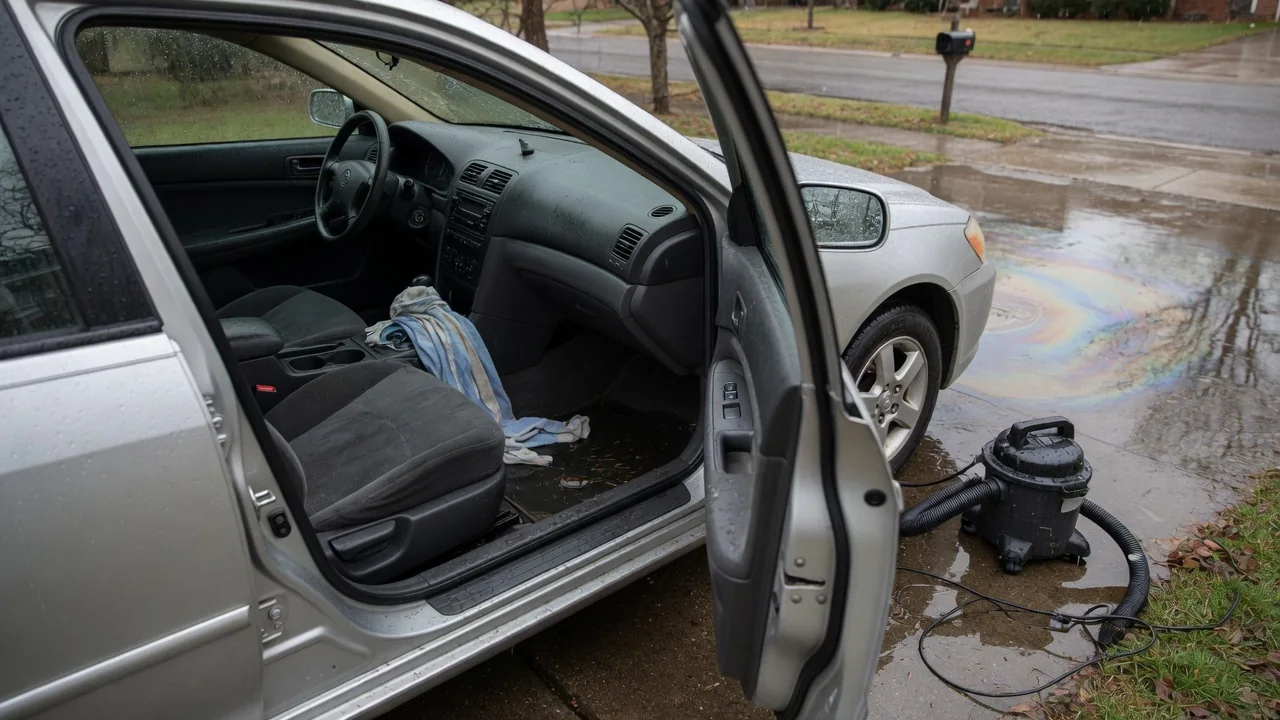
Drivers who ask why does a car smell musty after rain are usually noticing trapped moisture. Water finds its way into carpet, padding or the ventilation system, and mildew begins growing on damp fabric and dust within days. The odor is a useful clue, because following it back to the wet area usually shows how the water got inside.
Likely wet areas
Water that enters a cabin rarely stays where it lands. Carpet sits on a thick foam or jute underlay that soaks up water like a sponge, so the surface can feel nearly dry while the padding beneath stays saturated for weeks. Front footwells are the most common collection points because they sit low and close to the firewall, the door openings and the heating and air conditioning housing. Pressing firmly on the carpet with a dry paper towel often reveals dampness that a quick touch would miss.
Other spots deserve a look as well. The spare tire well can hold standing water beneath the trunk floor panel, and the cargo area on hatchbacks and SUVs often gets wet near the tail lamp openings or the liftgate seal. Vehicles with a sunroof may show stains on the headliner or along the pillar trim where the drain tubes run. The cabin air filter and the cowl intake at the base of the windshield can also trap wet leaves. Exact locations vary with body style and design.
Drying and cleaning
Drying has to reach the padding, not just the carpet face. Take the floor mats out and let them dry outside the vehicle, then blot or extract standing water with a wet vacuum. Airflow does the rest: parking in a dry, covered space with the windows cracked, aiming a fan across the floor or placing a dehumidifier in the cabin all pull moisture out over a day or more. Running the heater with the air conditioning switched on also helps, because the system removes humidity from the air it circulates.
Once the materials are dry, cleaning removes what the mildew was feeding on. An upholstery cleaner intended for automotive interiors lifts residue from carpet and seat fabric, while air fresheners only cover the odor until the next damp day. A cabin air filter that has become wet and dirty is worth replacing; its location differs between vehicles, so the owner's manual is the best guide. Padding that was heavily soaked sometimes never fully recovers and may need to be replaced before the smell goes away.
When to inspect leaks
A single damp episode after an open window is not a leak, but wetness that returns with every storm is. Other signs include windows that fog on the inside overnight, water sloshing inside a door or behind the dashboard, and drips from the headliner or lower trim. Common entry paths include sunroof drains clogged with debris, cowl drains blocked by leaves, worn door and trunk weatherstripping, a loose moisture barrier behind a door trim panel, a failing windshield seal and aged tail lamp gaskets.
Water often travels along a seam or wiring harness before it shows itself, so the wet spot may sit well away from the entry point. Noting whether dampness appears on one side, at the front or rear, or high or low narrows the search. A gentle stream from a garden hose, applied to one area at a time while someone watches inside, can confirm a suspicion. A wet passenger footwell in dry weather points instead toward a restricted air conditioning condensate drain, which is a separate problem from rain intrusion.
Everyday Use and Observations
Daily habits add more moisture than most drivers expect. Wet shoes, umbrellas, coats and damp sports gear all carry water inside, and deep rubber mats that catch it can hold a shallow pool for days. Recirculation mode keeps that humid air trapped, while fresh air mode with the air conditioning running clears it faster. Short trips make things worse, because the cabin never warms up long enough to dry the carpet and the evaporator before the car is parked and closed again.
The timing of the odor says a lot about its source. A smell that greets you the moment the door opens after the car has sat closed suggests soaked interior materials, while one that arrives only when the fan starts points toward the ventilation system. Heavy window fogging that clears slowly indicates high cabin humidity. Parking under trees loads the cowl and sunroof channels with leaves, and parking on a slope changes where water drains. Brief notes on weather, parking position and damp locations make patterns easier to spot.
Limits and Next Steps
Home drying and cleaning cannot fix an active leak, and they have limits even when the leak is minor. Mildew established deep in padding or behind trim can keep producing odor after the surface seems clean, which matters most for occupants sensitive to mold. Water also threatens electrical components, since many vehicles route connectors, wiring and control modules beneath the carpet or seats, where corrosion can cause intermittent faults later. Trim near airbags and seat belt hardware is best left to trained technicians rather than pried loose at home.
When the source stays hidden, a repair shop can perform a controlled water test or remove trim to follow the path directly. Depending on the finding, the work may belong to an auto glass specialist, a body shop or a general technician. Sharing your notes shortens the diagnosis, as does mentioning any past windshield replacement, collision repair or sunroof service. After the repair, check the same areas following the next few rainstorms and confirm the padding stays dry, because a lingering odor may simply mean leftover moisture.