What Is a Rain Sensor on a Car?
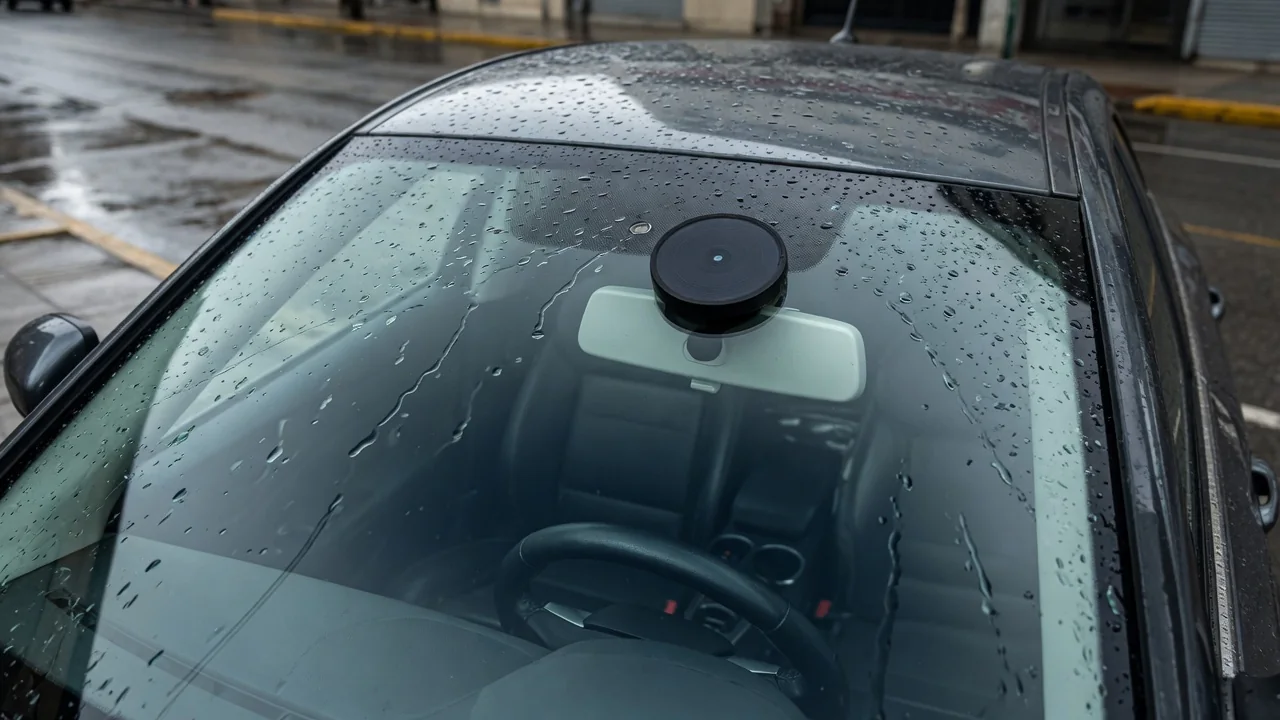
Drivers who ask what is a rain sensor on a car are usually looking at a small module behind the windshield that lets the wipers run themselves. It uses light to detect water on the glass and tells the wiper system when to sweep and how fast. Understanding how that optical detection works makes the system's behavior easier to read and its quirks easier to explain.
Windshield area
On most vehicles the rain sensor sits on the inside of the windshield, typically near the base of the rearview mirror mount and within the area swept by the wiper blades. From outside the car it often appears as a small dark patch, a circle, or a lens-like window in the shaded band at the top of the glass. That placement matters because the sensor can only judge the small section of glass directly in front of it, and that section has to be wiped clear after each pass.
Inside the module, infrared light is directed into the glass at an angle so that it reflects along the windshield and returns to a light detector. When the outer surface is dry, most of that light comes back. Water droplets change how the glass reflects, letting some light escape, so the detector sees less. The module is joined to the glass with a clear gel pad or adhesive layer. Exact position, housing shape, and whether the unit shares space with cameras or light sensors differ by manufacturer and model.
Sensitivity
Sensitivity describes how readily the system reacts to moisture and how quickly it steps up the wiper speed. The sensor does not measure rainfall as such; it measures how much reflected light has been lost and how fast that loss is changing. A few scattered drops produce a small change and may trigger a single sweep, while a steady downpour causes rapid, repeated drops in the returned signal, prompting continuous or high-speed wiping. The control electronics translate that pattern into wiper commands.
Many vehicles let the driver adjust this response, often through a ring or thumbwheel on the wiper stalk when the automatic position is selected, or through a menu in the infotainment screen. A higher setting makes the wipers sweep sooner in light drizzle, while a lower one waits for more water to build up. Some cars also vary the response with road speed. Because control layouts and the number of steps differ widely, the owner's manual is the reliable reference for what each setting does on a particular vehicle.
Cleaning
Because detection relies on light passing cleanly through the glass, the condition of the windshield over the sensor directly affects performance. Road film, dried insect residue, tree sap, salt spray, and wax carried over from a car wash can all scatter or absorb light and be read as moisture, or mask real droplets. The result may be wipers that sweep on a dry day, hesitate in real rain, or seem inconsistent. Keeping that patch of glass clean with an ordinary automotive glass cleaner and a soft cloth is a simple first step.
Wiper blades are part of the same picture. A worn or hardened blade can leave a streak or film across the sensing area after each pass, so the sensor still sees water and keeps the wipers running longer than expected. The inside of the windshield is worth wiping too, though the sensor housing itself should be left alone, since the optical coupling between module and glass is easily disturbed. It is also wise to switch off the automatic mode before hand washing or entering a car wash, so the wipers do not start unexpectedly.
Everyday Use and Observations
In daily driving, a working system tends to be most noticeable in changing conditions. The wipers may make a single pass when the automatic mode is first selected, stay parked under a dry sky, then sweep once or twice as mist collects and speed up when a passing truck throws spray across the glass. Entering a tunnel or stopping under cover usually brings them to rest after the last drops are cleared. That variable rhythm is the main difference from a fixed intermittent setting, which repeats at one interval regardless of conditions.
Some behavior that looks odd is simply the optical method at work. Fine mist or very light drizzle may not disturb enough light to trigger a sweep, even though the driver sees a haze. Frost, ice, or snow can confuse the reading, and a large smear in front of the sensor may cause a burst of wiping. Many vehicles pair the rain sensor with automatic headlights, and some close windows or a sunroof when rain is detected, though those linked functions depend entirely on the vehicle and its equipment level.
Limits and Next Steps
A rain sensor is a convenience aid, not a substitute for the driver's judgment. It watches one small patch of glass, so it cannot see a dirty streak in the driver's line of sight or anticipate a sudden wall of spray. Manual wiper control always remains available and should be used whenever visibility calls for it. Windshield replacement is another known limit: the sensor has to be transferred and bonded properly to the new glass, and air bubbles or the wrong glass specification can leave the automatic function erratic afterward.
When the automatic mode stops responding or behaves erratically after the glass and blades have been checked, the cause could lie in the sensor, its bond to the windshield, wiring, the wiper switch, or the control module, so guessing at a single part is unreliable. A stored fault code can point a technician toward the affected circuit, but it is evidence to interpret alongside testing, and manufacturer-specific codes need vehicle-specific confirmation. A qualified shop can also determine whether the sensor needs to be reinitialized or calibrated, which some vehicles require after glass work.