Why Do Tires Have an Inner Liner? Air Retention, Construction and Damage
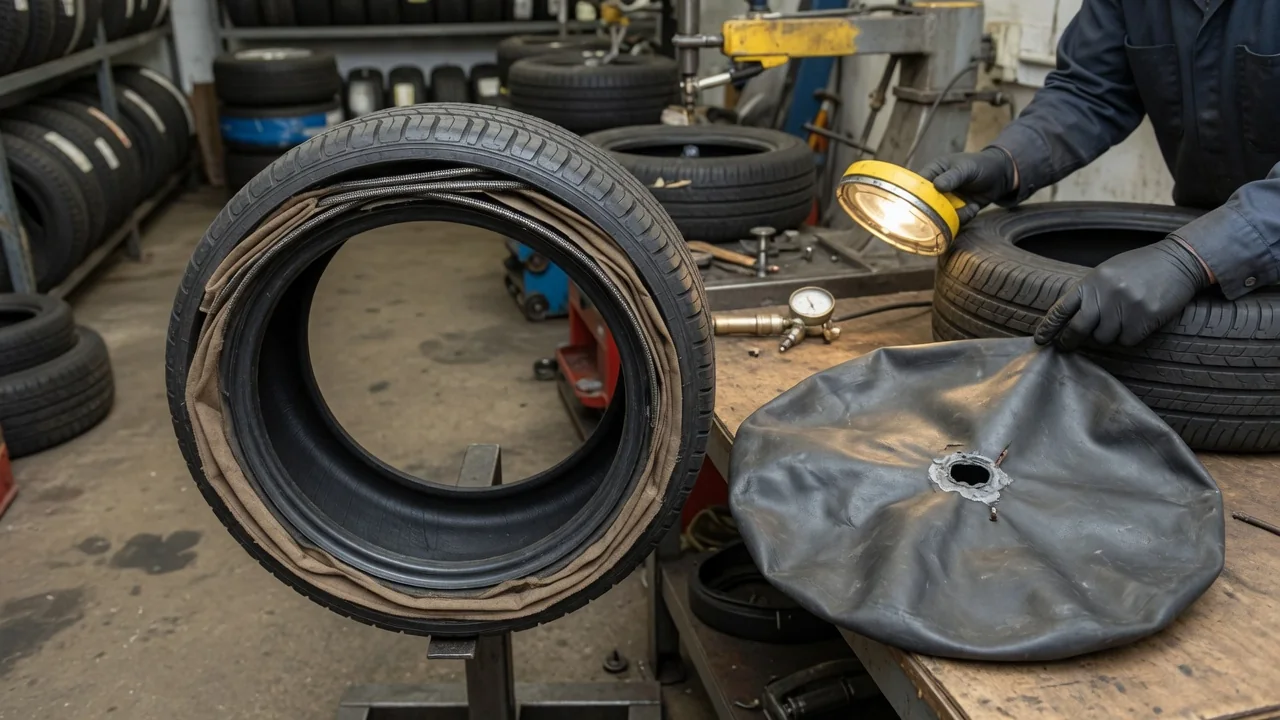
Every modern tubeless passenger tire has a thin layer of specialized rubber covering its inside surface. That layer, the inner liner, is what allows the tire to hold air without a separate inner tube. Knowing why tires have an inner liner explains why pressure still drops slowly over time, why some repairs are acceptable while others are not, and why damage you cannot see from the outside can shorten a tire's service life.
Air retention: the job the inner tube used to do
Rubber is not a perfect barrier to gas. The general-purpose compounds used in treads and sidewalls, such as natural rubber and styrene-butadiene rubber, are chosen for grip, flexibility and wear resistance, and they allow air molecules to diffuse through them relatively easily. Older tire designs solved this by placing a separate inner tube inside the casing. In a tubeless tire, the inner liner and the seal between the tire bead and the wheel rim together form the air chamber. The liner is typically made from a halobutyl compound, meaning butyl rubber modified with bromine or chlorine. Butyl-based rubbers have much lower gas permeability than general-purpose rubbers, and the halogen modification helps the liner cure together with, and bond to, the rest of the tire.
A low-permeability liner slows air loss, but it does not stop it entirely. Some air still diffuses through the tire over weeks and months, which is one reason inflation pressure gradually falls even in an undamaged tire. The liner also has a second, less obvious role: protecting the tire's internal structure. Air that passes through the liner does not simply vanish; it migrates into the carcass plies, carrying oxygen and moisture with it. Oxygen accelerates the aging of rubber compounds and can weaken the adhesion between reinforcing cords and the surrounding rubber. Over time, that degradation can contribute to separations inside the tire. By limiting how much air reaches the casing, the inner liner helps keep the tire inflated and helps preserve its structure from the inside.
Construction: how the inner liner is built into the tire
The inner liner is not a coating sprayed on after the tire is made. It is applied as a thin sheet of rubber, usually one of the first components laid onto the tire-building drum. The carcass plies, bead bundles, belts and tread are then assembled over it to form an uncured tire, often called a green tire. During vulcanization in the mold, an inflatable curing bladder presses against the inside of the tire while heat and pressure cure all the components together. The liner becomes an integral part of the finished tire rather than a separate piece, and the inside surface often carries a fine pattern left by the curing bladder.
In a typical design, the liner runs continuously from one bead to the other, covering the entire interior surface exposed to inflation air. Many tires also use an intermediate tie layer between the halobutyl liner and the carcass, because the liner compound does not adhere as readily to general-purpose rubber on its own. This tie layer improves adhesion and adds further resistance to air migration. Liner thickness and formulation are engineering trade-offs: a thicker or more impermeable liner holds air better but adds weight and cost and can influence rolling resistance. Exact values differ between manufacturers and tire types and are rarely published for individual products.
Some tires add extra layers on top of the liner, such as a self-sealing compound intended to close small tread punctures or a foam layer meant to reduce cavity noise. Self-supporting run-flat tires use reinforced sidewalls to carry load after pressure loss, but they still rely on an inner liner to retain air in normal use. These additions sit alongside the liner rather than replacing it.
Damage: what harms the inner liner and why it matters
The most common form of liner damage is a puncture. A nail or screw that passes through the tread also passes through the belts, the carcass and finally the liner. Even if the object stays in place, the injury creates a path for air to escape and for moisture to enter the tire's structure, where it can reach steel belts and promote corrosion. This is why widely accepted repair practice seals the liner from the inside with a patch, combined with a plug or stem that fills the injury channel. A plug inserted only from the outside does not restore the liner, and it gives no opportunity to inspect the inside of the tire for additional damage.
Driving on a seriously underinflated or flat tire can damage the liner even without a puncture. When pressure is too low, the sidewalls flex far more than intended, generating heat, and inner surfaces can rub against each other. The result may be a scuffed or wrinkled band around the inside of the sidewall, or loose rubber dust and crumbs inside the tire. This damage is usually invisible from the outside, yet it indicates that the tire's structure may have been compromised, and such a tire is generally considered unsuitable for repair. Other sources of liner damage include tears near the bead from improper mounting tools, repair materials or chemicals that are not compatible with the liner compound, and cracking or hardening associated with age.
Practical implications and limits
For everyday ownership, the main consequence is that a healthy tubeless tire inner liner reduces air loss but does not eliminate the need for regular pressure checks. Use a reliable gauge with the tires cold and compare readings with the pressure listed on the vehicle placard, commonly located on the driver's door jamb, or in the owner's manual. The figure molded into the sidewall is a maximum rating for the tire, not the recommended operating pressure for a particular vehicle. A tire pressure monitoring system warns of significant drops, but warning thresholds and behavior differ by vehicle, so it supplements manual checks rather than replacing them.
When a tire needs repair, the inside can only be evaluated properly once the tire is removed from the wheel. A shop that demounts the tire can look for liner scuffing, rubber debris or hidden injuries before deciding whether a repair is appropriate. Repairs are generally limited to the tread area, within size and location limits set by tire manufacturers; injuries in the shoulder or sidewall are typically not repairable. If an aerosol sealant was used as a roadside fix, tell the technician, since the residue must be cleaned out before a patch can bond and it may affect pressure sensors mounted inside the wheel.
The liner also has clear limits as a diagnostic explanation. A tire that keeps losing air may have a leak at the bead seat, a faulty valve stem or core, or a corroded or damaged wheel, none of which involve the liner at all. Owners cannot judge liner condition by looking at the outside of a tire, and published specifications rarely describe liner materials or thickness, so meaningful comparisons between tire models depend on information from the manufacturer. Recommended pressures, monitoring systems and repair policies are specific to each vehicle and tire, so the owner's manual and the tire manufacturer's guidance remain the authoritative references.