How Does a Tubeless Car Tire Hold Air?
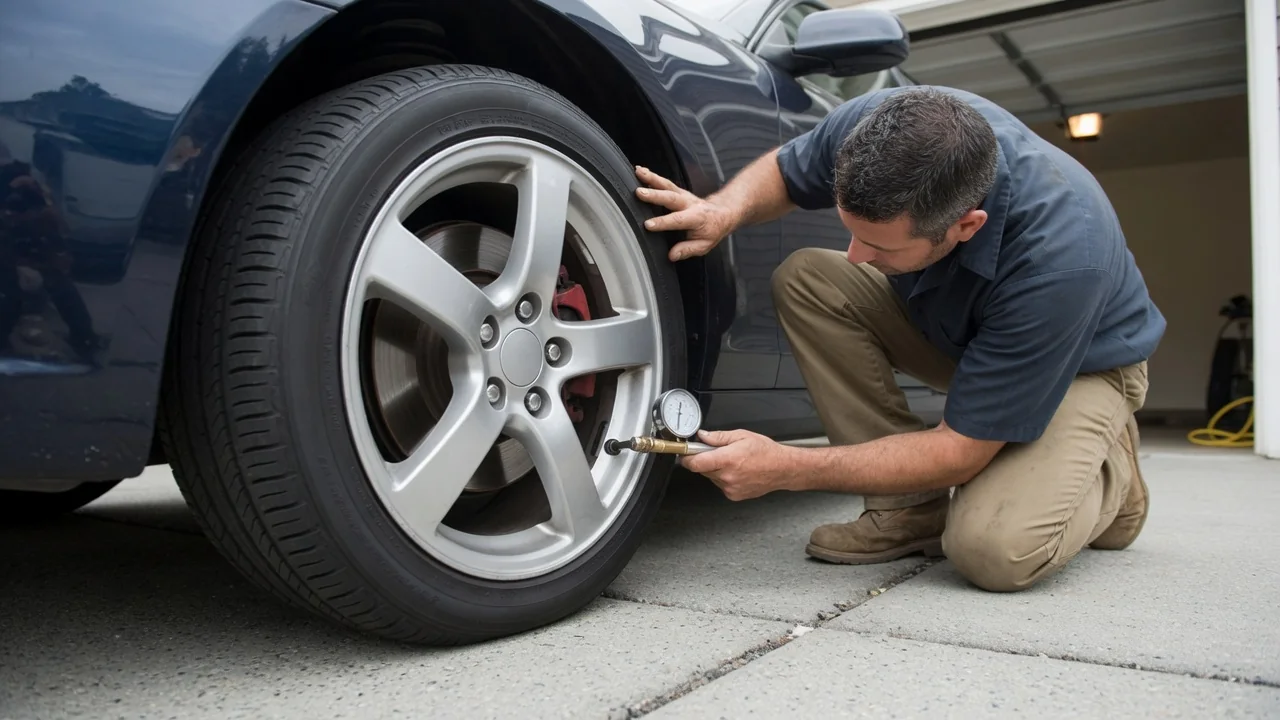
How does a tubeless car tire hold air without an inner tube? The answer lies in three seals working together: the bead pressed against the wheel rim, an airtight inner liner molded into the tire, and a valve fitted through the rim. The tire and wheel form a single pressure vessel, and understanding each seal makes slow leaks far easier to interpret.
Wheel fit
A tubeless tire depends on the wheel being part of the air chamber. Each edge of the tire, called the bead, contains a hoop of steel wire wrapped in rubber, and it has a slightly smaller diameter than the rim seat it rests on. When the tire is inflated during mounting, the beads slide outward over a raised hump and press tightly against the rim flanges. That interference fit, backed by air pressure pushing the bead outward, creates the main seal.
Wheel design influences how well that fit holds up. Passenger car rims have a center drop well that lets the bead be worked over the flange during mounting, plus safety humps that help keep the bead seated if pressure falls. Tire and wheel diameters and widths must match the ranges approved for each other, which vary by vehicle and are listed on the tire placard and sidewall. Readers can see the seating result as a thin molded guide line running evenly around the sidewall just above the rim edge.
Air retention
Inside the tire, a thin layer of specialized rubber called the inner liner takes over the job an inner tube once did. It is typically made from a butyl-based compound chosen because air passes through it very slowly compared with ordinary tread or sidewall rubber. The liner is bonded to the casing from bead to bead, so there is no separate part to chafe or pinch. Structural plies carry the load while the liner simply keeps the air in.
The valve completes the chamber. A rubber snap-in or metal clamp-in stem seals against the valve hole in the rim, and a small spring-loaded core inside it opens only when pressed by an inflator or gauge. Internal pressure helps hold the core closed, and the cap keeps out grit and moisture while acting as a secondary seal. Many vehicles mount a tire pressure sensor on the stem, so the hardware and its sealing grommets differ by make and model year.
Leak paths
Because the system has three seals, air has a small number of predictable escape routes. A nail or screw through the tread pierces the liner, though the rubber often grips the object and the loss stays gradual instead of sudden, one reason tubeless designs replaced tubes. At the bead, corrosion on an alloy rim, old rubber residue, or a small bend from a pothole can open a tiny channel. Valve stems can crack with age, and cores may weep if dirt lodges in them.
Some loss happens with no defect at all. Air slowly permeates even a healthy liner, and pressure drops as temperatures fall, so a reading taken on a cold morning will be lower than one taken on a warm afternoon. Less common paths include porosity in a cast wheel or damage to the liner from driving on a severely underinflated tire. A soapy water solution brushed over the tread, bead line, and valve shows bubbles where air escapes, which helps distinguish these sources.
Everyday Use and Observations
In daily driving, the clearest sign of how well the seals are working is how one tire compares with the other three. All four should lose pressure at a similar slow rate; one that repeatedly needs topping up points to a specific leak instead of normal permeation. Checking pressure with a gauge when the tires are cold, against the figure on the door-jamb placard, gives a consistent baseline. The sidewall's maximum pressure marking isn't the recommended setting.
A tire pressure warning light deserves the same careful reading. It is evidence that a sensor has reported low pressure or that the system has a fault, not proof that a tire is punctured, and how it behaves depends on the manufacturer. Direct systems measure pressure at each wheel, while indirect systems infer it from wheel speed, so reset steps and displays vary. Visual clues help too: white or green crust around the rim edge, a cracked stem base, or a missing cap all merit a closer look.
Limits and Next Steps
The sealing system has limits that inspection alone can't always reveal. Punctures in the central tread area can often be repaired properly from the inside by a tire shop, with the tire removed so the liner can be examined, while damage to the sidewall or shoulder generally can't be repaired safely. A tire driven flat may look normal outside yet have a scuffed, weakened liner. Aerosol sealants are temporary measures at best, and some can affect pressure sensors, so vehicle guidance should be checked.
When a leak persists, the sensible next step is a professional dismount and inspection instead of repeated topping up. A shop can clean corrosion from the bead seat, replace a valve stem or sensor seal, and check the rim for bends, tasks that require proper mounting equipment because seating a bead involves considerable stored energy. Rapid pressure loss, a visible bulge, or cords showing mean the tire shouldn't be driven on. Replacement choices should follow the size and load ratings specified for the vehicle.