Why Do Cars Have Door Drain Holes?
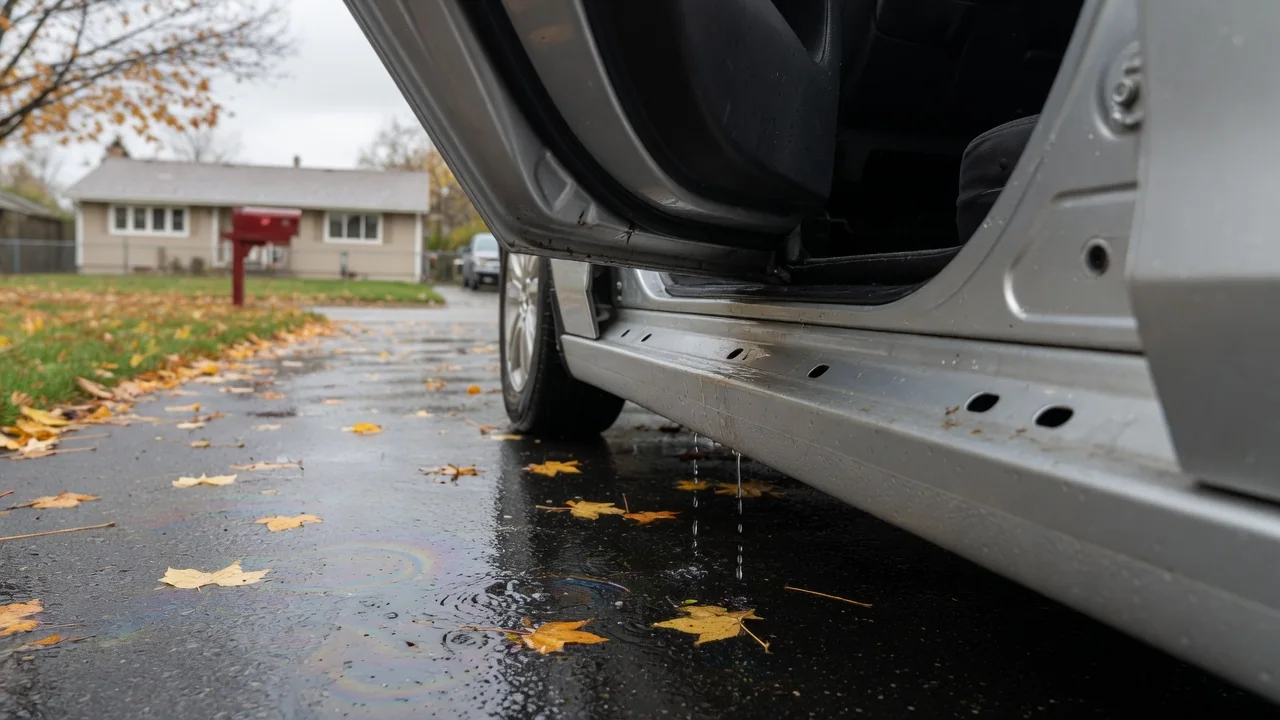
Many drivers are surprised to learn that water gets inside their doors every time it rains. So why do cars have door drain holes? Because the seal against the side glass is designed to wipe the window, not to make it watertight. The small openings along the bottom of each door give that expected water a way back out.
Door cavity
A car door is a hollow shell, not a solid panel. Between the outer skin and the inner frame sits a cavity that houses the window regulator, the glass when it is lowered, the latch, lock rods or cables, wiring, and often a speaker. Because the glass has to slide up and down through a slot at the top of the door, that slot can never be fully sealed. The rubber or felt strips at the beltline brush against the glass and shed most water, but some always slips past.
Manufacturers plan for this. Inside most doors, a plastic sheet or molded barrier sits behind the interior trim panel to keep moisture on the outer side of the cavity, away from the cabin and the upholstery. Water that runs down the glass follows the inner face of the outer skin and collects at the lowest seam. The exact layout differs between vehicles: frameless doors, doors with large speakers, and doors packed with side-impact structures all route water slightly differently, but the principle of a wet side and a dry side is common.
Drain outlets
The drain outlets are small openings along the bottom edge of the door, usually in the folded seam where the outer skin meets the inner frame. They may be simple round holes, narrow slots, or gaps in the hem sealer, and some vehicles fit them with small rubber flaps or plugs that let water out while limiting road dust and noise coming in. With the door open, they can usually be found by looking at or feeling along the underside, often near the front and rear corners.
Their placement follows gravity. Water inside the cavity runs to the lowest point, so the outlets sit where the door bottom dips, and many doors have more than one so the shell empties whether the car is parked nose up or nose down. The number, shape, and position vary by manufacturer and body style, and the lower weatherstrip may partly hide them. An owner's manual or a model-specific service reference is the reliable way to confirm where they are on a particular vehicle.
Cleaning
Drain holes are small, so they clog easily. Leaves, pine needles, pollen, and seed pods that settle at the base of the window get carried down past the glass, while road grime, mud, and wax or polish residue can build up from the outside. Rustproofing coatings and body-shop seam sealer applied after a repair can also bridge an opening. Once an outlet is blocked, water has nowhere to go and simply stands in the bottom of the door until it evaporates or finds another path.
Clearing them is normally gentle work. A soft plastic trim tool, a zip tie, or a pipe cleaner eased into the opening is usually enough to loosen packed dirt, and a low-pressure rinse along the door bottom shows whether water now runs freely. Sharp metal picks and drills are best avoided, because scratching the paint and factory coating inside the seam exposes bare steel exactly where moisture collects. Rubber flaps should be checked for stiffness and seated properly rather than pulled out and discarded.
Everyday Use and Observations
In normal use, working drains go mostly unnoticed. After a car wash or heavy rain, a few drips or a thin trickle from the bottom of an opened door is ordinary behavior, not a leak. It simply shows that water which entered past the glass is leaving the way the designers intended. Dirty streaks below the door bottom or on the sill can be the same thing: drained water carrying dust out of the cavity with it.
The signs of a blocked drain are more distinctive. A sloshing sound when the door swings or when the car pulls away suggests standing water in the shell. Other clues include persistent window fogging, a musty smell, damp carpet near the sill, a crackling or dead door speaker, sluggish power windows, or locks that freeze in cold weather. Rust bubbles along the lower door seam often point to moisture that sat there repeatedly. None of these proves a clogged drain on its own, since failed seals elsewhere can produce similar symptoms.
Limits and Next Steps
Drain holes handle the modest amount of water that normally passes the window seals; they are not a cure for every wet interior. If the outlets run freely and the carpet is still damp, the cause may lie elsewhere, such as a torn or poorly resealed moisture barrier behind the door trim, a worn door weatherstrip, blocked sunroof or cowl drains, or a windshield seal. Badly hardened or shrunken beltline strips can also admit more water than the door was designed to shed.
A sensible next step is a simple check with the doors open after rain, followed by gentle cleaning of any outlet that looks packed with debris. Water that has sat long enough to affect window motors, door modules, speakers, or airbag wiring deserves professional inspection, since removing door trim around side-impact components calls for vehicle-specific procedures. The same applies to visible corrosion along the seam, where a body shop can judge whether treatment or repair is warranted before the damage spreads.