How to Check Car Drain Holes Without Damaging Them
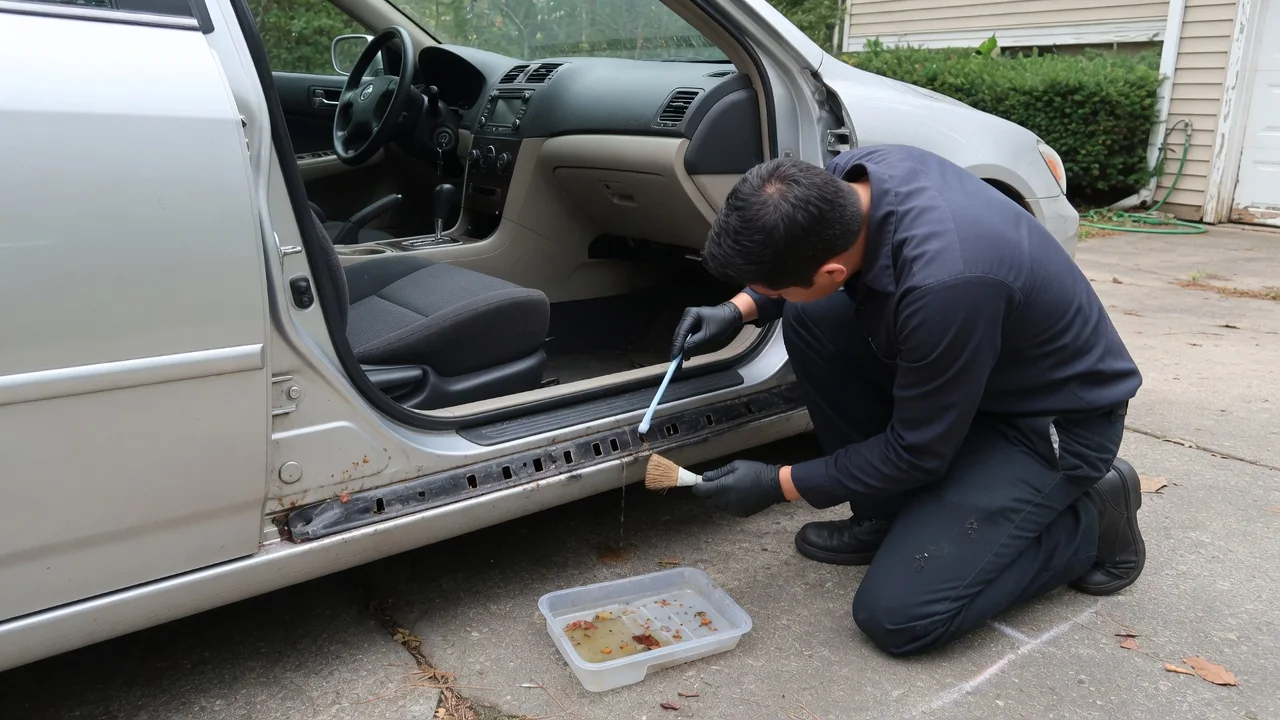
Drain holes are small openings that let water escape from doors, rocker panels, sunroof channels and the cowl before it can pool and cause rust or damp carpets. Learning how to check car drain holes without damaging them comes down to patience, good light and soft tools, because the paint, seals and tubes around these openings are easier to harm than the clog itself.
Locate openings
Start with the doors, since they are the easiest to inspect. Open each one and look along the bottom edge, where small slots or round holes sit in the folded seam, sometimes hidden behind a rubber flap or the lower weatherstrip. A flashlight held low and a small mirror help you see them without kneeling in the dirt. Rocker panels often have similar openings on their underside, and the trunk lid or liftgate usually has a few along its lower lip.
Other drains are less obvious. Sunroof trays typically have an outlet in each corner leading to tubes that run down the pillars, and the cowl below the windshield drains water away from the cabin air intake. The fuel filler pocket and convertible top wells may have their own outlets too. Positions, sizes and numbers differ widely between manufacturers and body styles, so the owner's manual or a body diagram for your specific vehicle is the most reliable guide to what should be there.
Remove debris
Most blockages are ordinary: leaf fragments, pine needles, seed pods, road grit and wax residue left behind after polishing. Begin by lifting away loose material with gloved fingers or a soft detailing brush, working outward so you are not pushing debris deeper into the cavity. Around the cowl and sunroof tray, a vacuum with a narrow nozzle held just above the surface collects dry leaves cleanly before they turn into a wet plug that is far harder to shift.
For the opening itself, a plastic cable tie, a wooden toothpick or a length of flexible trimmer line is usually enough to tease out packed dirt. Move it gently back and forth rather than stabbing, and stop if you feel firm resistance. A slow trickle of clean water from a squeeze bottle then confirms the result: you should see it leave promptly from the underside of the door or behind a wheel, depending on where that particular drain exits.
Avoid force
The edges of a drain hole are painted or coated steel, and that coating is the only thing standing between the seam and corrosion. Screwdrivers, drill bits, coat hangers and metal picks scrape it away in exactly the spot where water collects, so a cleared drain can become the start of a rust patch. Enlarging a hole to make it flow better carries the same risk and can also disturb the seam sealer applied at the factory.
Sunroof and cowl tubes need even more restraint. They are thin rubber or plastic hoses pushed onto small nipples, and a stiff wire can puncture them or a blast of high pressure compressed air can pop them off their fittings inside the pillar. When that happens, water drains straight into the headliner or footwell instead of outside. If air is used at all, keep it gentle and brief, and treat any rubber flap valve as something to lift carefully, not pull off.
Everyday Use and Observations
Day to day use gives plenty of clues about how well the drains are working. A sloshing sound from a door when you brake or corner suggests water trapped inside the shell. Fogged windows that take a long time to clear, a musty smell, damp carpet near the sills, or water stains on the headliner around the sunroof all point toward a restricted path. Drips from the bottom of the doors after rain or a wash are normal and reassuring.
Parking habits strongly influence how often checks are worthwhile. A car kept under trees collects needles and blossoms in the cowl and sunroof channels far faster than one stored in a garage, and gravel roads load the rocker openings with mud. A quick look during regular washing, especially in autumn and after winter, catches buildup while it is still loose. Wiping the lower door seams with a damp microfiber cloth at the same time keeps grit from settling back in.
Limits and Next Steps
Gentle cleaning has clear limits. If water still backs up after the visible opening is clear, the obstruction is probably deeper in a tube or cavity that cannot be reached safely from outside. A hose that has slipped off its fitting, a kinked tube or a collapsed flap valve will not respond to more poking, and persistent attempts tend to cause the damage you were trying to avoid. Repeated wet carpets also deserve attention because moisture can affect wiring and connectors under the floor.
At that stage a body shop or a workshop familiar with your model is the sensible next step, since reaching the tubes may involve removing trim panels, pillar covers or part of the headliner. It helps to describe what you observed: where water appeared, after what kind of weather, and which drains you already checked. Flaking paint, bubbling or brown staining around a drain opening should also be shown to a professional early, before corrosion spreads along the seam.