How to Carry a Stroller in a Car Without Damaging Trim
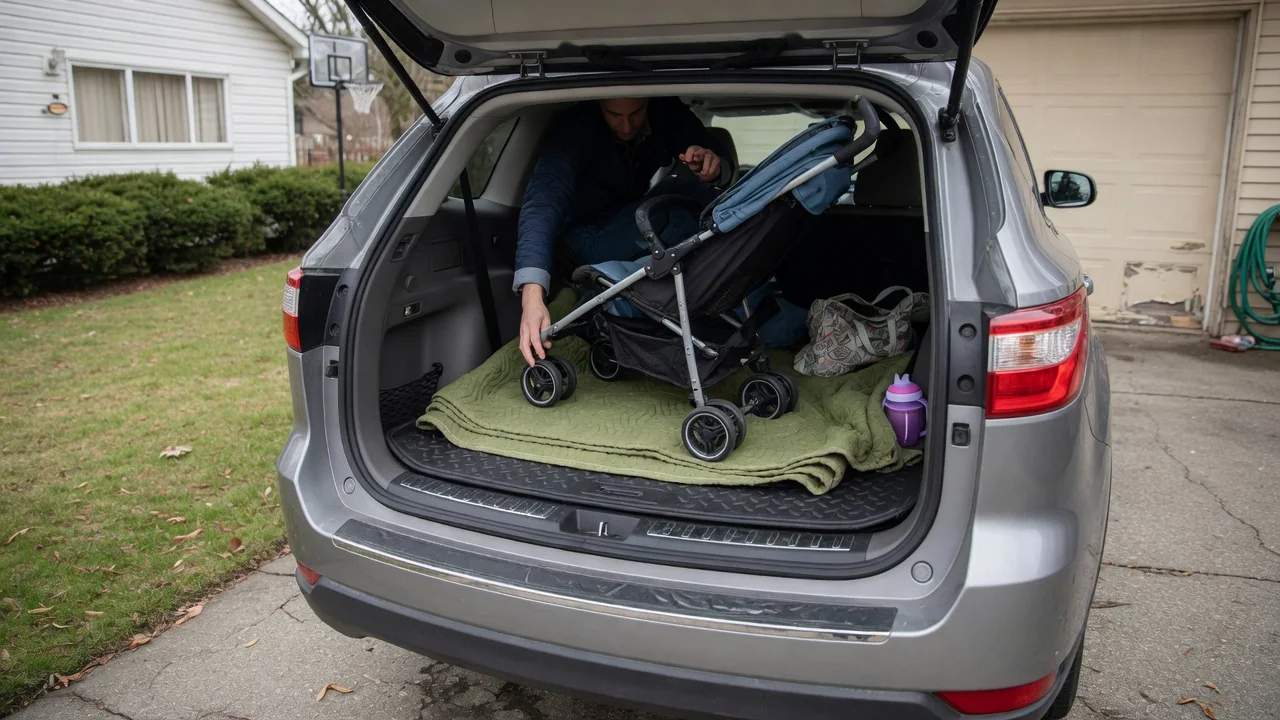
A folded stroller is one of the most awkward things a family car carries: heavy, angular, and full of metal corners that meet soft plastic and painted surfaces at every loading. Learning how to carry a stroller in a car without damaging trim comes down to three habits: knowing the space, cushioning the contact points, and keeping the load from shifting once the car moves.
Measure opening
Start with the cargo opening rather than the cargo floor, because the narrowest point decides whether the stroller slides in cleanly or scrapes on the way. Measure the width between the tail lamp housings or trunk gutters, the height from the load sill to the upper edge of the opening, and the depth to the rear seatback. Sedans usually have a smaller, higher aperture than hatchbacks or SUVs, so a stroller that fits the floor on paper may still need to be angled through the gap.
Then measure the stroller in its folded state, including wheels, handlebar, and any bumper bar or cup holder that sticks out. Compare the longest dimension against the opening diagonal as well as the straight width, since many frames only pass through when tilted. Note anything that narrows the space on your particular vehicle, such as wheel-arch intrusions, a cargo cover cassette, a subwoofer enclosure, or a raised lip at the sill. These details vary widely between body styles and trim levels.
Protect edges
Most stroller-related damage happens at a few predictable places: the painted top of the rear bumper, the plastic sill plate, the side panels beside the wheel arches, and the back of the rear seat. Wheels carry grit that acts like sandpaper on paint, while brake levers and folding latches gouge soft plastics. A bumper protector flap that folds out from a cargo liner, or simply a thick blanket draped over the sill during loading, keeps the frame from resting directly on those surfaces.
Inside the cargo area, a fitted rubber or carpeted liner protects the floor, and a moving blanket or foam pad against the side trim absorbs contact from axle ends. Padding the stroller itself also helps: a travel bag or a towel wrapped around the handlebar and wheel hubs covers the hardest points. Look for scuff marks already present, because they reveal exactly where the frame touches on your car. Glossy black and textured gray plastics show scratches differently, so check both in good light.
Secure it
A stroller that fits snugly can still mark the interior if it moves. Under braking and cornering, an unrestrained frame slides forward into the seatback or sideways into the trim panels, and repeated small impacts leave dents and rub marks. In a hard stop, a loose object in an open cargo area can also travel toward the passenger compartment. Position the stroller low and flat where possible, with the heaviest part against the rear seatback so it has nowhere to accelerate before contact.
Many vehicles provide tie-down rings in the cargo floor or side walls, and a cargo net, elastic strap, or adjustable webbing strap hooked to those points holds the frame steady. Use only anchor points intended for cargo, and avoid looping straps around trim pieces, seat belt hardware, or child seat anchors that are in use. Engage the stroller's fold lock so it cannot spring open, and set the wheel brakes if that stops the wheels rolling against the liner. Anchor locations and ratings are listed in the owner's manual.
Everyday Use and Observations
Daily routines matter more than a single careful loading. Lifting the stroller clear of the bumper instead of dragging it across the sill prevents the long, shallow scratches that accumulate over months. Loading wheels-first or handle-first makes a difference depending on the fold design, so try both and settle on the orientation that clears the opening with the most margin. Brushing or knocking mud and gravel off the wheels before loading keeps abrasive debris out of the carpet and off the plastics.
Pay attention to what the car tells you during normal driving. A thump under braking, a rattle over bumps, or a creak from the cargo area means the stroller is moving and touching something. After a few weeks, inspect the usual contact points for dull patches, white stress marks in plastic, or fraying on the seatback fabric. If groceries or luggage share the space, load the stroller first and pack softer items around it, rather than balancing it on top where it can tip.
Limits and Next Steps
Some combinations simply do not work well. A full-size or double stroller may not fit a compact trunk without folding a rear seat section, removing the wheels, or taking off the seat unit, and forcing it through a tight opening is how trim gets cracked. Carrying it in the passenger cabin is a poor substitute unless it can be properly restrained, and it should never obstruct a child seat, a seat belt buckle, or the driver's rearward view. Always confirm the tailgate or trunk lid closes without pressing on the frame.
If the fit remains marginal, consider practical changes before the damage adds up. A more compact folding stroller, a purpose-made travel bag, or a vehicle-specific cargo liner with a bumper flap can each solve a recurring problem. Existing scuffs on textured plastic can sometimes be improved by a detailer, while deeper gouges or scratched paint may need professional attention. For questions about tie-down capacity, seat folding, or roof and hitch carrier options, the owner's manual and the dealer are the right references for your specific vehicle.