Car Door Drain Holes: Where They Are and How to Clear Clogged Ones
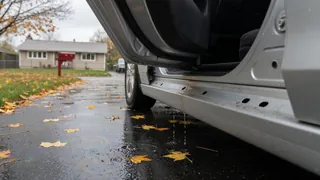
Water collecting inside a door often points to blocked car door drain holes. These small openings let rain, wash water, and condensation escape from the lower door cavity before it soaks trim panels, damages speakers, or feeds corrosion. Locating the drain holes in a car door and clearing them can be straightforward, but the exact position differs by body style, model generation, and trim level. The fix usually involves removing debris from small slots or slits along the bottom edge, then confirming water flows out freely rather than remaining trapped.
Direct answer
Car door drain holes are narrow slots, slits, or small openings along the bottom edge or lower inner face of each door. They provide a controlled path for water that enters past the belt molding, glass run channels, or inner panel fasteners. When they work, water leaves quickly and helps shield the door cavity, wiring, latch rods, and moisture-sensitive components from standing water. If they become clogged with dirt, leaf fragments, or degraded adhesive, water can rise until it seeps past the inner weather barrier and soaks the carpet.
A useful first response is to inspect every lower door edge while the door is open. Many vehicles place two or more drain openings near the front and rear corners, but some designs group them toward the center. If you cannot find a clear slot from below, bend down and look for a dark opening or a small flap that may be partly closed by grime. Clearing a suspected blockage may restore drainage, but a wet door should also be checked for other leak sources around the glass seal or door-mounted speakers.
Identification and location
The location varies because a door shell is shaped around crash beams, electric window regulators, latch mounting surfaces, and interior trim attachment points. Drain holes in car doors are often positioned where the outer skin meets the door hem, which is the folded seam at the bottom. Some automakers use visible round holes, while others press narrow scallops into the lower pinch weld. A Toyota Corolla may show drains in a small reinforced section beside the front or rear door seam, but the exact layout can change with model year, body style, and market specification.
To identify the correct openings, wipe the lower lip with a cloth and look for gaps that interrupt the hem. If dirt covers the area, use a soft brush or a gentle spray of water to expose recessed slots. Avoid mistaking rubber body plugs or wiring grommets for drain holes; those are usually solid and set into the inner panel rather than the lowest edge. When a door has been repaired or repainted, undercoating or seam sealer can also cover the opening, making careful scraping around the likely low spots necessary before you attempt to clear it.
Look-alike features can confuse the inspection. Some vehicles have oval access holes for window regulator service, while others have oval slots that genuinely release water. Shining a light behind the lower door edge can indicate whether the hole passes through the shell. If water comes from only one side after rain, compare the matching door on the opposite side to see the intended pattern. This comparison is often the fastest way to recognize a blocked drain that has been sealed by hardened dirt instead of lacking an obvious opening.
How to proceed
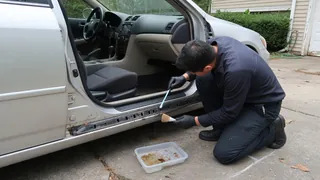
Before clearing car door water drain holes, protect the paint and surrounding trim. Use a plastic trim tool, a narrow soft stick, or a short length of cable tie rather than a metal screwdriver. Push the tool gently into the slot and move it sideways only a short distance to break up silt and leaf debris. Rotate the tool lightly if the opening is round, then pull it back to avoid forcing material deeper into the door cavity. Do not use high-pressure air aimed upward because it can blow debris past the inner moisture barrier or tear speaker cones and electrical connectors.
After probing, pour a small amount of clean water along the outside of the glass while the door is closed, then open the door and watch the lower edge. The water should drip or stream from the drain openings, not from behind the trim panel or around the speaker. If flow is slow, repeat the gentle tooling and flush again with a mild stream that follows the outside of the glass. If water remains trapped or drains behind interior surfaces, the issue may include a deformed door shell, failed weather-resistant membrane, or an unrelated seal leak requiring vehicle-specific inspection.
Preventing future clogs is usually easier than dealing with a soaked cabin. Keep the lower door lip free of heavy mud and leaf buildup, and check the openings after dusty roads or autumnal debris. If you park under trees, clear the cowl area and door jambs so organic matter cannot wash directly across the glass and into the door. Recurrent blockage may mean a missing inner shield or a damaged belt molding is allowing extra debris to enter, and those conditions should be corrected before they lead to rust or electrical faults in the lock or window circuit.