Why Do Old Cars Need Drain Holes Checked?
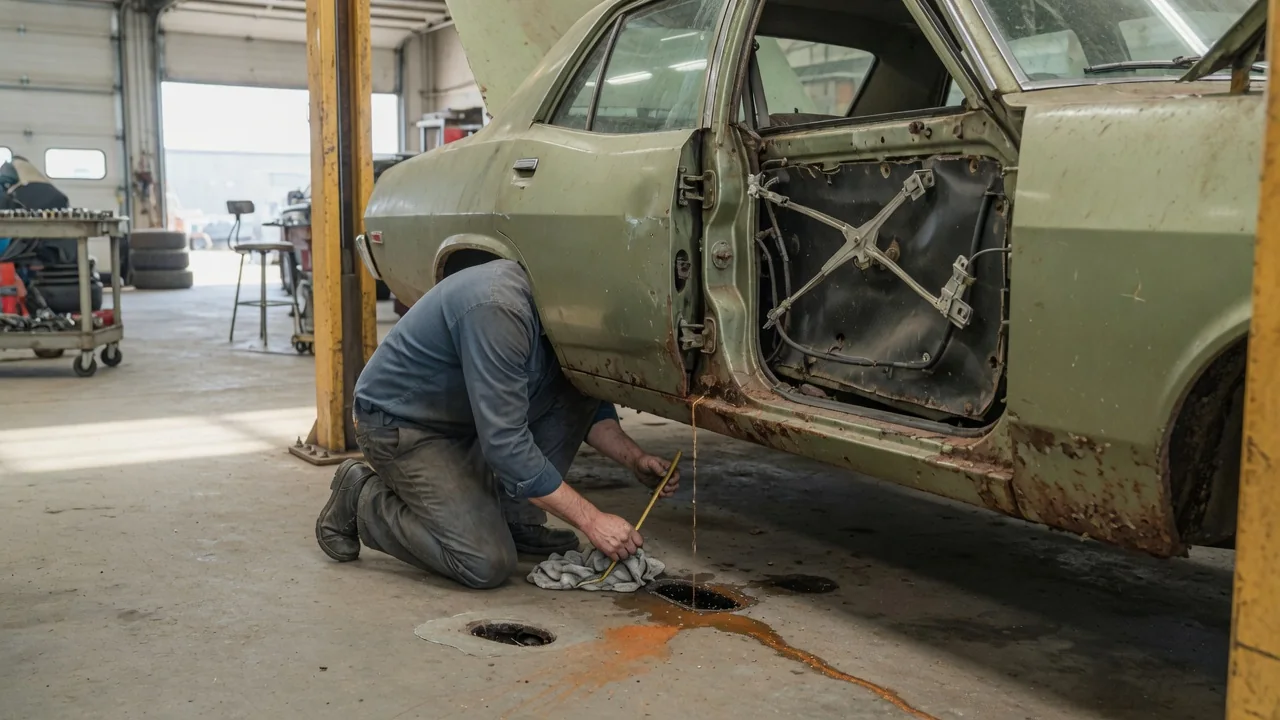
Old cars are good at collecting water in places owners rarely look. Doors, rocker panels, cowls, trunks and floors are designed to let moisture in and then let it out again through small drain holes and channels. When those openings clog, water sits against steel for weeks at a time. Checking classic vehicle drain holes is one of the simplest ways to slow hidden corrosion. Understanding why it matters helps owners decide where to look and how carefully to clean.
Water Paths
Most car bodies are not sealed boxes. Water reaches the inside of panels both by design and by accident. Rain runs down the side glass and past the window weatherstrip into the door shell. The cowl area below the windshield collects water and debris from the hood and glass. Trunk lids, tailgates and hatches use channels and gutters that guide water away from the opening, and sunroofs or convertible tops typically rely on drain channels or tubes. Condensation also forms inside enclosed cavities as temperatures change between day and night.
Manufacturers generally plan for this by giving water a downhill route out. Drain holes or slots are usually placed at the lowest points of doors, rocker panels, quarter panels, tailgates and some floor areas, sometimes fitted with rubber valves, flaps or removable plugs. The exact locations, shapes and number vary widely between vehicles, so a factory service manual or body diagram for the specific car is the best guide. The general principle stays the same: water should enter, run down and leave before it has time to settle.
Over decades, those exits are easily blocked. Road dirt, leaves, pine needles, sand and rust scale settle at the bottom of cavities. Undercoating, seam sealer, paint or cavity wax from earlier repairs can bridge over holes, and replacement panels or patch work sometimes leave them out entirely. Rubber drain valves can harden or stick shut. Once an exit is closed, the cavity becomes a reservoir.
Rust Risk
Steel corrodes fastest when it stays wet and has access to oxygen and dissolved salts. A clogged drain creates exactly that condition: standing water, or a damp mat of debris that holds moisture against the metal long after the outside of the car has dried. Packed debris is often worse than open water because it rarely dries out completely, and it can hold road salt picked up during winter driving or carried by coastal air.
The lowest seams of a body are also among its most vulnerable areas. Inner and outer panels meet at hems and spot-welded flanges, where coatings may be thin and where moisture can wick between layers. Many older vehicles have less corrosion protection inside their cavities than newer designs, and whatever protection they had may have worn away with age. Because this kind of corrosion starts on the inner surface, it often stays invisible until paint begins to bubble along a door bottom, rocker or wheel arch. By that point, the metal behind the blister may already be thin or perforated.
Blocked drains can also send water somewhere it was never meant to go. A plugged cowl or sunroof drain may overflow into the passenger compartment, soaking carpet, padding and floor pans from above. Wet carpet underlay holds moisture against the floor in the same way debris does inside a sill, and the damage can spread unnoticed beneath otherwise tidy upholstery.
Cleaning
Start by finding the drains. Look along the underside of each door, the bottom of the rocker panels, the lower edges of quarter panels and tailgates, the cowl area under the wiper or vent panel, the trunk floor and the gutters around lids and sunroofs. A flashlight and a small inspection mirror make the job easier. On some cars, floor openings carry plugs that are meant to stay in place, so confirm the intended function of an opening before removing anything.
Clear blockages with tools that are softer than the paint. A plastic trim tool, a nylon cable tie, a pipe cleaner or a length of flexible plastic line can break up packed dirt without scraping coatings. Avoid screwdrivers or stiff wire pushed hard against the hole edge, because chipped paint at a drain opening exposes bare steel right where water collects. Low-pressure compressed air or a gentle flush of clean water from inside the cavity, where access allows, can move loosened debris out. Sunroof and cowl drain tubes need particular care, since pushing too hard can disconnect a tube and create a new leak.
Afterward, confirm that water actually leaves. Pour a small amount of water into the cavity, channel or gutter and watch for steady flow from the outlet. Slow or no drainage suggests a remaining clog or an opening buried under coating. If cavity wax or a rust-preventive product is applied later, keep it from sealing the drains, and recheck them once the product has set.
Practical Implications and Limits
For an owner, the value of drain checks lies in timing more than effort. Inspecting drains before a car goes into storage, after a wet season, after parking under trees and after any bodywork catches problems while they are still a matter of debris rather than metal repair. A car that sits for long periods can be more exposed than one driven regularly, because trapped moisture has nowhere to go and nobody notices a damp carpet or a sloshing sound in a door.
During restoration, drains deserve attention at every stage. Painters, panel installers and anyone applying undercoating or seam sealer should know where the openings are so they can be masked or reopened. Comparing a replacement panel with the original before fitting helps confirm that drain locations carry over. Drilling new holes is not a substitute for restoring the intended ones, since placement affects both drainage and panel strength, and a hole in the wrong spot can let water in rather than out.
There are limits to what this maintenance can achieve. Clearing a drain stops new water from pooling, but it does not reverse existing corrosion, and a panel that has rusted from the inside may still need repair. Drains also cannot compensate for failed window seals, cracked weatherstrip or a leaking windshield, which can admit more water than an outlet is meant to handle. An open hole shows that water can leave, not that the cavity behind it is sound; an inspection camera or a careful look behind a removed trim panel gives a better picture of hidden metal. Drain checks work best as one routine part of keeping an old body dry.