Why Do Cars Have Daytime Running Lights?
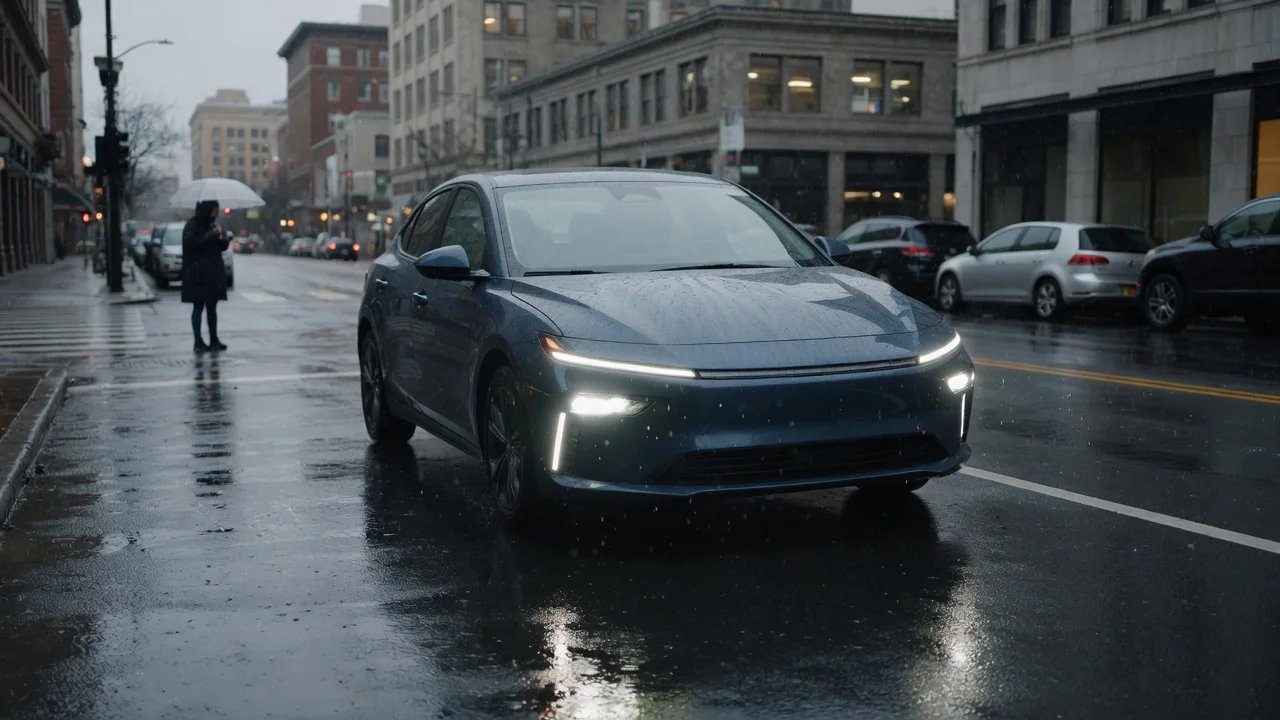
Anyone who has wondered why do cars have daytime running lights can start with a simple answer: they help other road users notice a moving vehicle sooner. These forward-facing lamps are meant to make the car conspicuous in daylight, not to light the road ahead. Understanding how they behave, and where they stop being useful, helps drivers use their lighting correctly.
When they illuminate
Daytime running lights generally switch on by themselves once the engine is running or the vehicle is ready to drive, without any input from the headlight switch. On many cars they come on as soon as the parking brake is released or the transmission leaves park, while others light them the moment the ignition is on. The idea is that the driver never has to remember them, so the vehicle is marked out to oncoming traffic, pedestrians and cyclists from the start of every trip.
The exact triggers differ between manufacturers and markets. Some vehicles dim or switch off the running light on one side while that turn signal flashes, so the amber indicator stands out more clearly. Others reduce the brightness when the main headlights come on and reuse the same LED strip as a position lamp. A few allow the function to be disabled through a menu or switch position. The owner's manual is the reliable reference for how a particular car behaves.
Difference from full headlights
The central difference is purpose. Low beam headlights are shaped to throw a controlled pattern onto the road so the driver can see lane markings, obstacles and signs after dark. Daytime running lights are aimed at being seen from ahead, so their output is spread toward other road users instead of onto the pavement. Depending on the design, they may be a dedicated LED strip, a reduced-power high beam filament, or a brighter setting of the front turn signal or position lamp.
A second difference catches many drivers out: on a large number of vehicles the running lights operate only at the front. The tail lamps, side markers and license plate lamp may stay dark, which leaves the car hard to see from behind in dusk, rain or fog. The instrument panel can add to the confusion, because modern displays are often backlit all the time and look the same whether or not the full lighting system is actually switched on.
Driver checks
A quick walk-around confirms what the car is really doing. With the vehicle running and safely parked, a driver can look at the front to see which lamps are lit, then step to the rear to see whether the tail lamps are on at the same time. Reflections in a garage door or shop window work as a rough check when no helper is available. Uneven brightness, flickering or one dark side is worth noting, since both sides should normally match.
Inside the cabin, the headlight switch position and the dashboard symbols tell the rest of the story. Many cars show a green lamp symbol when the low beams and tail lamps are active, and some display a separate indicator for the running lights. If the switch has an automatic setting, it helps to know whether it has been left there or turned to off. Symbol designs and switch layouts vary, so the manual should settle any uncertainty about what each indicator means.
Everyday Use and Observations
In ordinary driving the benefit shows up in situations where a vehicle blends into its background. A gray car against a wet road, a dark vehicle emerging from tree shade, or traffic approaching with a low sun behind it can all be harder to pick out than expected. A lit front end gives other drivers an earlier cue when they are judging a gap to pull out of a side street or deciding whether there is room to pass on a two-lane road.
Drivers will also notice that not every vehicle on the road behaves alike. Some regions require running lights on new vehicles while others simply permit them, so older or imported cars may have none at all. Styling plays a part too, with manufacturers using distinctive light signatures that make a model recognizable at a distance. Brightness can appear to change between bright noon sun and an overcast afternoon, which is usually a matter of contrast with the surroundings.
Limits and Next Steps
Running lights are not a substitute for headlights. They do not light the road well enough for night driving, and where the rear lamps stay off they leave the vehicle poorly marked from behind. Rain, fog, snow, tunnels, dawn and dusk all call for low beams, and many jurisdictions require them whenever the wipers are in use or visibility drops. Automatic headlight systems help, but their light sensors can react slowly in daytime fog or spray, so a manual switch to low beams is the safer habit.
When a running light stops working, the cause is not always the lamp itself. A blown fuse, a relay or control module fault, wiring damage or a corroded connector can produce the same symptom, and LED units on some vehicles are serviced as an assembly instead of a single bulb. A warning message or stored fault code points toward a circuit to investigate, not to a confirmed failed part. A qualified technician with vehicle-specific information can confirm the cause and whether local rules require the lights to work.