Why Does a Car Have a Brightness Dimmer?
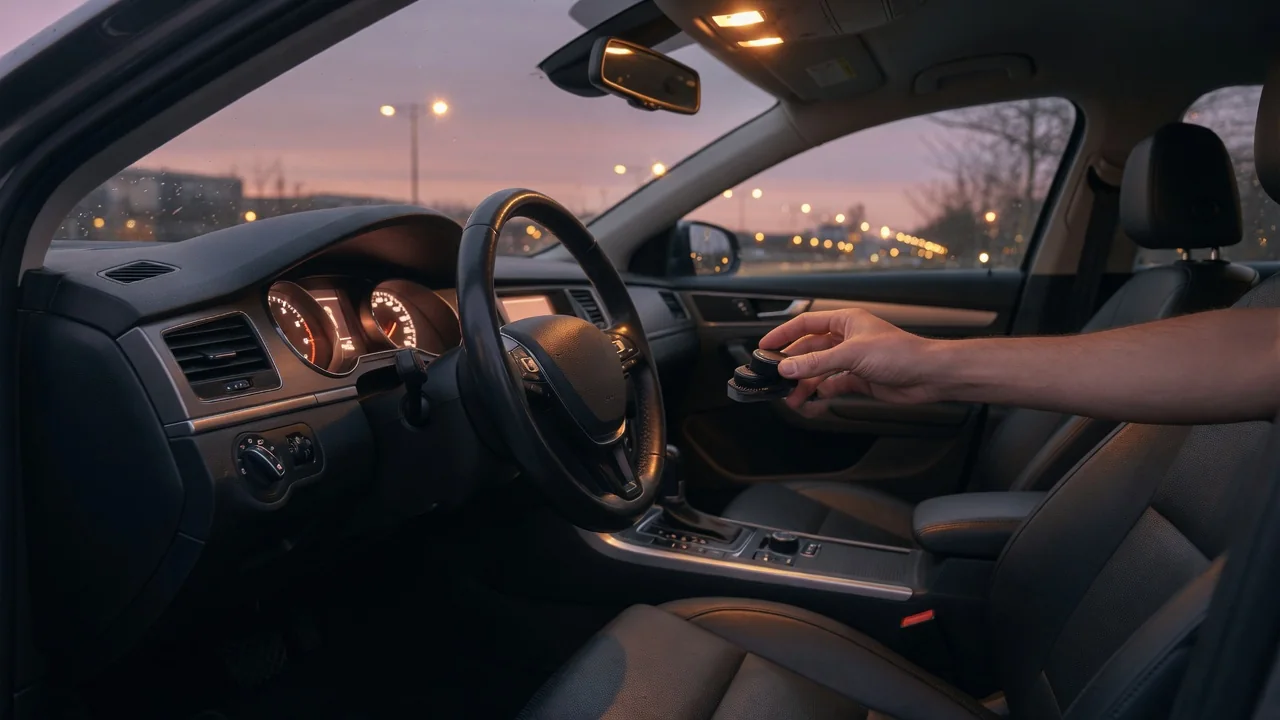
Why does a car have a brightness dimmer? The short answer is night vision. Eyes adapted to a dark road are easily overwhelmed by a bright instrument cluster, and a panel set too dim becomes unreadable at dusk. The dimmer lets each driver balance gauge legibility against glare, keeping attention on the road ahead rather than on the dashboard.
Dimmer range
The dimmer typically covers a span from barely visible to full output, and that range exists because driving conditions vary so widely. On an unlit rural highway, pupils open wide, and even modest gauge lighting can feel harsh and reflect in the windshield or side glass. In a well-lit city, the same low setting may make the speedometer hard to read. A wide adjustment range lets the driver match panel lighting to the darkness outside rather than accepting one compromise level.
What the control looks like differs by vehicle. Some cars use a thumbwheel near the headlight switch, others a stalk-mounted knob, buttons on the cluster, or a menu inside the infotainment system. On many vehicles the top of the range includes a detent or separate position that switches on the interior dome lights or forces full daytime brightness. Because these layouts are manufacturer-specific, the owner's manual is the reliable reference for where the range begins and ends on a particular model.
Screen behavior
Modern cabins add touchscreens and digital clusters to the traditional backlit gauges, and these large displays can be the brightest objects in the car at night. Many vehicles respond by switching the screen to a darker color scheme when the headlights come on, or by using an ambient light sensor to lower output as the surroundings darken. The dimmer then fine-tunes brightness within that night mode, so the map or audio display stays readable without flooding the cabin with light.
Drivers may notice that the screen and the gauges do not always follow the same control. In some vehicles one dimmer governs everything, including switch illumination and climate controls; in others the central display has its own brightness setting in a menu, and a head-up display may have a third. A screen that suddenly dims when headlights are switched on during the day is usually this automatic night logic at work rather than a malfunction.
Setting troubleshooting
When instrument lights seem too dark or appear dead, the dimmer setting itself is the first thing to check. A wheel bumped to its lowest position while reaching for the headlight switch is a common reason for a dark dashboard at night. Turning the control through its full travel with the headlights on shows whether the lighting responds. If the screen is dim in daylight, check whether the headlights are on manually, since that can hold the displays in night mode.
Observations help narrow down anything that an adjustment does not fix. If every illuminated control stays dark while the exterior lights work, the cause could lie in the dimmer circuit, a fuse, or the switch, though that needs proper diagnosis before any part is blamed. If only one gauge or button is dark, an individual light source is the more likely suspect. Flickering that changes as the control moves points toward the control, but confirmation is a job for vehicle-specific testing.
Everyday Use and Observations
In daily driving, the best setting is usually the lowest one at which the gauges can be read at a glance. A useful test on a dark road is to look for reflections of the cluster or screen in the windshield and side windows; if they are noticeable, the panel is probably brighter than necessary. Lowering it a step or two often makes the road beyond the headlights look clearer, simply because the eyes are no longer adjusting to a bright foreground.
Needs shift with the trip and the driver. Twilight, tunnels, and brightly lit streets may call for more illumination, while long night stretches on empty roads favor less. Older drivers, or anyone wearing glasses that catch stray reflections, may prefer different levels than other people who share the car. Some vehicles store brightness with a driver profile or remember separate day and night values, while others keep whatever position the control was last left in.
Limits and Next Steps
A dimmer manages interior lighting only, and it cannot solve every night visibility complaint. Glare from oncoming headlights, a hazy film on the inside of the windshield, or worn wiper blades affect vision far more than gauge brightness does. Certain warning lamps and indicators are also designed to stay at a fixed intensity regardless of the dimmer, so that an important alert is never turned down out of sight. How many items remain fixed depends on the manufacturer.
If the lighting still seems wrong after the control and any display menus have been checked, the next step is the owner's manual, which explains how that vehicle links headlights, sensors, and brightness settings. Persistent problems such as a panel that will not illuminate, erratic flicker, or a screen stuck at one level deserve inspection by a qualified technician, who can test the circuit rather than guess. Until then, driving at night with unreadable gauges is worth avoiding.