What Is a DRL Resistor or Driver?
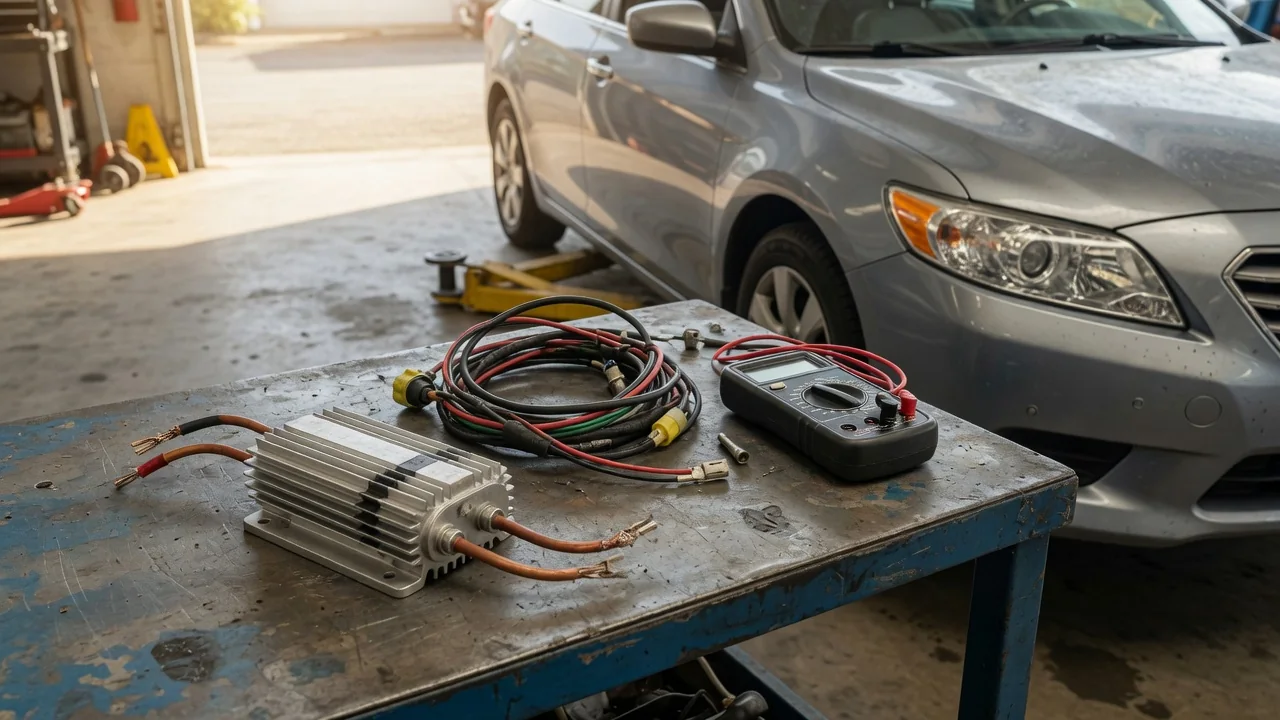
Drivers who ask what is a DRL resistor or driver are usually looking at a daytime running light that is dim, flickering, or dark. Both parts manage the electrical energy reaching the lamp, but they do it in different ways. A resistor drops voltage as heat, while a driver regulates current electronically. Which one a vehicle uses depends on its lighting design.
Lamp power
Daytime running lights are meant to make a vehicle more visible, not to light the road, so many designs run the lamp at less than full output. On some older vehicles with halogen bulbs, the high-beam or low-beam filament is fed through a series resistor that drops part of the system voltage. The filament glows at reduced intensity, draws less current, and the resistor sheds the difference as heat, which is why it is often mounted on metal away from plastic parts.
LED daytime lamps have different needs. A light-emitting diode is sensitive to current rather than voltage, and a small rise in supply voltage can push far more current through it than it can tolerate. A driver, sometimes called an LED control unit or ballast-style module, holds that current steady as charging-system voltage shifts with engine speed and electrical load. Some drivers also dim the LEDs by switching them on and off rapidly, a method known as pulse-width modulation, which the eye sees as lower brightness.
Module role
In many modern vehicles, a body control module or dedicated lighting module decides when the daytime lamps operate. It may look at ignition status, parking brake position, gear selection, ambient light, and the headlight switch before commanding the lamps on. In a resistor-based circuit, the module or a relay simply routes power through the resistor. In an LED system, the module typically sends a command or a pulsed signal to the driver, which then supplies the regulated current.
The module often monitors the circuit as well. It can compare expected current draw with what it measures, and if the result falls outside its window, it may store a fault code or show a lamp-out warning. That code points to a circuit condition, not to a confirmed failed part; a corroded connector, poor ground, or damaged wire can produce the same result as a weak driver. Code meanings and the monitoring strategy differ between manufacturers, so vehicle-specific service information is needed to interpret them.
Service
Diagnosis usually begins with simple observation: which lamp is affected, whether both sides share the symptom, and whether the headlights still work normally in their regular mode. A technician then checks fuses, power and ground at the lamp, and connector condition before blaming a resistor or driver. Resistors can crack, corrode, or go open after years of heat cycling, while drivers can suffer from moisture intrusion or internal electronic failure. Each fault leaves different evidence, so testing matters more than guessing.
How the part is serviced depends heavily on the vehicle. Some resistors are separate components bolted to the body or radiator support, and some drivers are small modules attached to the outside of the headlamp housing. In other designs, the driver or LED board is sealed inside the assembly and is not offered separately, so the whole lamp unit may be the available repair. A resistor that has been operating can be hot enough to burn skin, and lighting circuits should be worked on according to the manufacturer's procedures.
Everyday Use and Observations
Most owners never think about this part until something changes. A healthy system shows two daytime lamps of equal brightness and color that come on shortly after startup and dim or switch off when the headlights take over, depending on the design. On vehicles where the LED strip doubles as a turn signal or parking light, the driver changes output levels for each function, so the same strip may look bright by day and softer at night.
Warning signs tend to be visual. One lamp appearing dimmer than the other, a flicker at idle, a strip with dark segments, or a lamp that works intermittently after rain can all suggest a current-control or connection issue. A dashboard message may accompany these symptoms on vehicles that monitor the circuit. Flicker seen only through a phone camera is often just the pulsed dimming showing up on video and is not necessarily a fault. Noting when the symptom occurs helps whoever diagnoses it later.
Limits and Next Steps
A general explanation can only go so far, because daytime running light circuits vary widely. Some vehicles use a dedicated lamp, others run a headlight filament at reduced power, and others have no separate resistor or driver at all because the control module regulates output itself. Aftermarket LED bulbs complicate things further; fitted to a circuit designed for halogen, they can trigger bulb-out warnings or flicker, and the add-on load resistors sold to correct this are a different item from a factory DRL resistor.
The sensible next step is to identify how the specific vehicle is built. The owner's manual describes how the daytime lamps should behave, and a wiring diagram shows whether a resistor, a driver, or a module output feeds them. If a lamp is out or a warning appears, a scan of stored codes combined with basic electrical testing gives a far clearer picture than replacing parts on suspicion. Because lighting rules differ by region, any repair should restore the original function rather than alter it.