What Are Side Marker Lights on a Car?
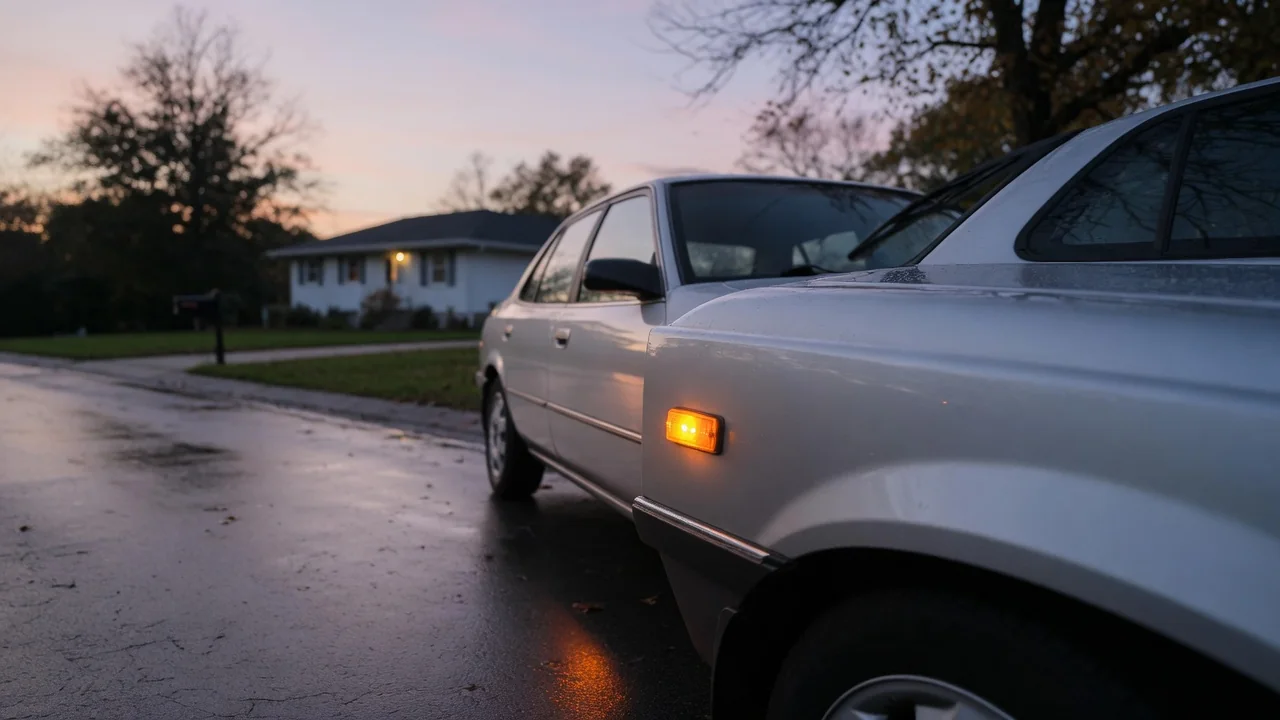
If you have ever wondered what are side marker lights on a car, they are the small lamps and reflectors mounted near the front and rear corners that make the vehicle's length and position visible from the side. They do not light the road; they help other drivers recognize a vehicle that is crossing, turning, or merging in darkness.
Typical placement
On most passenger vehicles sold in the United States, side markers sit near the four corners of the body. The front units glow amber and are usually found on the fender just behind the bumper, in the bumper cover itself, or built into the outer edge of the headlamp housing. The rear units glow red and typically appear on the quarter panel, the bumper corner, or the wraparound portion of the tail lamp assembly, where the lens curves toward the side.
Designs vary enough that the lamps can be easy to miss. Some cars use a separate small lens set into the fender, while others hide the marker function behind a clear or tinted section of a larger lamp cluster. Longer vehicles such as pickup trucks with dual rear wheels, trailers, and vans may carry additional markers midway along the body. Imported or older vehicles may follow different conventions, so the owner's manual or the lamp diagram for that specific model is the reliable reference.
Relationship to parking lamps
Side markers and parking lamps are related but not identical. Parking lamps face forward and rearward at low intensity to outline a stationary or slow-moving vehicle, while side markers face outward so the same outline can be seen from a perpendicular angle. On many vehicles the two share a circuit, which means turning the headlamp switch to its first position, or letting automatic lighting take over at dusk, illuminates the parking lamps, tail lamps, and side markers together.
Sharing can go further than wiring. A single bulb or LED module in a wraparound housing may serve as both parking lamp and front side marker, with the lens shaped to throw light forward and sideways. On some models the front marker also flashes with the turn signal, either in step with it or alternating, while on others it stays steady. Because these arrangements depend on the manufacturer, watching the lamps while a helper operates the switch shows how a particular car behaves.
Inspection
Checking side markers takes only a few minutes. With the vehicle parked safely and the exterior lights switched on, walk around each corner and look at the lamps from the side rather than from directly ahead or behind. Each marker should glow steadily with color that matches its partner on the opposite side. A dim, flickering, or dark lamp, or one that looks noticeably different in brightness, points to something worth investigating, though appearance alone does not identify the cause.
The lens deserves the same attention as the light source. Cracks, cloudiness, fading, and moisture trapped inside the housing all reduce output and can let corrosion reach the socket or connector. Many markers also incorporate a reflector that works even when the lamp is off, so a missing or badly weathered lens removes both functions. Some vehicles display a bulb-out warning on the instrument panel, but not every model monitors these small lamps, so a visual walkaround remains the dependable check.
Everyday Use and Observations
In daily driving, side markers earn their keep at intersections, driveways, and parking lots. A car pulling out of a dark side street presents its flank to approaching traffic, and headlamps aimed forward do little to announce it. The amber glow at the front corner and red at the rear tell an oncoming driver which way the vehicle is pointed and roughly how long it is, information that helps with judging gaps during lane changes on unlit highways as well.
Owners often notice these lamps indirectly. A reflection in a garage wall or a neighboring car's door may reveal that one corner is dark, or a passenger may point out a flashing marker during a turn. Vehicles parked along a narrow street at night are easier to spot when their reflectors catch passing headlamps. Dirt, road salt, and snow packed around the bumper corners can mask the lenses, so wiping them during a wash or fuel stop keeps the side outline visible.
Limits and Next Steps
Side markers have clear limits. They are low-intensity position lamps, not a substitute for headlamps, turn signals, or hazard flashers, and they cannot make up for poor visibility in heavy rain or fog. Aftermarket changes carry risk too: smoked lenses, clear lenses with the wrong color bulb, or deleted markers can reduce conspicuity and may conflict with lighting regulations or inspection requirements, which differ by state. Replacement parts should match the original color and function for the vehicle.
When a marker stops working, the bulb is only one possibility. A corroded socket, damaged wiring, a blown fuse, a failed LED module, or a fault in a body control module can produce the same symptom, and a stored fault code, where one exists, is a clue to interpret rather than a verdict on any single part. Access also varies, with some lamps reachable from the wheel well and others requiring trim or bumper removal. The owner's manual or a qualified technician can confirm the right approach.