Why Are Car Lights Aimed at the Factory? Beam Pattern, Adjustment and Final Check
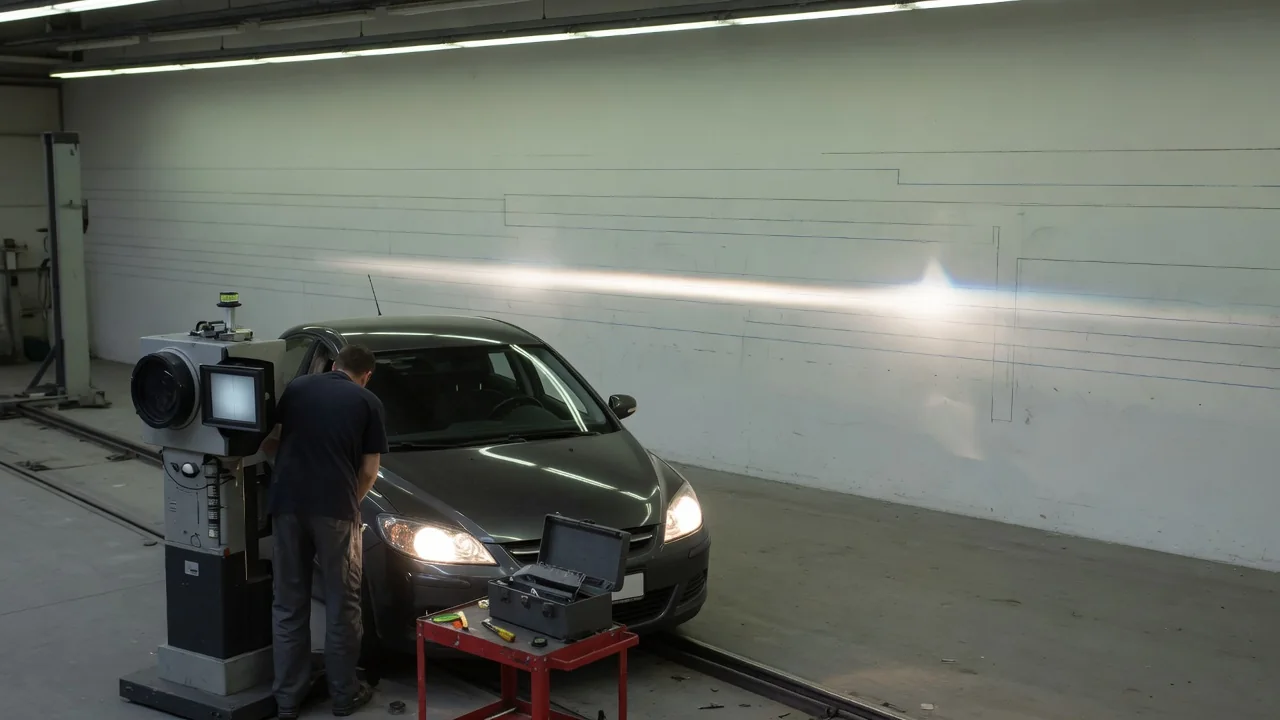
A headlamp can be built perfectly and still light the road poorly if it points slightly off. That is why factory headlight aim is a distinct step in vehicle assembly rather than something left to chance. Lamps, brackets, body panels and suspension all carry small manufacturing tolerances, and those tolerances add up. Aiming at the factory brings each car's beams into their intended position before the car reaches a driver.
Beam pattern: what the light is designed to do
A modern headlamp does not simply throw light forward. It shapes the light. The low beam has a defined upper edge, often called the cutoff, that keeps the brightest light below the eye level of oncoming drivers while still reaching well down the road. Many low-beam designs also put more light toward the curb side, which helps illuminate signs, lane edges and pedestrians without aiming that extra light at opposing traffic. The high beam is meant to reach as far as possible when no one is ahead.
Because the pattern is engineered as a precise shape, its usefulness depends on where it lands. If the beam points too high, the cutoff rises into the view of other drivers and causes glare. If it points too low, the driver loses distance vision and can outrun the lit area at highway speed. A sideways error moves the extra curb-side light to the wrong place. The optics inside the lamp cannot correct for these errors, so the lamp's physical orientation on the vehicle has to be set.
Adjustment: correcting accumulated tolerances
Every headlamp assembly mounts to the body through brackets and fasteners, and each part in that chain has some allowed variation. The housing, the front-end structure, the mounting points and the vehicle's ride height all affect where the beam ends up. Even when every component is within its own tolerance, the combined effect can tilt the beam noticeably. This is the core reason car lights are aimed at the factory. Assembly can install the lamp correctly, but correct aim also requires a measurement and correction step.
For that reason, headlamps are generally designed to be adjustable. Most assemblies have mechanical adjusters, typically screws or geared drives, that change the lamp's vertical angle and, on many designs, its horizontal angle. For aiming, the vehicle is positioned on a level surface in a defined load condition, and the beam is measured with optical aiming equipment or against a target. A technician or automated station then turns the adjusters until reference features of the beam, such as the cutoff line, sit within the intended zone. The procedure, equipment and tolerances depend on the manufacturer and the lamp design.
Some vehicles add electronic elements to this process. Headlamps with automatic leveling or adaptive functions use sensors and motors to change aim while driving. These systems usually need a baseline or calibration that defines the correct position. Whether that calibration happens on the assembly line, through a diagnostic tool, or both varies by vehicle, so the owner's manual and service information are the authority for any given model.
Final check: confirming aim before delivery
After adjustment, the beams are typically verified during end-of-line inspection, along with other lighting and electrical functions. The check confirms that the low and high beams fall within the manufacturer's specified aim window, that the left and right lamps are consistent with each other, and that all lighting functions work. A car that fails can be re-aimed or sent for repair before shipment, which is much easier than fixing the problem after the vehicle reaches a customer.
The final check also matters because aiming conditions must match how the car will be used. Measuring with incorrect tire pressure, on an uneven floor or with an unusual load would give a misleading result. Factory procedures control these conditions, so the recorded aim reflects the car as designed rather than the circumstances of one moment. The final check is therefore less about the lamp alone and more about confirming that the complete vehicle projects its light correctly.
Practical implications and limits
For owners, factory aim is a starting point, not a permanent guarantee. Aim can change over a vehicle's life. Replacing a headlamp assembly, repairing front-end collision damage, changing suspension height, fitting different wheels and tires, or regularly carrying heavy loads can all shift where the beam lands. In those cases the factory setting may no longer match the car's actual stance, and re-aiming at a qualified shop is the usual remedy.
Some signs suggest that aim deserves attention. Oncoming drivers may flash their lights even though the low beams are on. The lit area may end unusually close to the car, or the left and right beams may sit at visibly different heights. These symptoms do not prove misalignment on their own. Dirty or clouded lenses, an incorrect bulb or a failing component can cause similar effects, so an inspection should rule those out first.
It also helps to know the limits of do-it-yourself adjustment. Adjuster screws work on a common principle, but their location, access and correct reference points vary widely, and some lamps cannot be set accurately by eye against a garage wall. Vehicles with leveling or adaptive lighting may need a diagnostic procedure after any change. When the procedure for a specific car is unclear, rely on the owner's manual or service information rather than general rules of thumb.