What to Check Before Installing Window Shades in a Car
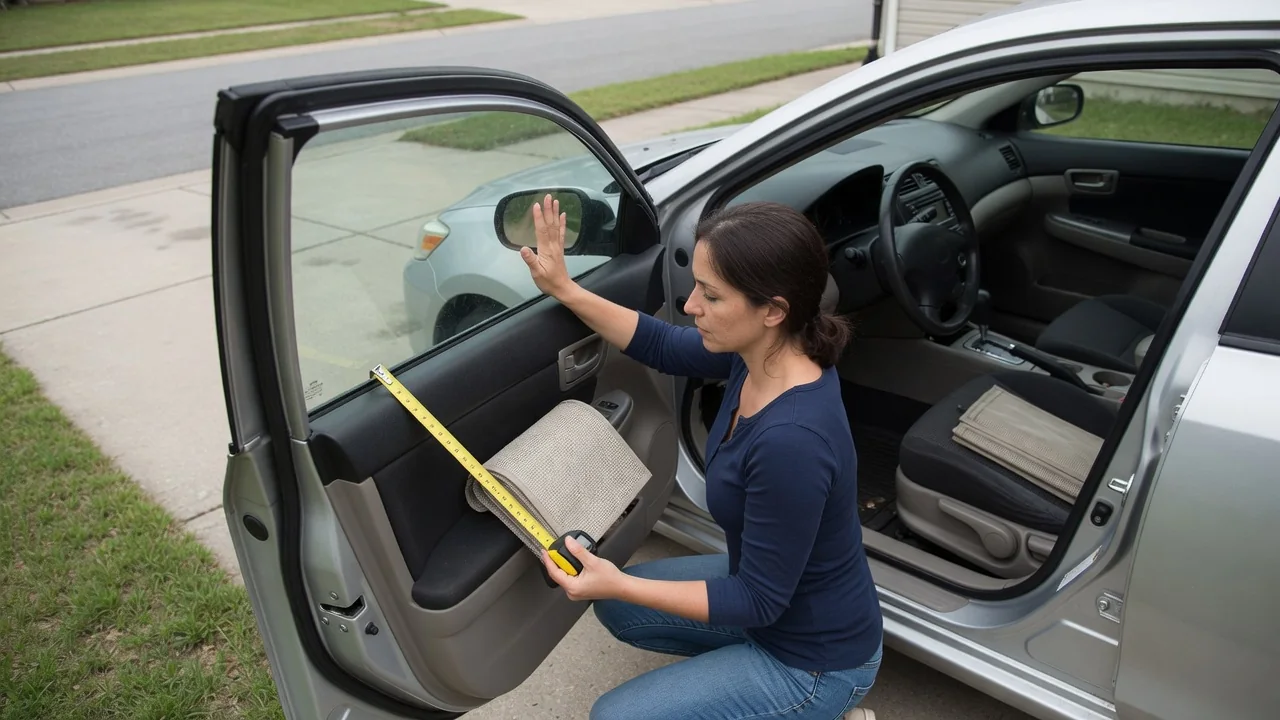
Knowing what to check before installing window shades in a car saves you from buying a product that blocks more than sunlight. A shade that suits one rear door may sag, gap, or cover a mirror view in another vehicle. Measuring the glass, choosing a sensible mounting method, and confirming the driver's view from the seat all matter before anything goes on the window.
Window size
Start by measuring the visible glass rather than trusting a shade labeled universal. Rear door windows differ widely: a compact sedan often has a short, sharply tapered opening, while an SUV or minivan may have tall, nearly rectangular glass. Measure the width at the widest point and the height at the tallest, then note how much the top edge slopes toward the rear pillar. A rectangular shade on a strongly angled window either leaves a bright triangle uncovered or hangs past the frame.
Look also for a small fixed quarter pane behind the main rear glass, since some doors divide the opening with a vertical bar and the movable section is narrower than it appears from outside. Curvature matters too; heavily curved glass can lift the corners of a flat, rigid panel. Compare your measurements with the shade's stated dimensions, and remember that an oversized shade bunched into the frame can wrinkle, press against the seals, and creep into areas the driver needs to see through.
Attachment
Shades commonly attach with suction cups, static cling film, clips that hook over the top edge of the glass, magnets that grip a steel door frame, or a fabric sleeve that stretches over the whole door. Each depends on something in your vehicle. Magnets need exposed or thinly covered steel around the opening, which frames wrapped in thick plastic trim or made of aluminum will not provide. Suction cups and cling film need clean, smooth glass and may struggle on dotted ceramic borders.
Consider what happens when the window moves. A cling shade or suction cups travel with the glass and can be scraped by the seal as the pane drops into the door, while frame-mounted magnetic shades stay put. Sleeve designs let the window open but cover the exterior of the door, so check that they clear the mirror and door latch. On rear windshields, avoid anything that presses hard on defroster grid lines, and keep every mount away from the area where side curtain airbags deploy.
Sightline check
Before fixing anything permanently, hold or temporarily place the shade and sit in the driver's seat adjusted to your normal position. Look over each shoulder as you would for a lane change, then check the interior mirror and both door mirrors. A rear door shade can sit directly in the over-the-shoulder view, and even mesh that looks transparent up close reduces contrast enough to hide a motorcycle or cyclist in the blind spot, particularly at dusk or in rain.
Front side windows deserve the most caution, because the driver looks through them to see the door mirrors and approaching cross traffic at intersections. Many jurisdictions restrict or prohibit shades and tint on the front side glass and windshield, and rules for rear windows vary as well, so confirm local requirements for your vehicle. Repeat the check at night if possible: mesh that seems fine in bright daylight can turn nearly opaque against headlights, and reflections off glossy shade surfaces can add glare.
Everyday Use and Observations
A shade that fits on installation day still needs watching. Heat softens suction cups and cling film, so a panel that held firm in a cool garage may peel away after an afternoon parked in direct sun. Notice whether the shade flaps or rattles with a window cracked open, whether a retractable roller snaps back cleanly, and whether rear passengers, especially children, can pull it loose. A shade that drops suddenly while driving is a distraction as well as a nuisance.
Pay attention to how the shade interacts with the rest of the vehicle. Raise and lower the window fully and listen for the motor straining or the automatic pinch protection reversing the glass, which can indicate the shade or its clips are binding in the channel. See whether a blind spot warning lamp in the mirror housing, where fitted, stays visible, and whether a rear seat occupant can still see out enough to stay comfortable. Factory tinted privacy glass combined with mesh may be darker than expected.
Limits and Next Steps
Aftermarket shades reduce glare and direct sun on passengers, but they have limits. They do not make it safe to leave a child or pet in a parked car, and the amount of heat or ultraviolet reduction depends on the material, so treat packaging claims as general guidance. Generic products also cannot account for every door shape, trim design, or airbag location. Where the owner's manual warns against attaching accessories near curtain airbags or on certain glass, that guidance takes priority.
If no universal shade fits cleanly, check whether your vehicle has factory integrated rear sunshades or whether a shade cut for your specific model, year, and body style is offered; confirm the fitment against your own measurements rather than the listing alone. Professionally applied window film is another route where it is legal. Whatever you choose, recheck the mounts when seasons change, clean the glass before reattaching, and remove any shade that begins to sag, curl, or narrow the driver's view.