How to Clear Snow From a Car Before Driving
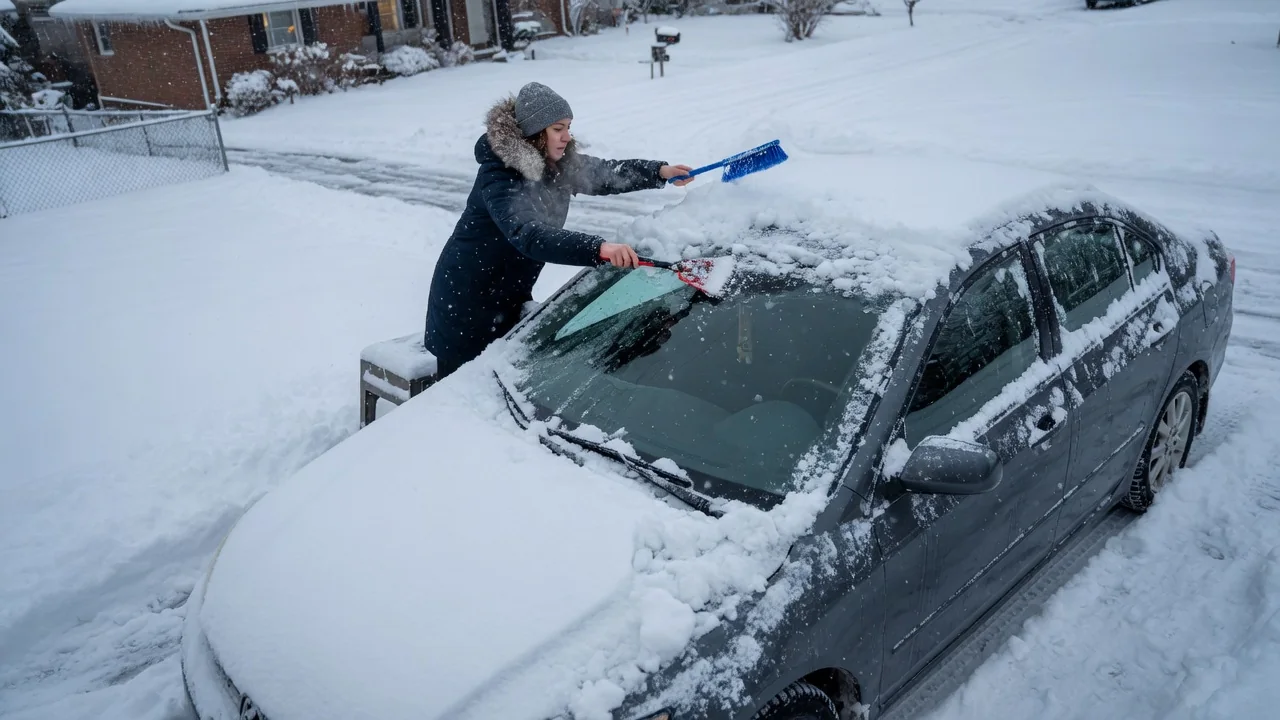
Knowing how to clear snow from a car before driving is mostly about restoring a complete view outward and making sure other road users can see you. A small porthole scraped in the windshield is not enough. The sequence below works through glass, mirrors, roof, lights, and a last walk-around, so nothing loose or hidden is left to cause trouble once the vehicle is moving.
Glass and mirrors
Start the engine or, on an electric vehicle, switch on the climate system, and set the defroster to the windshield with the rear window heater on. While the cabin warms, push loose snow off every pane with a foam-headed or soft-bristle snow brush, working from the top edge downward so it falls away from the glass. That includes the side windows and the rear quarter glass, because lane changes and junctions depend on views that a cleared windshield alone cannot provide.
Ice underneath needs a plastic scraper used in short, flat strokes; hot water risks cracking cold glass and should be avoided. Check that wiper blades are not frozen to the windshield before switching them on, since a stuck blade can tear its rubber edge or strain the wiper mechanism. Door mirrors should be brushed gently rather than scraped hard, as the mirror glass is thin. Some vehicles have heated mirrors or a heated windshield, and the owner's manual shows which switch activates them.
Roof and lights
The roof matters more than it looks. A slab of snow left on top can slide forward onto the windshield under braking, blinding the driver at exactly the wrong moment, or blow backward onto the vehicle behind. Many drivers find it practical to sweep the roof early, then give the glass a second quick pass. Pull or push the snow off to the sides rather than toward the front or rear, and clear the hood and trunk lid as well. Laws on roof snow vary by state.
Lights come next. Headlights, taillights, brake lights, turn signals, and the high-mounted stop lamp can all be buried or frosted over, and LED units often run too cool to melt snow on their own. Wipe each lens with the brush or a gloved hand until it is clear and bright. The license plate should be legible too. On taller vehicles such as SUVs and pickups, a telescoping brush helps reach the center of the roof, while roof rails, racks, and cargo boxes tend to trap snow in pockets.
Final check
Before getting in, walk once around the vehicle. Confirm that the tailpipe is not blocked by a drift or plowed snow, because a blocked exhaust can let carbon monoxide build up in the cabin. Look at the cowl at the base of the windshield, where the cabin air intake usually sits; snow packed there can restrict airflow to the defroster and leave the glass fogging. Knock loose any heavy buildup in the wheel arches that might rub against the tires when the steering is turned.
Driver-assistance hardware deserves the same attention. Backup cameras, parking sensors in the bumpers, and radar units behind the grille or front emblem can be blinded by a thin film of slush, and the vehicle may show a warning that a system is unavailable. Locations differ by make and model, so the owner's manual is the reliable guide. Finally, sit in the driver's seat and check each view in turn: windshield, both side windows, both mirrors, and the rear window. Wait if the inside is still fogged.
Everyday Use and Observations
In daily winter use, the type of snow changes the job. Dry powder brushes off in a minute or two, while wet, heavy snow clings and may hide a layer of ice that formed as the car cooled overnight. Freezing rain leaves a hard glaze that needs defroster time before a scraper will bite. Building a few extra minutes into the morning routine removes the temptation to drive off peering through a small cleared patch, which is both hazardous and, in many places, illegal.
Small observations help along the way. If the windshield fogs on the inside as soon as you sit down, moisture from wet floor mats or snowy boots is often the reason, and running the air conditioning with the defroster dries the air faster. Snow that keeps reappearing on the rear window during a drive usually came from an uncleared roof or trunk lid. Keeping the brush and scraper inside the cabin rather than the trunk means they stay reachable even when the trunk lid is frozen shut.
Limits and Next Steps
Clearing snow has limits. A brush and scraper cannot make up for a weak defroster, worn wiper blades that smear, or an empty washer reservoir, and road spray will coat a clean windshield within minutes if winter-rated washer fluid is not available. If a door, window, or charge port flap is frozen, forcing it can damage seals, regulators, or latches; gentle pressure and patience, or a de-icer product made for automotive use, are safer. Frameless door glass in particular should not be yanked free.
Some problems call for a next step beyond the driveway. A rear window heater with dead lines, a blower that only works on certain speeds, or a persistent sensor warning after the area is clean should be checked by a qualified technician. Repeated scraping scratches on paint suggest switching to a softer foam tool. And when snowfall is heavy enough that the car is re-covered while you work, or visibility on the road is poor, postponing the trip may be the soundest choice.