What Is Weight Distribution in a Car?
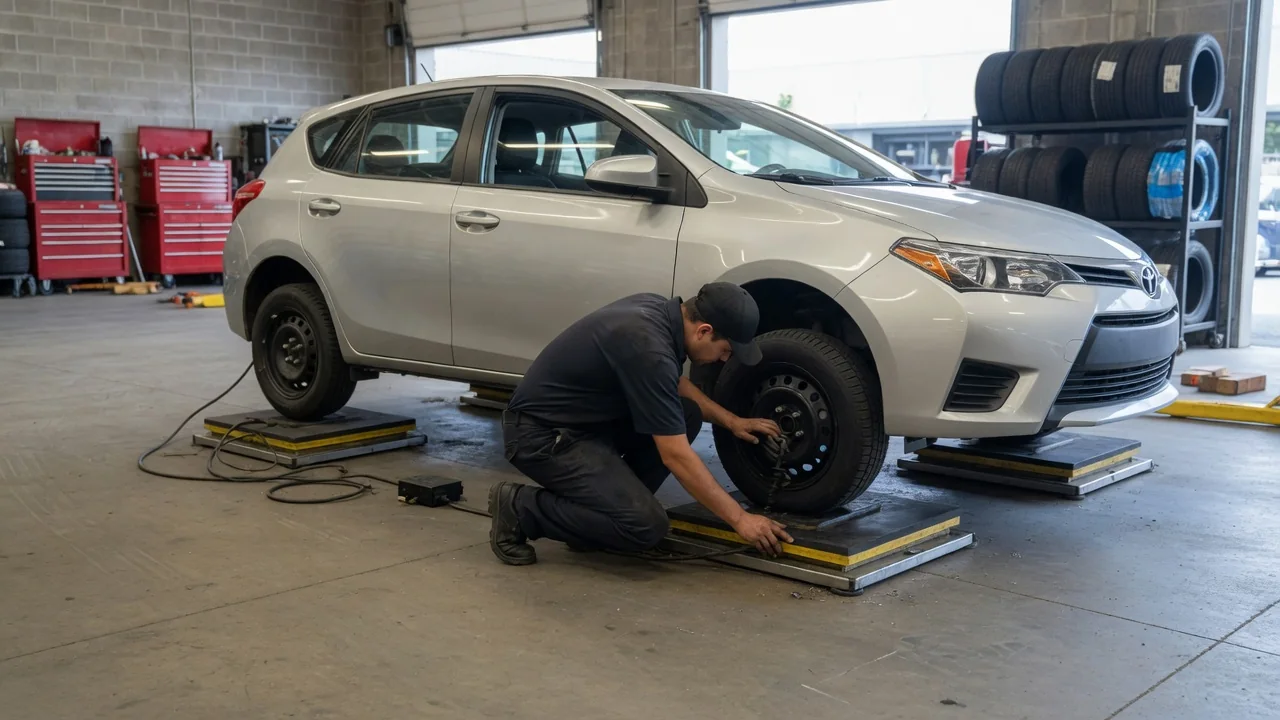
Anyone asking what is weight distribution in a car is really asking how the vehicle's mass is shared between its axles and, ultimately, its four tire contact patches. That split shapes how a car steers, brakes, accelerates, and wears its tires. Understanding it helps explain why different vehicles feel so different on the same road.
Front/rear concept
Weight distribution is usually expressed as a front-to-rear percentage, describing how much of the car's total mass rests on the front axle compared with the rear. A vehicle with its engine and transmission mounted ahead of the cabin typically carries more load over the front wheels, because the heaviest components sit there. Cars with the engine behind the seats tend to shift that balance rearward. The figure is measured with the car stationary on level ground, which is why engineers call it static weight distribution.
Drivetrain layout offers a visible clue. Front-wheel-drive cars package the engine and transaxle over the driven wheels, which helps traction on slippery surfaces but leaves the nose heavy. Rear-wheel-drive designs often push the engine farther back and place the differential at the rear, moving the balance closer to even. Electric vehicles differ again, since a flat battery pack under the floor spreads mass between the axles. Exact figures vary by model, trim, and options, so the manufacturer's published data is the reliable reference.
Load changes
The static split is only a starting point, because the load on each axle changes the moment the car moves. Under braking, inertia acts through the center of gravity and presses the front tires harder into the pavement while lightening the rear. Acceleration does the opposite, settling the rear and unloading the front. This is called load transfer, and it explains why front brakes are generally larger and why a nose-heavy car can struggle to put power down through front wheels on a hard launch.
Cargo and passengers alter the balance as well. Filling a trunk or a pickup bed adds mass behind or above the rear axle, which can lighten the steering and change how the headlights aim. Rear-seat passengers have a similar but smaller effect. A fuel tank mounted near the rear axle means the split shifts slightly between full and nearly empty. Cornering moves load sideways too, from the inside tires to the outside ones, with the amount depending on center-of-gravity height and track width.
Practical limits
An even front-to-rear split is often described as ideal, but it is not a guarantee of good handling. Suspension geometry, tire size, spring and damper tuning, wheelbase, and center-of-gravity height all influence how a car behaves. Two vehicles with identical percentages can feel completely different, and many well-regarded cars are deliberately front-heavy or rear-biased. Engineers choose a balance that suits the vehicle's purpose, whether that is predictable family transport, towing stability, or sharp responses on a winding road.
There are also firm limits on how much load each axle can safely carry. Manufacturers set a gross axle weight rating for the front and rear, along with an overall gross vehicle weight rating, and these are normally listed on a label in the driver's door opening. A vehicle can stay under its total limit while still overloading one axle if cargo is poorly placed. Exceeding either rating stresses tires, suspension, and brakes, so the specific numbers for a given vehicle should always be checked.
Everyday Use and Observations
Drivers can notice the effects of axle loading without any instruments. A front-heavy car tends to push wide in a tight corner, a trait called understeer, while a tail-heavy one can rotate more readily if the driver lifts off the throttle mid-turn. Heavy cargo in the back may make the rear sit visibly lower, soften the steering feel, and lengthen stopping distances. An empty pickup, by contrast, often has little weight over its driven rear wheels and can spin them easily on wet or icy roads.
Tire wear patterns tell part of the story too. The more heavily loaded axle generally wears its tires faster, especially when those wheels also steer and drive, which is one reason tire rotation is recommended in most owner's manuals. Recommended tire pressures sometimes differ front to rear, or change for a fully loaded vehicle, reflecting the mass each axle supports. These values appear on the tire placard, and they vary enough between vehicles that guessing from another car is unwise.
Limits and Next Steps
Knowing the concept does not reveal a particular car's actual numbers. Published figures usually describe an unladen vehicle in a specific configuration, and options such as a larger engine, all-wheel drive, a panoramic roof, or a spare tire can move the balance. Aftermarket changes, including heavy audio equipment, a roof rack, or relocated batteries, shift it further. The only way to know the real split is to weigh each axle on suitable scales, which some public weigh stations and motorsport shops can do.
For most owners, the sensible next step is simply loading thoughtfully. Placing heavy items low and as close to the space between the axles as practical keeps the balance nearer to what the suspension was designed for. Anyone towing should pay attention to tongue weight, since a trailer adds load behind the rear axle and can lighten the front. If the car sags, steers vaguely, or brakes poorly when loaded, comparing actual weights against the door-label ratings is worthwhile, and a qualified technician can inspect the suspension.