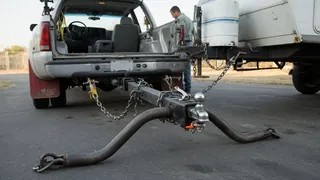
Best Weight Distribution Hitch with Sway Control
Choosing the right hitch changes how a travel trailer behaves in crosswinds, during passing maneuvers, and under hard braking. A weight distribution system uses spring bars to shift some tongue load from the rear axle toward the front axle and trailer axles, restoring steering response and level ride height. Sway control then resists the lateral forces that can start a dangerous oscillation. The goal is a setup matched to your loaded trailer weight, tongue weight, and receiver configuration, not simply the heaviest or most aggressive hardware.
Relevant entries
A round-bar system with integrated sway control is a common starting point for travel trailers of moderate loaded weight. Its spring bars mount in brackets below the trailer A-frame and rotate as the tow vehicle turns, which creates friction at the head that damps yaw movement. This design keeps the package straightforward to install and adjust, while still returning enough load to the steering axle to reduce wander and porpoising on uneven highway joints.
A trunnion-bar setup offers a stiffer alternative when tongue weight is higher or the trailer has a longer body that catches side wind. The squared bar ends sit in pockets at the hitch head, concentrating the distribution force closer to the ball. Many of these systems pair well with a separate sway damper on one side of the A-frame, allowing the owner to tune distribution and sway resistance independently as the travel trailer's payload, water load, and gear placement change between trips.