What Is a Power Distribution Box in a Car
A car power distribution box is the protected hub where high-current battery voltage is divided into smaller fused circuits before reaching switches, modules, lights and motors. When a driver opens the black plastic housing near the engine bay or interior kick panel, the fuse layout, relays and bus bars inside show how one main power feed becomes many individually protected branches. Knowing what this component does helps explain why a single short or overload can affect several accessories, and why the box is the first place to look when multiple electrical functions stop at once.
Meaning
In an automotive context, the power distribution box is the centralized enclosure that receives the main battery cable and routes current through high-amperage fuses, smaller blade fuses and relays. The housing is usually mounted in the engine compartment or near a kick panel, with a removable cover marked to identify each fuse position and amperage rating. Unlike a simple inline fuse holder, the box combines circuit protection with organized power feeds for the charging system, cooling fan, fuel pump, body controller and many convenience features.
The term can be ambiguous because manufacturers use different names for similar housings. A main fuse block may sit adjacent to a separate body control module, while a power distribution center often includes both engine and cabin circuits. In every case, the box is the physical endpoint for the large positive cable from the battery and the starting point for the thinner protected wires that branch throughout the vehicle. Understanding this role makes owner-manual fuse diagrams and connector locations easier to interpret when diagnosing an electrical fault.
How it works
Current enters the box through a heavy-gauge battery cable attached to a bus bar or primary terminal. From that common junction, copper traces or internal cables split the supply into multiple protected paths. High-current consumers such as the alternator, radiator fan or ABS pump may use cartridge or maxi fuses, while lower-current circuits use standard blade fuses. A relay inside the box can also switch a circuit on and off with a small control signal, so the ignition key or computer does not need to handle full accessory current directly.
The effect on vehicle behavior becomes clear when a circuit overloads. The thin fuse element inside that branch melts before the wiring can heat enough to damage insulation or connectors. Other circuits continue working because their own fuses remain intact. A wiring diagram for the vehicle shows how each cavity in the fuse layout maps to the component it feeds, helping an owner trace a dead power window, horn or lighting circuit back to the correct fuse or relay without disturbing unrelated systems.
Key differences
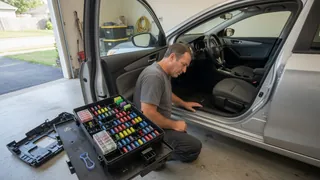
A power distribution box is commonly confused with a smaller interior fuse panel or a simple relay block, but the roles differ. The distribution box handles the primary high-current feed from the battery and often contains the largest fuses and relays in the vehicle. An interior fuse panel usually receives an already protected lower-current supply and manages cabin accessories such as the radio or power seats. A dedicated relay block may have little or no circuit protection, relying on fuses elsewhere in the harness.
The practical difference appears during diagnosis. If a single accessory fails, the smaller interior panel is often the quicker reference point. If several unrelated systems fail or a major load such as the starter or cooling fan is dead, the engine-bay distribution box becomes the likely inspection area. Recognizing which housing contains the bus bar and high-amperage protection also helps prevent the mistake of replacing a low-amperage blade fuse where a higher-capacity cartridge fuse is actually the failed component.
Understanding a problem
Multiple dead circuits often point to a shared connection inside the distribution box rather than to individual failed components. A loose battery cable, corroded main terminal or damaged bus bar can reduce voltage before any individual fuse sees current. Intermittent operation when the harness or box is moved suggests a spread electrical connector or a cracked solder joint on an internal board. In these cases the wiring diagram helps identify which outputs share a common power feed and therefore should be tested together.
A blown high-amperage fuse can be a symptom of a short in the connected circuit, not proof that the fuse itself failed without cause. Replacing it may restore function temporarily, but the underlying overload or chafed wire must be located or the new fuse can fail again. A burned or melted housing, a strong electrical smell, or visible heat damage around a terminal means the vehicle should not continue in service until the connection is inspected. Basic visual checks for water intrusion, green corrosion and loose fasteners are reasonable first steps.