What Is a Weight-Distribution Hitch?
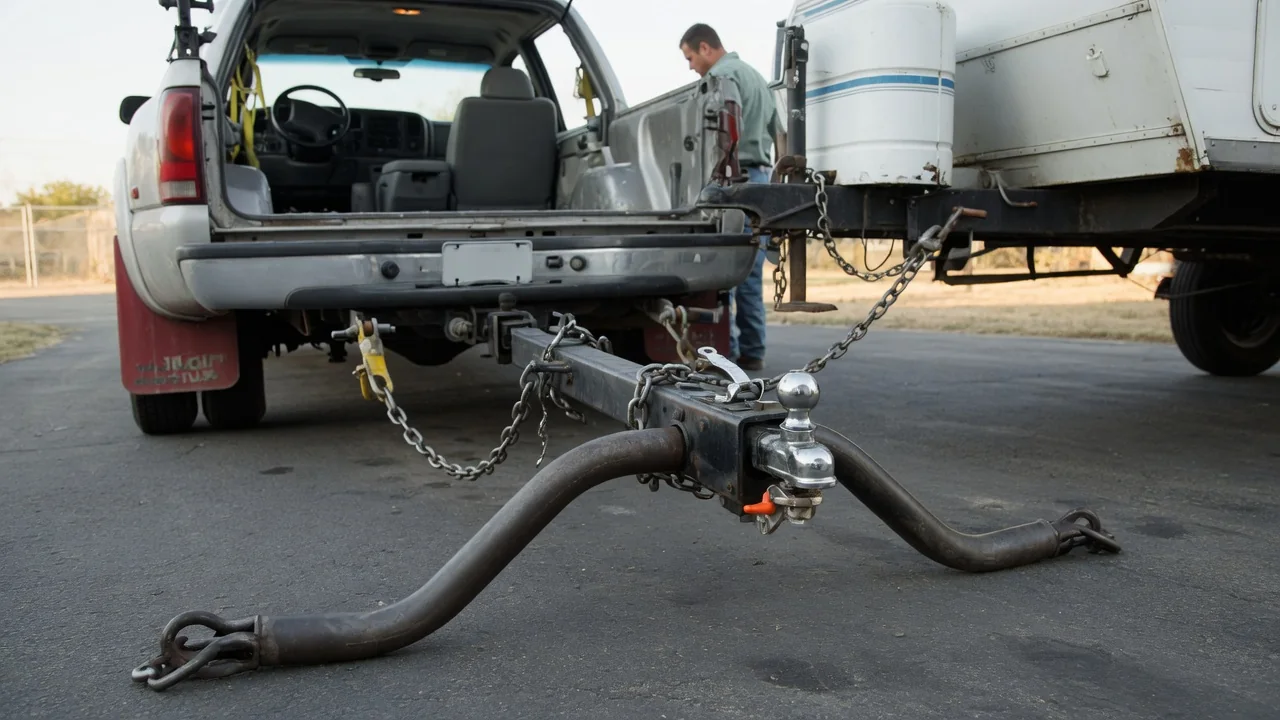
Anyone asking what is a weight distribution hitch is usually looking at a tow vehicle that squats at the rear when a trailer is coupled. This type of hitch uses spring bars as levers, shifting part of the tongue load forward to the front axle and back to the trailer axles. The sections below explain the hardware, the setup, and the limits.
Hitch components
A weight-distribution hitch starts with a shank that slides into the tow vehicle's receiver, just as a standard ball mount does. Bolted to that shank is the hitch head, a heavy casting that carries the hitch ball and also provides sockets or trunnion pockets for two spring bars. Those bars run rearward beneath the trailer's A-frame, and their free ends are held by brackets clamped or bolted to the trailer frame rails, using either chains or rigid supports.
Designs differ in visible ways. Round bars usually enter the head from below and curve back, while trunnion bars insert from the side and sit flatter, which can help ground clearance. Some systems hang the bars on chains with snap-up brackets; others rest them on L-shaped brackets that also add friction against sway. The head typically has a tilt adjustment, often through washers or a serrated plate, and the shank offers several height positions to suit different trucks and trailers.
Why setup matters
The spring bars work as levers. When their ends are lifted and locked into the frame brackets, they bend and try to straighten, applying a twisting force through the hitch head into the receiver and the tow vehicle's frame. That force pushes load back toward the front axle and sends a share to the trailer axles, so the tongue weight no longer hangs entirely behind the rear axle, where it pries the front end upward.
Too little bar tension leaves the front axle light, which can dull steering response and lengthen braking, and the headlights may aim high. Too much tension can unload the rear axle, reducing traction at the drive wheels on many trucks and stressing the hitch hardware. Head tilt, the number of chain links engaged or bracket height, and ball height all change the result, so a setup that suited one trailer or one loading pattern may be wrong for another.
Vehicle instructions
The tow vehicle's owner's manual is the first reference, because automakers differ on how they want load transfer judged. Many describe measuring front fender height unhitched, then with the trailer coupled, then with the bars engaged, and specify how much of the lost front height should be restored. Some call for returning only part of the way toward the unloaded figure and not all of it, and the target varies by make and model, so the wording needs to be read for the exact vehicle.
Manuals and receiver labels may also list separate ratings for weight-carrying and weight-distributing use, and some vehicles, particularly certain unibody models or those with air or self-leveling suspension, carry special instructions or restrictions on using this equipment at all. Self-leveling systems may need to be handled in a particular way during measurement. The hitch maker's instructions cover bar selection, bracket placement on the trailer frame, and fastener tightening, and some trailer builders restrict where brackets can be attached to their frames.
Everyday Use and Observations
In daily use, hitching follows a rhythm: couple the trailer to the ball, latch the coupler, then use the tongue jack to raise the trailer and the rear of the tow vehicle together, which takes tension off the bars so they can be set on their brackets more easily. Lowering the jack loads them. A properly adjusted combination typically sits close to level, with the front fender near its target height and the trailer riding parallel to the ground.
On the road, drivers often notice steadier steering, less porpoising over bridge joints, and a more settled rear suspension. Creaks and groans in tight turns are common with friction-style systems and usually reflect metal sliding on metal, not a defect. Worth watching are uneven bar angles side to side, shiny wear spots on brackets, loose fasteners, and a dry hitch ball or trunnion sockets where the manufacturer calls for lubrication. Changes in cargo or water tank levels can shift the stance noticeably.
Limits and Next Steps
A weight-distribution hitch rearranges load among axles; it does not raise any rating. The vehicle's towing limits, axle ratings, receiver rating, tire capacity, and the trailer's own limits remain exactly as the manufacturers published them, and the combination is still bound by the lowest of them. Nor is load distribution the same as sway control. Some systems build sway resistance in, others need an add-on device, and none of it corrects a trailer loaded with too little weight on the tongue.
The practical next step is gathering facts about the specific combination: reading the towing section of the owner's manual, checking the labels on the receiver and the trailer, and weighing the loaded rig at a public scale to see actual axle loads with the bars engaged and released. If the vehicle still sits unevenly, steering feels vague, or the instructions are unclear, a hitch shop or trailer dealer can inspect the setup and adjust it against the manufacturer's stated targets.