What Is Unsprung Weight?
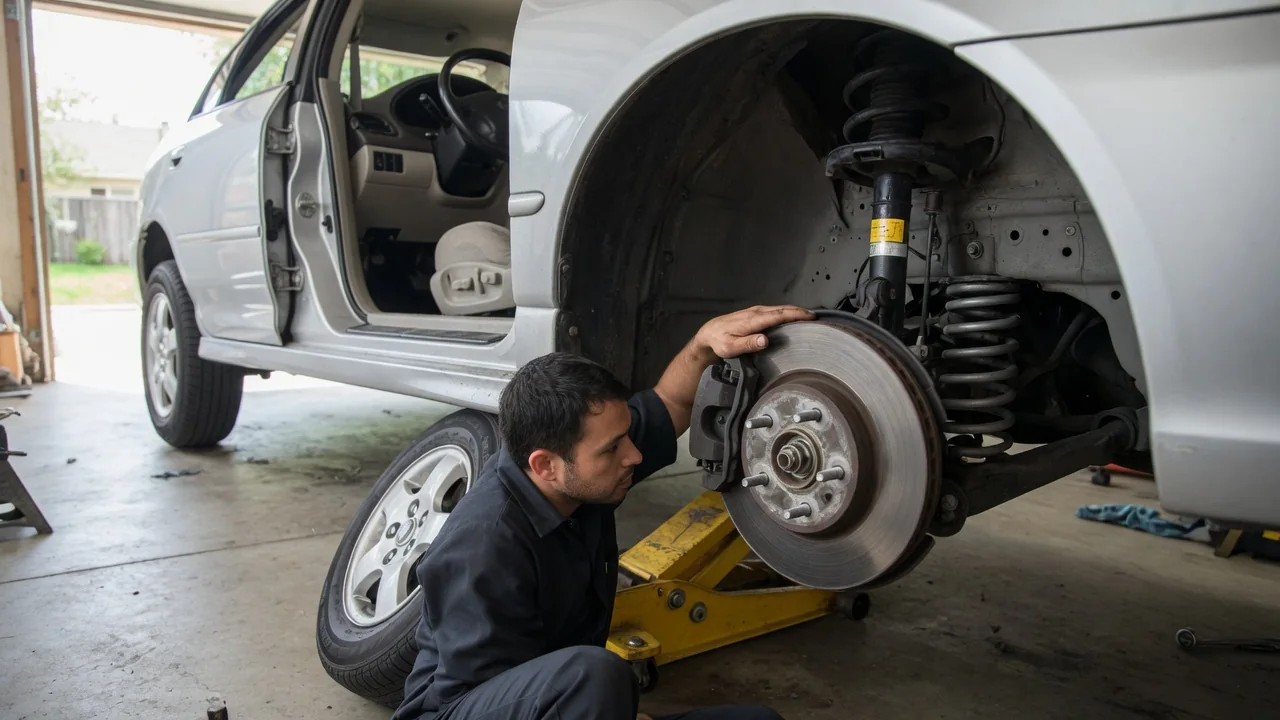
What is unsprung weight? It is the mass of every part of a vehicle that is not carried by the springs, the hardware that rides directly on the road and must follow each bump and dip. Wheels, tires, and brakes lead the list. Understanding this mass explains much about ride comfort, grip, and why engineers work so hard on components few drivers ever see.
What counts
Unsprung weight, also called unsprung mass, covers the parts located between the road surface and the springs. Tires, wheels, wheel bearings, hubs, brake rotors, calipers, and the knuckles or uprights that hold them all move up and down with the pavement. The body, engine, cabin, and passengers sit on top of the springs and count as sprung weight. A simple mental test helps: if a part rises immediately when the tire climbs a bump, before the spring compresses, it belongs in the unsprung category.
Some components fall into a gray area. Control arms, springs, shock absorbers, and half shafts are attached to the chassis at one end and the wheel assembly at the other, so engineers commonly treat part of their mass as unsprung. Layout changes the tally as well. A solid rear axle on a pickup carries the entire axle housing and differential with the wheels, while an independent suspension mounts the differential to the body. Inboard brakes, found on a few specialized designs, shift rotor mass to the sprung side.
Road response
When a tire meets a bump, the wheel assembly must accelerate upward, then come back down to keep the tread pressed against the pavement. The heavier that assembly, the more momentum it carries and the harder the spring and damper must work to control it. A light wheel changes direction quickly and tracks the surface closely. A heavy one tends to keep traveling after the bump has passed, briefly reducing the load on the contact patch and, with it, the grip available for braking, steering, and acceleration.
The relationship between the two masses matters as much as the unsprung figure alone. A heavy body resting on light wheels barely notices as the suspension absorbs an impact, because the wheel's motion has little leverage over the larger mass above it. Raise the unsprung share and each strike pushes more force into the structure, which occupants feel as sharper jolts and shudder over broken pavement. This is one reason a lightly loaded truck with a solid axle can feel busier over rough roads than a comparable sedan.
Why design matters
Engineers treat unsprung mass as something to minimize within the limits of strength, cost, and durability. Aluminum knuckles and control arms, forged alloy wheels, hollow anti-roll bars, and lighter brake hardware all appear on vehicles where ride and handling are priorities. Each choice involves a trade-off. A wheel must survive potholes and curb strikes, brakes need enough thermal mass to absorb repeated stops, and tires need adequate construction for the vehicle's load. Shaving weight without respecting those demands creates a fragile part rather than a better one.
Suspension tuning is built around the mass it has to control. Spring rates, damper valving, and bushing stiffness are selected for a specific wheel and tire package, which is why the same model can ride differently across trim levels with different wheel sizes. Electric vehicles illustrate the balance from another angle: a heavy battery pack raises sprung mass, while designs that place motors inside the wheels add unsprung mass that engineers must then manage. How any manufacturer resolves these compromises varies by platform, purpose, and price.
Everyday Use and Observations
Drivers most often encounter the effect after changing wheels or tires. Moving to a larger diameter wheel with a low profile tire can add mass at each corner, depending on the specific products, and the result may be a ride that feels firmer or more abrupt over expansion joints and patched asphalt. The reverse can also be true, since a lighter wheel and tire combination may make the suspension feel more settled. Comparing actual component weights, where the maker publishes them, is more reliable than judging by size or appearance.
On the road, the signs are subtle rather than dramatic. A car with well controlled wheel motion feels composed across a rippled corner and keeps its line, while one struggling with heavy assemblies may skip sideways slightly or transmit a thump followed by a secondary shake. Washboard gravel exaggerates the difference. Similar sensations can come from worn dampers, incorrect tire pressure, or tired bushings, so a change in ride quality on an otherwise unmodified vehicle points toward inspection, not toward wheel weight as the cause.
Limits and Next Steps
Reducing unsprung weight is helpful, but it is not a cure for every ride or handling complaint. Tire construction, sidewall height, inflation pressure, alignment, and damper condition often have a larger influence on how a vehicle feels than a modest saving at each corner. Gains from lighter wheels are typically easier to notice on a small, light car than on a heavy SUV, where the same saving represents a smaller proportion of the total. Expectations should match the size of the change being made.
Anyone considering different wheels, tires, or brake components should confirm that the parts carry an appropriate load rating and fit the vehicle correctly, including clearance around the calipers and suspension. The owner's manual and the tire placard list approved sizes and pressures, and a qualified shop can advise on combinations outside those listings. For a vehicle that rides poorly without any modifications, a suspension and tire inspection is the sensible starting point, since restoring worn parts usually returns the behavior the engineers intended.