What Is Spot Welding on a Car Body?
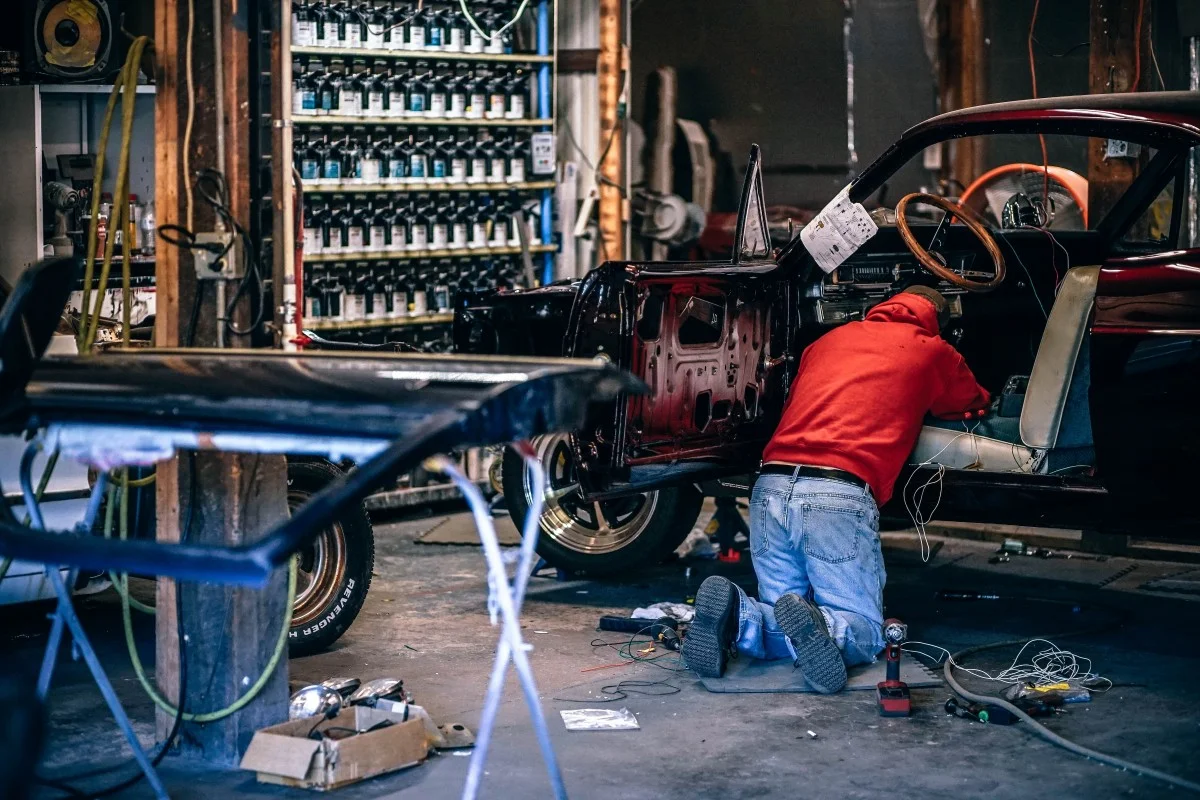
Anyone asking what is spot welding on a car body is really asking how a vehicle's steel shell holds together. Resistance spot welding joins overlapping sheet metal at small, localized points rather than along a continuous bead. Electrodes clamp the panels, current flows, and the metal fuses where the sheets touch. The result is a body built from a great many small, discrete joints.
Weld nuggets
The weld nugget is the small lens of fused metal that forms between the sheets during a spot weld. Copper electrodes squeeze the panels together and pass a heavy electrical current through the stack. Because resistance is highest where the two sheets meet, heat concentrates at that interface rather than at the outer surfaces. The metal there melts briefly, then solidifies under pressure into a single button of material shared by both panels.
From the outside, you never see the nugget itself, only the shallow round dimple the electrode tips leave behind. Nugget size and strength depend on current, clamping force, weld time, and the thickness and coating of the steel, so settings differ between a thin outer skin and a thick structural reinforcement. Galvanized and high-strength steels behave differently from mild steel, and aluminum-intensive bodies may rely more heavily on rivets or adhesives, which is why details vary by vehicle.
Body seams
Spot welds live along flanges, the narrow overlapping edges where one stamped panel meets another. Open a door and look at the pinch weld running along the bottom of the rocker panel, or study the door opening behind the weatherstrip, and you may find a row of evenly spaced dimples. Similar rows appear around the trunk gutter, along the strut towers under the hood, and where the floor pan meets the sills.
Because each weld joins the panels only at a point, the gap between welds is not sealed. Manufacturers typically cover these seams with seam sealer, and many also apply structural adhesive between the flanges, a combination often called weld bonding. The sealer keeps water and road noise out, while the adhesive spreads load between the welds. Spacing, sealer placement, and the mix of welds, adhesive, and laser-welded or brazed joints differ from one body design to another.
Repair practice
When a collision shop replaces a welded panel such as a quarter panel or radiator support, technicians generally separate the factory spot welds rather than cutting the panel free at random. Each weld is located, the nugget is removed or released, and the damaged part comes away while the underlying flange stays in place. The replacement panel is then joined along the same flange, ideally in a way that restores the original strength of the joint.
How that new joint is made depends on the manufacturer's body repair instructions. Some shops use a squeeze-type resistance spot welder that mimics the factory process, while other locations call for plug welds, structural adhesive, rivets, or a combination. Certain high-strength steels are sensitive to heat, so the wrong method can weaken the surrounding metal. This is structural work that affects crash performance, which makes it a job for trained technicians with proper equipment rather than a casual home project.
Everyday Use and Observations
For most owners, spot welds matter as clues rather than as something to service. Factory welds tend to be uniform in size and spacing, with a consistent dimple pattern along a seam. When inspecting a used vehicle, an irregular row, ground-flat patches, missing dimples, or lumpy weld beads where neat dots should be can suggest that a panel has been replaced. Fresh sealer that looks different in texture or color from the surrounding seams tells a similar story.
Spot-welded flanges also deserve attention for corrosion. Moisture can creep between overlapping sheets, so rust sometimes begins at the seam and shows up as bubbling paint or brown staining along a rocker, wheel arch lip, or door bottom. The pinch welds under the sills commonly serve as lifting points, and a bent or crushed flange there hints at careless jacking. Where the correct lifting points sit, and how exposed the seams are, varies by vehicle, so the owner's manual is worth checking.
Limits and Next Steps
A visual check has clear limits. Dimples on the surface show where electrodes touched, not whether the nugget beneath is sound, and many welds hide behind trim, undercoating, sealer, or interior panels. A tidy-looking repair can still be weak, and an untidy factory seam can be perfectly strong. Odd weld patterns are therefore evidence to weigh alongside paint thickness readings, panel gaps, and repair records, not proof on their own that a car has been damaged or badly repaired.
If something looks questionable, the sensible next step is an inspection by a qualified body shop or independent appraiser who can put the vehicle on a lift and compare it with the manufacturer's repair information. Creaks from the body, water leaks, or seam rust that keeps returning are worth mentioning during that visit. For anyone planning repairs, asking how the shop intends to join replacement panels, and whether that follows the vehicle maker's procedure, is a reasonable and useful question.