What Is Plastic Welding in Car Repair? Materials, Joining and Limits
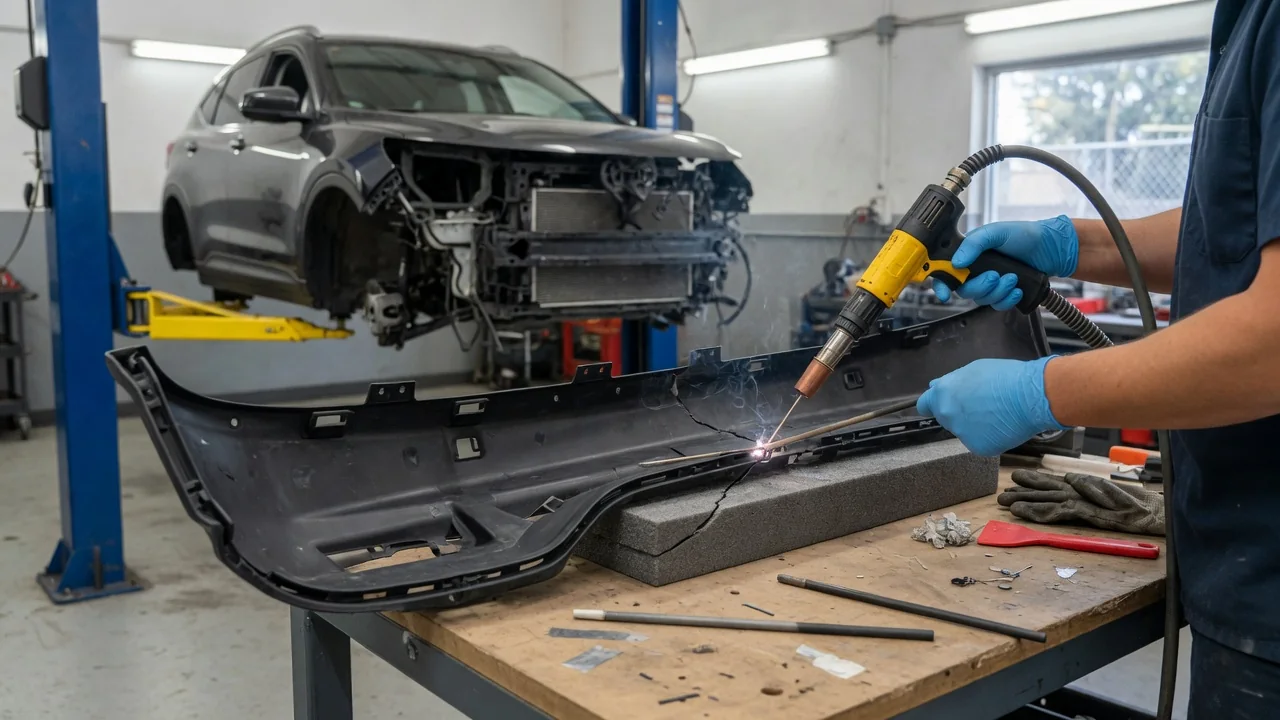
Plastic welding in car repair is a way to fix cracked, torn or broken polymer parts by melting the damaged edges together with a filler rod of the same plastic. It is used on bumper covers, headlight mounting tabs, splash shields, grilles and many interior and under-hood components. Whether automotive plastic welding is the right fix depends on three things: what the part is made of, how the joint is built, and what job the part does on the vehicle.
Material compatibility
Welding only works on thermoplastics, the family of polymers that soften when heated and harden again when they cool. Most modern bumper covers, wheel-well liners, interior panels and many under-hood housings belong to this group. Common examples include polypropylene (PP) and its rubber-modified blends, often labeled TPO or PP+EPDM, as well as ABS, polycarbonate and PC blends, polyethylene, and polyamide (nylon). Thermosets behave differently. Materials such as sheet molding compound, fiberglass-reinforced polyester and some polyurethane parts cure chemically during manufacturing, so they scorch or degrade instead of melting. They cannot be welded in the usual sense and are normally repaired with two-part structural adhesives and reinforcement instead.
The second requirement is matching. Two different thermoplastics generally do not fuse into a strong bond, so the filler rod must be the same base material as the part. Many manufacturers mold an identification code on the back of plastic components, using markings between angle brackets such as >PP<, >ABS< or >PC/PBT<. When a code is missing or unreadable, technicians may compare the part with known samples, test candidate rods on a small hidden area, or observe how the material reacts to heat. Fillers and reinforcements also matter: glass-filled or talc-filled grades may need a rod with a similar composition. A wrong guess about the material can leave a seam that looks filled but separates under flexing or vibration.
Joining
Joining plastic means bringing both the base material and the filler into their melting range at the same time, so the polymer chains intermingle and solidify as one piece. In body shops this is usually done with a hot-air welder, which directs a controlled stream of heated air through a nozzle onto the rod and the groove. Some systems use nitrogen instead of air to reduce oxidation of the molten plastic. Airless welders heat the rod directly with a heated tip, and hot-staple tools embed small metal staples across a crack from the back side for reinforcement. Factory production relies on other methods, such as ultrasonic, vibration or hot-plate welding, but those need dedicated fixtures and are rarely part of collision repair.
A typical repair follows a consistent sequence. The part is cleaned of road film, wax and loose paint near the damage, because contaminants prevent fusion. Small holes are often drilled at the ends of a crack to keep it from running further. The crack is aligned, sometimes tacked from the back, and then shaped into a V-groove so the filler can reach the full thickness of the wall. The back side is usually welded first, sometimes with stainless mesh or staples pressed into the softened plastic, and the cosmetic side is filled afterward. The rod is fed with steady pressure while heat is directed at both rod and groove; too little heat leaves a cold, unfused bead, while too much causes bubbling, discoloration or warping. After cooling, the repair is sanded, treated with an adhesion promoter suited to plastic, and refinished.
Repair limits
Plastic welding restores continuity, but it does not return every part to an as-new condition. Short cracks, torn edges and broken mounting tabs on a cover or liner are usually good candidates. Large missing sections, heavily stretched areas, and plastic that has become brittle from age, heat or sunlight are harder to repair well, because the surrounding material may crack again right next to the weld. Parts that are bent out of shape often need reshaping with controlled heat before any welding, and some never return to their original fit against neighboring panels.
Function sets additional limits. Many bumper covers sit in front of radar sensors, parking sensors or cameras, and vehicle makers may restrict repairs, filler thickness or paint film in those zones because they can affect signal paths or sensor mounting. Pressurized or fluid-carrying parts, such as radiator end tanks, coolant reservoirs and fuel system components, face heat, pressure and chemical exposure, and a failed weld there can cause leaks or, with fuel, a fire hazard; replacement is the usual guidance. Load-bearing brackets and energy-absorbing parts fall into a similar category. The manufacturer's body repair information, where available, is the reference for whether a specific part may be repaired at all.
What this means when a plastic part is damaged
For an owner, the practical question is not whether plastic can be welded but whether this particular part is worth welding. The answer often comes down to labor time, part availability and the finish required. A bumper cover with a single short crack and a local refinish may be economical to weld, while a cover with several tears, damaged sensor brackets and broken clips may cost less to replace. For older vehicles or discontinued trim, welding can be the only realistic way to keep an original part in service. Asking the shop which material the part is made of, which method it plans to use and whether the repair area affects any sensors gives a clear picture of what is being done.
Consumer plastic welding kits are widely sold, and they can handle hidden tabs, liners and small cracks when the material is identified correctly. Results depend heavily on technique, so practicing on scrap of the same plastic before touching the part is sensible. Heating plastic releases fumes, so work in a ventilated area and avoid burning the material. A visible cosmetic repair is harder than a hidden one: matching texture on unpainted trim, or keeping paint from cracking on flexible plastic, adds steps beyond the weld itself. Because a weld changes how a part behaves locally, even a sound repair is worth rechecking for new cracks beside the seam after some driving, temperature swings and car washes.