Why Did Cars Start Using Plastic Bumpers?
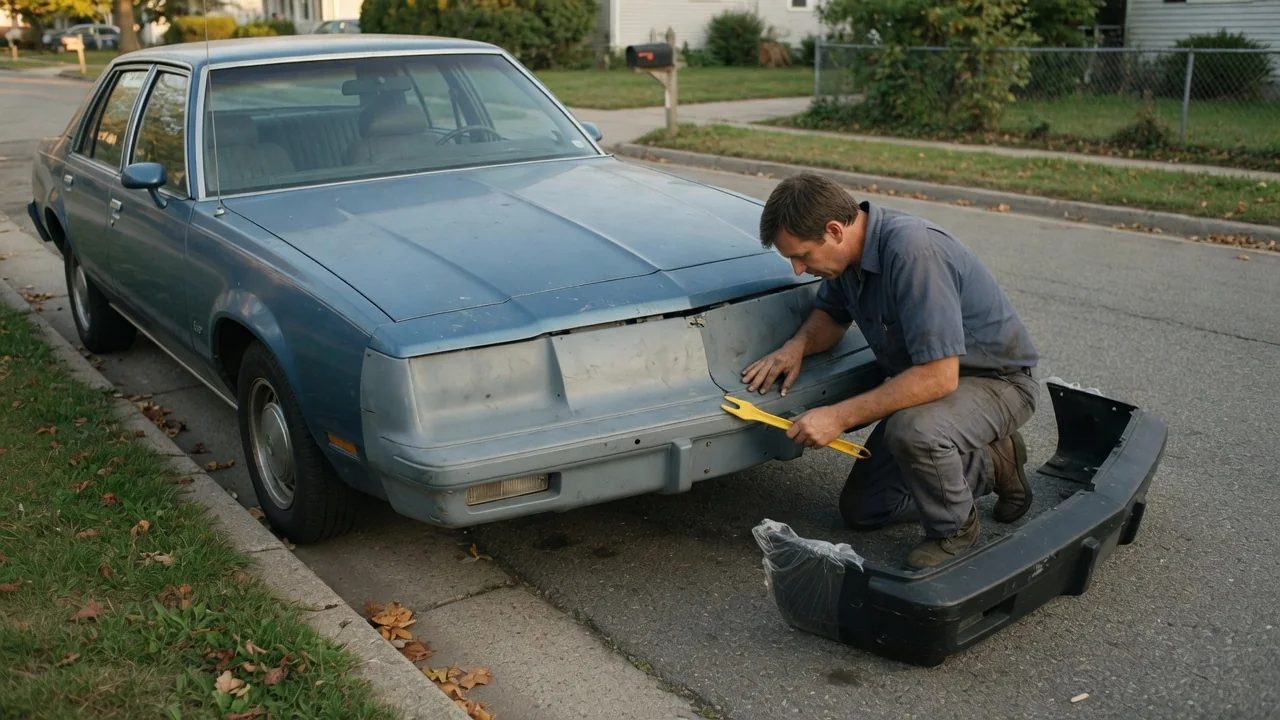
Anyone wondering why did cars start using plastic bumpers is really asking about three pressures that reshaped vehicle design: styling freedom, lower mass, and the cost of fixing minor damage. Chrome steel bars gave way to painted, molded covers because the flexible skin could blend into the body while the real crash structure moved out of sight behind it.
Cover versus reinforcement
What most people call a plastic bumper is actually a bumper cover, sometimes labeled a fascia. It is a thin molded skin, typically a thermoplastic blend, shaped to match the fenders, grille and lamps. Its job is appearance, airflow management and absorbing light contact without permanent deformation. The older chrome bumper combined looks and strength in one exposed steel part, which is why the two designs behave so differently when a shopping cart or parking post touches them.
Behind the cover sits the reinforcement, a steel or aluminum beam bolted to the ends of the frame rails or crush structures, often with a foam or honeycomb energy absorber sandwiched between beam and skin. That hidden assembly manages impact loads. Looking through the lower grille opening or behind the wheel-well liner, you can sometimes see the beam or absorber. Materials, beam shape and absorber design vary by manufacturer, model and market, so one vehicle's layout does not predict another's.
Production benefits
Injection molding let manufacturers form a complete front or rear fascia in a single tool cycle, with grille openings, lamp pockets, license plate recesses and mounting tabs already built in. A stamped and plated steel bumper needed pressing, welding, polishing and chrome plating, and it still could not follow tight compound curves. Molded covers made flush, body-colored designs practical, which helped designers smooth airflow around the nose and reduce the visual break between bumper and bodywork.
Mass was the other major gain. A plastic skin over a tuned beam weighs less than a heavy chromed bar with its brackets, and trimming weight at the far ends of the vehicle helps fuel economy and handling balance. As fuel-efficiency pressure grew and low-speed impact rules evolved in the 1970s and 1980s, the integrated design answered both demands. The cover also became a convenient host for fog lamps, parking sensors, radar units and air ducts, though equipment differs widely by trim level.
Repair
Repair is where the tradeoffs show. A flexible cover often springs back from a gentle nudge that would have dented or bent a steel bumper, and shallow scuffs can be sanded, filled and refinished. Small cracks and torn mounting tabs are sometimes repairable with plastic welding or adhesive methods suited to the material, which is usually identified by a code molded into the back of the part. Whether repair beats replacement depends on damage location, paint condition and labor time.
The catch is that an intact-looking skin can hide a crushed absorber, a bent reinforcement beam or broken brackets. Paint adds cost too, since a body-colored cover must be color-matched, and metallic or pearl finishes can require blending into adjacent panels. On vehicles with driver-assistance hardware in the bumper, sensors may need inspection, correct mounting and calibration after a repair, and manufacturers can restrict filler or repainting near radar zones. Those requirements are vehicle-specific and should be confirmed in the appropriate service information.
Everyday Use and Observations
In daily driving, a plastic cover resists the rust that eventually pitted and flaked chrome bumpers, and it shrugs off door-height bumps in parking lots. It is not maintenance-free, though. Paint on a flexible surface chips from stone strikes, low front lips scrape on steep driveways and parking curbs, and unpainted textured trim can fade to gray with sun exposure. Cold temperatures can make some plastics less forgiving, so a tap that would flex in summer may crack in winter.
A few simple observations reveal a cover's condition. Uneven gaps where the fascia meets the fender or headlamp often point to a broken tab, a missing clip or a shifted bracket rather than a bad part. A sagging corner, a rattle over bumps or a slightly mismatched paint shade can indicate previous repair work, which is useful to note when inspecting a used car. Fastener styles and attachment points differ between models, so the amount of flex that is normal on one vehicle may signal a problem on another.
Limits and Next Steps
Plastic bumpers have real limits. The cover contributes little crash strength on its own, so its condition says almost nothing about how the vehicle will manage an impact. Even modest collisions can become expensive when the fascia, absorber, lamps and sensors are damaged together, and some single-use absorbers are designed to be replaced once compressed. Trucks and off-road vehicles still frequently use steel bumpers where durability, towing hardware and recovery points matter more than a seamless painted look.
After any impact, even one that leaves only a scuff, it is worth having the structure behind the cover inspected, particularly if gaps have changed, a warning light appears or a parking sensor behaves oddly. A body shop can remove the fascia, check the beam and mounts, and confirm whether sensor calibration applies to that model. For purchasing decisions, asking about prior bumper repairs and looking closely at fit and finish gives a clearer picture than the smooth surface alone.