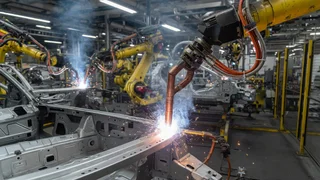
Automotive Spot Welding Robots
Choosing an automotive spot welding robot means looking beyond the basic pitch and examining how the machine will handle your joint design, material thickness and production tooling day after day. Heat input and process control directly shape weld quality, so the right evaluation should connect the robot’s motion, gun and control architecture to the metal stack you actually run. This guide explains what a welding robot does, which conditions change its performance, and how to compare systems without relying on unsupported specifications. The goal is to match automation capability to the realities of a body shop or component line.
The direct answer
The immediate answer is that an automotive spot welding robot is an industrial arm carrying a resistance welding gun, coordinated by a controller that times current, force and robot motion. It squeezes sheet metal between electrodes and passes a short, high-current pulse through the joint. The local resistance creates heat that fuses the materials into a weld nugget. The system’s value is repeatability: it returns to the same taught points with consistent squeeze and weld timing, which is difficult for manual welding during long production runs or on complex three-dimensional assemblies.
The suitability of a particular robot depends on its reach, payload, dress package and how well its motion works with the weld timer and gun. A robot that can hold the servo or pneumatic gun rigidly and move between seams without delay supports higher throughput, but only if the control system can tune heat input for the material thickness and coating present. The condition that materially changes the answer is the application itself. Thin coated steel, thicker structural sections, aluminum or assemblies with difficult access all require a different balance of gun force, current range and arm rigidity.