Laser Welding in the Automotive Industry
Laser welding has become one of the most influential joining methods in modern vehicle production. When researching automotive laser welding, readers typically want to know how the process works, where it is used, and why manufacturers select it over resistance spot welding or arc welding. The technology directs a focused laser beam at a joint to fuse metal quickly with minimal heat input. This supports lighter body structures, tighter tolerances, and cleaner visible seams. Understanding the basic mechanism and its common automotive applications helps clarify why laser beam welding appears across bodies, closures, battery enclosures, and powertrain components.
Essential answer
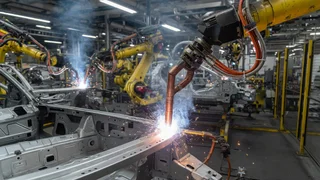
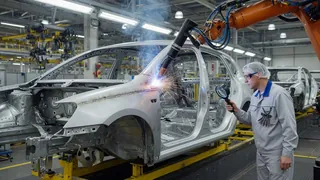
Automotive laser welding uses a concentrated beam of light to melt and join metal edges. The focused energy creates a narrow weld zone with relatively low overall heat input compared with conventional arc welding. Because the beam can be positioned precisely and moved quickly, it suits thin sheet steel, coated materials, and aluminum assemblies common in vehicle bodies. The process is often automated inside production cells where robots or optical scanners guide the beam along a programmed seam. This gives repeatable weld quality and reduces the distortion that can affect stamped panels.
In automotive manufacturing, the method supports several important jobs. It is used for tailored blanks that combine different material thicknesses, roof-to-body joints, door and closure seams, battery housing welds, and transmission or drivetrain subassemblies. The technique can operate as a deep-penetration keyhole weld or a wider conduction weld depending on beam focus and travel speed. Because joint design and process control shape the result, manufacturers choose laser welding when they need a compact seam, controlled heat input, and compatibility with high-volume production tooling.