What Is End-of-Line Testing for a New Car?
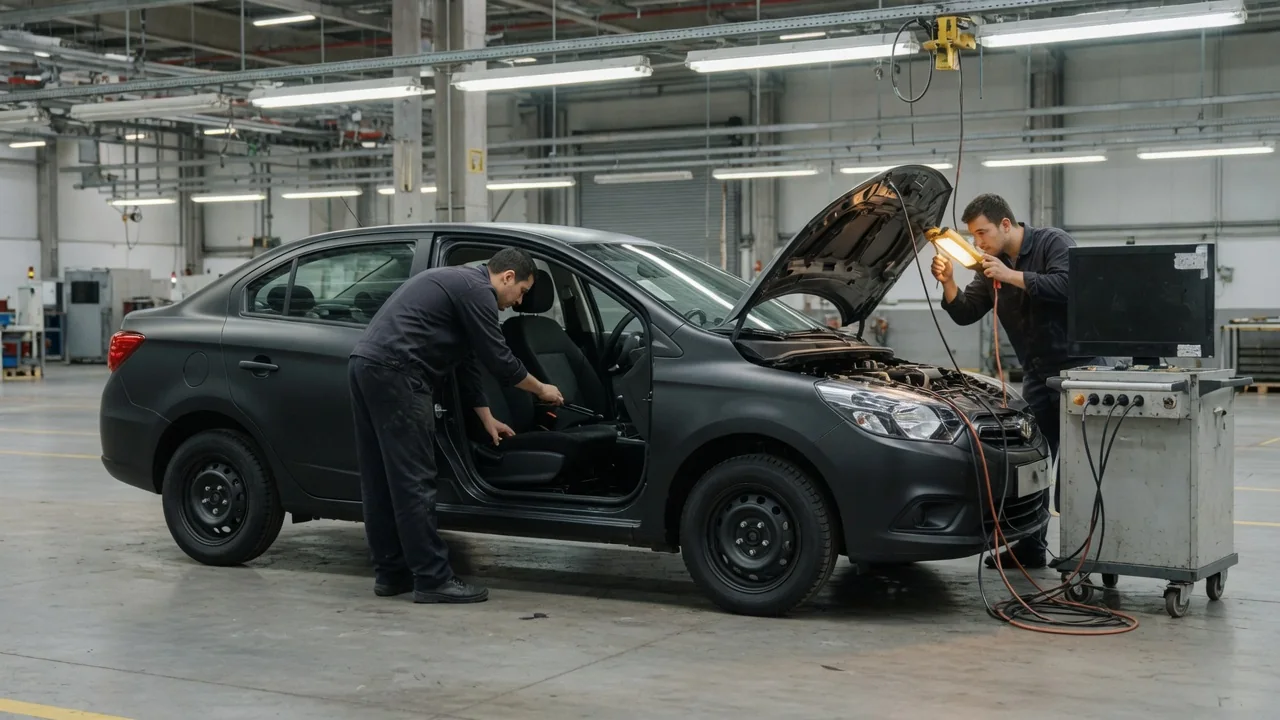
Anyone asking what is end of line testing for a new car is really asking how a factory proves that a freshly assembled vehicle works as intended. It is the series of checks carried out after the last parts are fitted and before the car is released for shipping. These checks cover electrical functions, sealing, wheel geometry, and overall build quality, though the exact routine differs between manufacturers and plants.
Electrical systems
A modern car leaves the assembly line with dozens of electronic control modules connected by wiring harnesses and data networks. During end-of-line testing, a diagnostic tool is typically plugged into the vehicle so the factory can confirm that each module is present, communicating, and loaded with the correct software for that particular build. Stored fault codes are read and reviewed as well. A code at this stage is a prompt to investigate a connector, sensor, or configuration, not automatic proof that a component is defective.
Functional checks follow the electronic conversation. Technicians or automated stations may operate the exterior lights, horn, wipers, power windows, door locks, instrument cluster, and infotainment screen to verify that commands produce the expected response. Driver assistance features that rely on cameras or radar often need calibration against targets before they can work accurately. The scope depends heavily on equipment level: a base trim has fewer circuits to prove than a fully optioned model, and electric vehicles add high-voltage system and charging checks that combustion cars do not need.
Leaks and alignment
Sealing is checked in two broad ways. Many plants send finished cars through a water booth, where spray from several angles simulates heavy rain while inspectors look for moisture around door seals, the windshield, the trunk or liftgate, and any sunroof. Fluid systems get separate attention, since brake lines, coolant hoses, fuel connections, and air conditioning circuits were all filled and joined only hours earlier. Inspectors look for drips, damp fittings, or pressure loss, and the methods used vary with the powertrain and the plant's equipment.
Wheel alignment is set because suspension parts assembled to tolerance still need final adjustment as a complete system. The car is positioned on a rig that measures angles such as toe and camber, and adjustments are made until readings fall within the manufacturer's specification for that model. The steering wheel is centered at the same time, so it sits straight when the car tracks straight. Headlight aim is commonly adjusted in the same area. Many factories also run the car on rollers to check braking and drivetrain behavior.
Final inspection
Final inspection is where trained eyes and hands take over from machines. Under bright, even lighting, inspectors study the paint for dust nibs, runs, scratches, or color mismatch between panels, and they check that gaps around the doors, hood, and trunk are consistent from side to side. Doors are opened and closed to judge effort and sound. Inside, they examine trim fit, seat stitching, carpet edges, and switch feel, looking for anything loose, marked, or misaligned that an owner would notice on day one.
Some plants add a short drive on a test track with rough surfaces designed to provoke squeaks, rattles, and wind noise that a stationary check cannot reveal. Cars that fail any station are diverted to a repair area, corrected, and then retested rather than simply waved through. Results are usually recorded against the vehicle identification number, creating a build history. How much of this is automated with cameras and how much relies on people differs widely, so two brands may reach the same goal by different routes.
Everyday Use and Observations
Owners rarely see the factory process, but its results show up in ordinary driving. A car that tracks straight on a level road with the steering wheel centered reflects a correct alignment setting. A dry cabin after a storm or a car wash reflects sound sealing. An instrument cluster free of warning lights at startup, after the brief bulb check, suggests the modules passed their electronic checks. Features such as automatic headlights or parking sensors working from the first mile point to proper configuration.
It helps to remember that a new car's journey continues after the factory gate. Vehicles travel by truck, rail, or ship, sit in storage yards, and may spend weeks with little use, so dealers normally carry out a pre-delivery inspection before handover. That step can include removing transport protection, checking tire pressures and battery condition, and confirming fluid levels. Buyers can do their own walkaround at delivery, looking over paint and glass, trying every switch, and noting anything unusual while the salesperson is present.
Limits and Next Steps
End-of-line testing confirms that a car met its specification on the day it was built; it cannot predict how every part will behave over years of heat, cold, vibration, and wear. Intermittent faults may not appear during a short test, and damage can happen in transit. A slight pull, a damp carpet, or a new rattle in the first weeks does not mean the factory skipped a step, but it deserves attention. Likewise, a warning light is information to be diagnosed, not a verdict on a specific part.
When something seems wrong, the sensible path is to note when it happens, under what conditions, and whether it repeats, then report it to the dealer while the new-vehicle warranty applies. Coverage terms differ by manufacturer, so the warranty booklet is the reference for what is included. Because some diagnostic codes are manufacturer-specific, their meaning should be confirmed with information for that exact vehicle. The owner's manual also explains which sounds, smells, or behaviors are normal during the early miles, which helps separate real concerns from ordinary break-in characteristics.