What Is Cylinder Deactivation? How Engines Rest Cylinders to Save Fuel
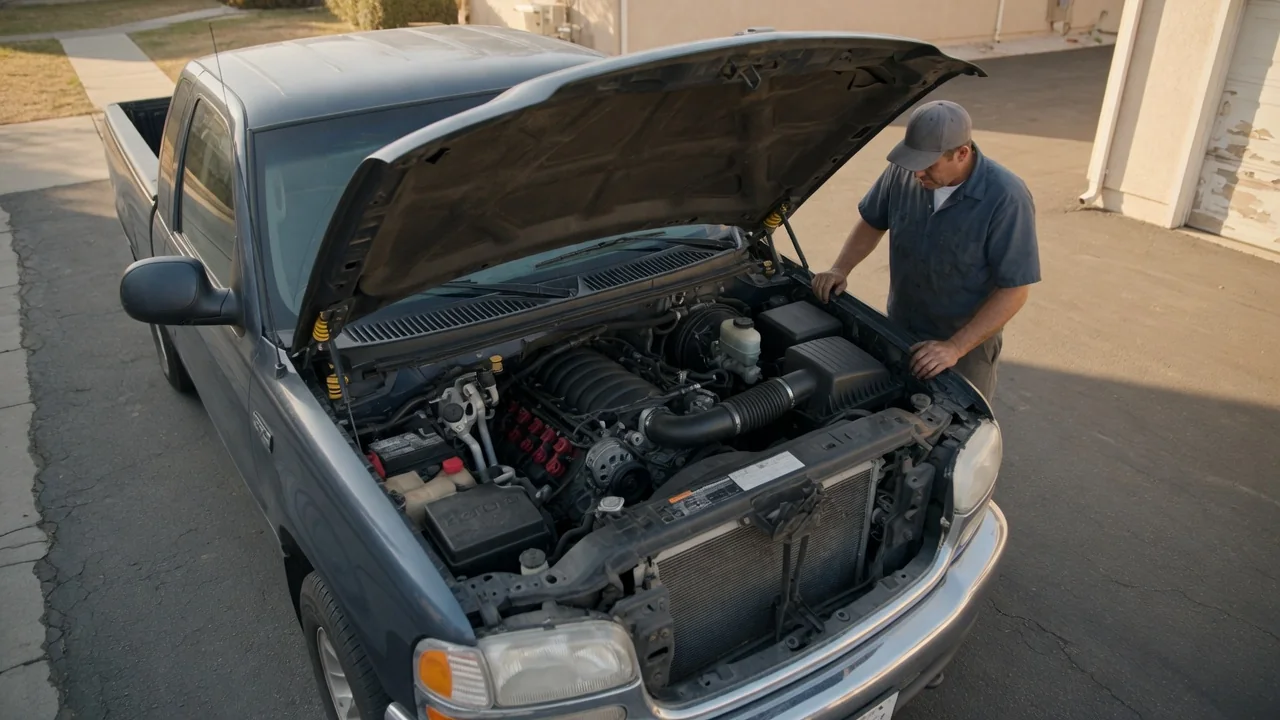
Cylinder deactivation is an engine strategy that temporarily shuts down some cylinders when the vehicle needs only a fraction of its available power. Instead of running every cylinder lightly, the engine runs fewer cylinders harder, which tends to reduce pumping losses and fuel use during light-load driving. This guide explains how engine cylinder deactivation controls valves and fuel, when it typically operates, what drivers may notice, and the practical limits worth understanding as an owner.
Valve and fuel control
A gasoline engine at light load runs with a partly closed throttle. The pistons must pull air past that restriction, and the effort spent doing so, often called pumping loss, is energy that never reaches the wheels. Simply cutting fuel to some cylinders would not solve this, because those cylinders would keep pumping air through the intake and exhaust, wasting energy and sending extra oxygen to the catalytic converter. Cylinder deactivation therefore stops both the fuel and the valve motion in the selected cylinders. With fewer cylinders sharing the work, the active ones need more air to produce the same output, so the throttle opens wider and pumping losses fall.
Manufacturers use several mechanical approaches to hold valves closed. One common design uses switchable hydraulic lifters or rocker arms: engine oil pressure, directed through solenoid-controlled passages, moves a locking pin so the lifter or rocker absorbs the cam lobe's motion instead of passing it to the valve. Another approach shifts a sliding section of the camshaft to a profile with no lift for the affected cylinders. In each case the intake and exhaust valves of a deactivated cylinder stay shut. Many systems close them in a sequence that traps a charge of gas in the cylinder, which then behaves like a spring: it is compressed as the piston rises and pushes back as the piston descends, returning much of that energy rather than wasting it.
The engine control module coordinates the switch. It stops the fuel injectors for the selected cylinders, manages ignition, and adjusts throttle opening and spark timing for the remaining cylinders so engine torque stays steady during the changeover. Timing is precise: the valve mechanism must switch at a point in the cam cycle where the lifter or rocker is not under load, so the control module schedules each cylinder's transition individually using crankshaft and camshaft position signals.
Operating range
Cylinder deactivation is meant for light, steady loads, the kind of demand found when cruising on a level highway, holding speed in suburban traffic, or rolling along with a small throttle opening. In those conditions a larger engine has far more capability than the moment requires, so running fewer cylinders costs nothing in usable performance. When the driver asks for more power, such as when accelerating, climbing a grade, or towing, the control module restores all cylinders, ideally before the extra demand has fully developed.
The control module also checks a set of enabling conditions before allowing deactivation. Typical inputs include coolant and oil temperature, oil pressure, engine speed, vehicle speed, the selected transmission gear, and throttle position. A cold engine, low oil pressure, very low engine speed, or a lower gear can each keep all cylinders running. The exact thresholds vary by engine and calibration, and they are not something an owner can usually observe directly, which is why the system may engage often on one trip and rarely on another.
Configurations differ as well. Many V8 and V6 designs deactivate half of their cylinders, while some systems can switch between several cylinder counts or vary which cylinders rest from one moment to the next to spread heat and wear. Some four-cylinder engines use the technique too. Which approach a given vehicle uses is a design choice by its manufacturer, so the owner's manual or factory service information is the reliable source for a particular engine.
Feel behind the wheel
When the system works as intended, most drivers notice little. The transition between full and partial operation is designed to be smooth, with the control module trimming throttle and spark so torque does not jump or sag. Some vehicles display an indicator, such as an economy message or a cylinder-count readout, while others give no visible cue at all. Where a change is perceptible, it is often a subtle shift in exhaust note or a faint, low-frequency hum at cruising speed.
The engineering challenge is vibration and sound. Fewer firing cylinders means fewer, stronger combustion pulses per crankshaft revolution, which moves the engine's vibration to a lower frequency that the body and cabin can transmit more readily. Engineers counter this with tools such as active or hydraulic engine mounts, tuned exhaust components, active noise cancellation through the audio system, and adjustments to torque converter lockup or slip that help damp drivetrain vibration. These limits are one reason the operating window can be narrower in some conditions: if the system cannot keep vibration acceptable, it simply keeps all cylinders active.
A noticeable shudder, a stumble during transitions, or rough running that appears alongside a warning light is not normal behavior for a healthy system. Such symptoms can point to a misfire, a valve actuation problem, low oil level, or a worn mount, and they deserve proper diagnosis rather than being dismissed as a quirk of the technology.
Practical implications and limits
The fuel benefit depends heavily on how a vehicle is used. Long stretches of steady, moderate driving give the system the most opportunity to engage, while short trips on a cold engine, frequent hard acceleration, heavy loads, or hilly terrain reduce that opportunity. Official fuel economy ratings already reflect whatever savings the system delivers under the test procedures, so it is not an extra bonus on top of the rated figure, and real-world results vary from driver to driver.
Because many designs rely on engine oil pressure to switch lifters or rockers, oil condition matters more than it might with a conventional valvetrain. Using the viscosity and specification listed by the manufacturer, keeping the oil at the correct level, and following the service interval all support reliable switching. Deactivation-related faults are typically monitored by the control module and can set diagnostic trouble codes, and some repairs involve the control solenoids, oil passages, or lifters themselves. Accurate diagnosis generally calls for a scan tool and the procedures in the service information for that specific engine.
Owners sometimes ask whether the feature can be turned off. Many vehicles offer no direct driver control for it, although certain drive modes or gear selections may limit how often it engages. Aftermarket devices that disable deactivation exist, but they change the engine's intended operation and can affect fuel consumption, emissions compliance, and warranty coverage, so any such modification is worth weighing carefully against the vehicle's documentation.