Cylinder Oil Lubrication: How to Choose the Right Oil for Your Engine
In a typical car, truck or SUV there is no separate cylinder oil. The cylinder walls, pistons and rings are lubricated by the same engine oil that protects the crankshaft, camshafts and valvetrain. Choosing the right cylinder lubrication oil therefore means choosing the right engine oil: the viscosity grade and performance specification your engine's manufacturer calls for. The answer changes for two-stroke engines, which burn oil mixed with fuel or metered in by an injection pump. It also changes for large marine and industrial engines, where dedicated cylinder oils are a separate product category that does not belong in road vehicles.
How Cylinders Are Lubricated in a Four-Stroke Engine
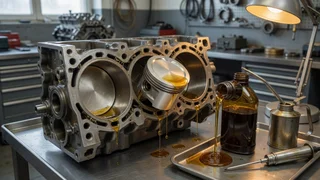
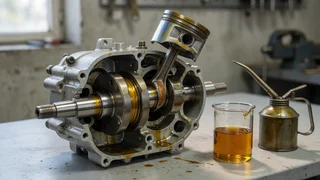
In a four-stroke gasoline or diesel engine, an oil pump draws oil from the sump and pushes it through galleries to the bearings and valvetrain. The cylinder walls receive oil mostly by splash and throw-off from the spinning crankshaft and connecting rods. Many modern engines, especially turbocharged ones, also use piston cooling jets that spray oil onto the underside of the pistons. That spray cools the pistons and adds lubrication to the lower cylinder.
The piston rings manage the oil film. The oil control ring scrapes most of the oil off the cylinder wall on the downstroke and returns it to the sump. It leaves behind only a thin film that the compression rings ride on. A small amount of oil is always exposed to combustion, so all engines consume some oil. This is also why oil chemistry affects deposits, emissions hardware and certain abnormal combustion events, not just wear.
What "Cylinder Oil" Can Mean
Four-stroke engine oil: the multigrade crankcase oil used in nearly all modern cars and light trucks, which lubricates the cylinders along with everything else. Two-stroke oil: oil made to be burned with the fuel in engines that have no oil sump, such as many small motorcycles, scooters, outboard motors and handheld power equipment. Upper cylinder lubricants: aftermarket additives added to fuel or intake air and marketed to lubricate valves, rings and the upper cylinder. Marine and industrial cylinder oils: specialized lubricants for large slow-speed two-stroke diesel engines or steam cylinders, fed to the cylinders by a separate system. These are unrelated to automotive engine oil.
Choosing Engine Oil for a Four-Stroke Car or Truck
The owner's manual, or the oil filler cap on some vehicles, is the controlling reference. Requirements vary by engine, model year and market. The same nameplate can call for different oils depending on the powertrain or the region it was sold in. Work through three criteria in order: viscosity, performance specification, then base oil type and special formulations.
Viscosity Grade
Viscosity grades follow the SAE J300 system. In a multigrade label such as 0W-20 or 5W-30, the number before the W describes cold-temperature performance. A lower number means the oil flows more readily at startup, when most wear occurs. The second number describes viscosity at normal operating temperature. Modern engines with tight clearances and variable valve timing are often designed around low-viscosity oils. Using a thicker grade than specified can slow oil delivery at startup and affect hydraulic systems. A thinner grade than specified can reduce film strength under load. Use the grade listed for your engine and climate.
Performance Specification and Approvals
Viscosity alone does not tell you whether an oil suits your engine. In the US, gasoline-engine oils are commonly identified by the API service symbol, the "donut," and by the ILSAC starburst. Current API gasoline categories include API SP and its 2025 successor, API SQ. Each newer category is generally intended to cover the needs of engines that called for earlier ones. These categories address issues such as low-speed pre-ignition (LSPI) in turbocharged direct-injection engines, timing chain wear and deposit control.
Diesel pickups and heavy-duty trucks typically use API C-series categories such as CK-4, or FA-4 where the manufacturer allows it. Many European and some domestic vehicles require a specific manufacturer approval in addition to, or instead of, an API rating. Examples include GM dexos, Volkswagen, Mercedes-Benz, BMW or Stellantis specifications, or an ACEA sequence. If your manual lists an approval code, look for that exact code on the bottle. Under warranty, keeping records that show the specified oil was used is sensible.
Base Oil Type
Oil type | General characteristics | When it makes sense; Conventional (mineral) | Refined from crude oil; generally lower cost; less resistant to heat and oxidation | Older or simpler engines whose manual permits it, with conventional change intervals; Synthetic blend | Mix of conventional and synthetic base stocks; performance and price typically between the other two | Drivers who want some added protection at moderate cost, where the specification is met; Full synthetic | Engineered or highly refined base stocks; better cold flow and high-temperature stability | Turbocharged and direct-injection engines, low-viscosity grades, extended intervals, and engines where the manufacturer requires it; High-mileage formulations | Usually include seal conditioners and additive packages aimed at older engines | Older engines with minor leaks or seepage, as long as the oil meets the required grade and specification
Base oil type matters less than meeting the correct specification. A conventional oil that carries the right approval is acceptable where the manufacturer allows it. A synthetic that lacks a required approval may not be. Many current engines call for low-viscosity grades that are effectively available only as synthetics, which settles the choice.
Special Cases
Turbocharged gasoline direct-injection engines: use an oil meeting a current API/ILSAC category or the required manufacturer approval, since these address LSPI and turbocharger deposits. Diesels with particulate filters: many require low-ash (low-SAPS) oils to limit filter clogging; check for the specific approval. Classic engines with flat-tappet camshafts: some older designs benefit from oils with higher levels of the anti-wear additive ZDDP than modern passenger-car oils contain. Products marketed for classic or performance use address this. New or rebuilt engines: follow the engine builder's or manufacturer's break-in guidance. Some rebuilders specify a particular break-in oil and an early first change so the rings seat properly against the cylinder walls.
Choosing Oil for Two-Stroke Engines
A two-stroke engine routes its fuel-air mixture through the crankcase, so it cannot hold a sump of oil. The cylinder, piston, bearings and rings are lubricated by oil carried in with the fuel. The oil is either premixed in the tank or metered by an injection pump, and it is then burned. Two-stroke oils are formulated to lubricate in that role and to burn with limited smoke and deposits. Do not use four-stroke engine oil in a two-stroke engine, or the reverse.
Air-cooled engines (motorcycles, scooters, chainsaws, trimmers): look for the rating the manufacturer specifies, commonly JASO FC or FD, or ISO-L-EGD. Higher grades generally indicate better detergency and lower smoke. Water-cooled outboard and personal watercraft engines: these typically call for NMMA TC-W3 certified oil, which is formulated for their lower operating temperatures. Mix ratio: use exactly the ratio stated by the engine manufacturer. Too little oil risks piston scuffing and seizure. Too much can foul spark plugs and build carbon. Oil-injected engines: use the oil type specified for the injection system, since thicker or incompatible oils may not meter correctly.
Do Upper Cylinder Lubricants Help?
For a modern, healthy engine running the correct oil and quality fuel, there is generally no established need for an upper cylinder lubricant. Fuel-system detergents in gasoline already address intake valve and injector deposits to a degree. Products for specific jobs are a different matter, such as fogging oil that coats cylinder walls before long-term storage, or assembly lubricant used during an engine build. Those are legitimate tools for a defined purpose rather than everyday additives. If you consider an aftermarket additive, check that it does not conflict with emissions equipment or warranty terms.
When Oil Choice Is Not the Real Problem
Rising oil consumption, blue exhaust smoke, low compression or oil-fouled spark plugs can point to worn or stuck piston rings, worn cylinder walls, valve stem seal wear or a faulty PCV (positive crankcase ventilation) system. Switching to a thicker or high-mileage oil may reduce symptoms slightly in some cases, but it does not repair mechanical wear. A compression or leak-down test gives a clearer picture before you spend on additives or specialty oils.
Quick Decision Steps
Confirm the engine type: four-stroke crankcase oil system or two-stroke oil-in-fuel system. Find the required viscosity grade and specification or approval code in the owner's manual for your exact model year and engine. Buy an oil whose label shows that grade and that specification or approval. Pick conventional, blend or synthetic based on what the specification allows, your driving conditions and your change interval. For two-strokes, match the JASO, ISO or TC-W3 rating and the manufacturer's mix ratio. Treat additives as optional and purpose-specific, not as a substitute for the correct oil or mechanical repair.