Choose cylinder lubrication oil
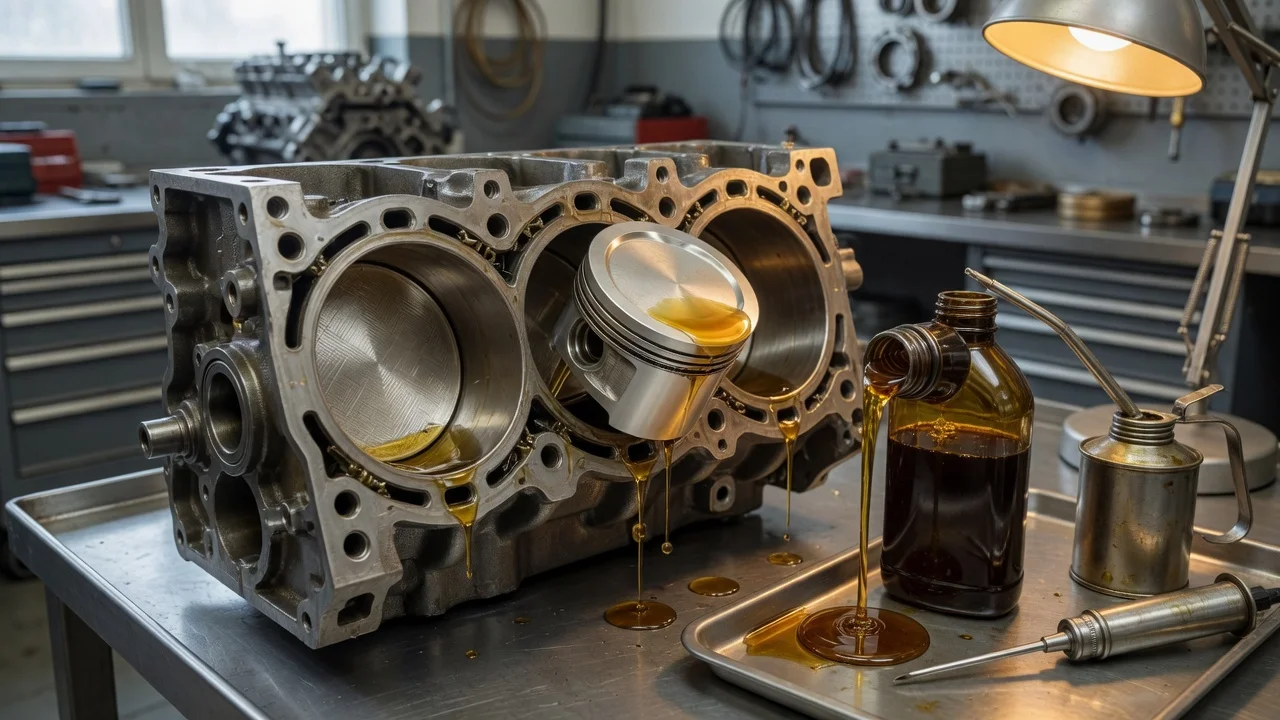
For most cars, there is no separate cylinder oil to buy. In a four-stroke engine, the regular engine oil lubricates the cylinder walls, pistons and rings, so choosing the right oil means matching the viscosity grade and performance specification in the owner's manual. A separate oil for cylinder lubrication is needed mainly in two-stroke engines, such as some motorcycles, scooters and small-engine equipment, where oil is mixed with fuel or injected into the intake. Products sold as "cylinder oil" for large marine or industrial engines are a different category and are not substitutes for automotive engine oil.
How cylinders are lubricated in vehicle engines
In a typical four-stroke car or motorcycle engine, oil is held in a sump and circulated by a pump. Some of that oil reaches the cylinder walls by being sprayed or flung from the crankshaft and connecting rods, and in some designs from dedicated piston-cooling jets. The piston rings spread a thin film on the bore and scrape most of it back down so it does not burn in the combustion chamber. Because the same oil also protects bearings, the camshaft and the valvetrain, the cylinder cannot be lubricated with a different product.
In a two-stroke engine, the crankcase is part of the intake path, so it cannot hold a sump of oil. Lubrication comes from oil carried in with the fuel-air charge, either premixed in the fuel tank or metered by an oil-injection pump from a separate reservoir. That oil coats the cylinder, piston and bearings and is then largely burned, which is why two-stroke oil is formulated differently from four-stroke engine oil.
Which oil fits your engine
The choice depends first on engine type, then on what the manufacturer specifies. The table below compares the relevant options on the same criteria.
Option | Where it applies | How it reaches the cylinder | When it is the right choice | Main caveat; Four-stroke engine oil | Most cars, most modern motorcycles and many light trucks | Circulated from the sump by the oil pump and splashed or sprayed onto the bores | Any four-stroke engine, using the grade and specification the manual lists | Must also suit bearings, valvetrain and any emissions hardware, so the manual's specification governs; Two-stroke oil for premix | Two-stroke engines without oil injection | Mixed into the fuel at a ratio set by the manufacturer | Engines whose maker specifies premixing | Wrong ratio or wrong oil type can cause poor lubrication or heavy deposits; Two-stroke oil for injection systems | Two-stroke engines with a separate oil tank and pump | Metered automatically into the intake | Engines with factory oil injection | Oil must suit the injection system as specified; some oils are labeled for premix only; Upper cylinder lubricant additive | Sold as a fuel or oil additive for four-stroke engines | Added to fuel to deposit a small amount of lubricant in the upper cylinder | Only where the vehicle maker recommends it | No supplied test evidence supports a benefit in modern engines; it does not replace engine oil; Marine or industrial cylinder oil | Large crosshead diesel engines and steam equipment | Fed by dedicated cylinder lubricators | Not applicable to cars or motorcycles | Not formulated or approved for automotive engines
Choosing four-stroke engine oil
Two pieces of information on the label matter most. The viscosity grade, such as 0W-20 or 5W-30, describes how the oil flows: the number before the W indicates cold-weather performance, and the number after it indicates thickness at operating temperature. The performance specification shows which standards the oil meets, such as API service categories, ILSAC grades, ACEA sequences or a carmaker's own approval code. Manufacturer approvals can be stricter than general categories and are often required for warranty compliance.
Requirements vary by model year, engine, market and sometimes climate, so a grade correct for one version of a model may be wrong for another. Use the owner's manual or the oil filler cap marking for your exact vehicle rather than a general recommendation. Motorcycles with a wet clutch, where the clutch runs in the engine oil, often call for oils meeting a motorcycle-specific standard such as JASO MA or MA2, because some car oils contain friction modifiers that can cause clutch slip.
Whether to use full synthetic, synthetic blend or conventional oil is secondary to meeting the required grade and specification. Some engines are approved only with oils that, in practice, are synthetic; where the manual allows a choice, the decision often comes down to cost, service interval and operating conditions. No comparative test data was supplied to rank base-oil types for cylinder wear.
Choosing two-stroke oil
For two-stroke vehicles, look for the classification the manufacturer requires. Common land-engine standards include the JASO FB, FC and FD grades and the ISO EGB, EGC and EGD grades, where later letters generally indicate tighter requirements for detergency and smoke. Oils certified to the TC-W3 standard are designed for water-cooled outboard engines and should not be assumed suitable for air-cooled motorcycle or scooter engines unless the engine maker permits it.
For premix engines, the fuel-to-oil ratio comes from the manufacturer and can differ between models and even between break-in and normal running. Do not change the ratio based on a different oil's label without confirming it with the engine maker's guidance. For oil-injected engines, keep the reservoir filled with an oil the manual approves; running it dry removes cylinder lubrication.
Evidence limits
This guide describes documented lubrication principles and standard classifications. No brand-specific product data, prices, wear measurements or independent test results were supplied, so it does not rank individual oils or quantify differences between oil types. Where your engine's requirements are unclear, the vehicle manufacturer's documentation or a dealer service department is the authoritative source.
Next steps
Confirm whether your engine is four-stroke or two-stroke. For a four-stroke engine, find the required viscosity grade and specification or approval code in the owner's manual for your model year and engine. For a motorcycle with a wet clutch, check whether a JASO MA or MA2 oil is required. For a two-stroke engine, confirm the required oil classification and whether the engine uses premix or oil injection, plus the specified mixing ratio if premixed. Buy an oil whose label lists the exact grade and specification required, and treat additives or alternative products as optional only if the manufacturer endorses them.