What Is an OBD2 Port Used For?
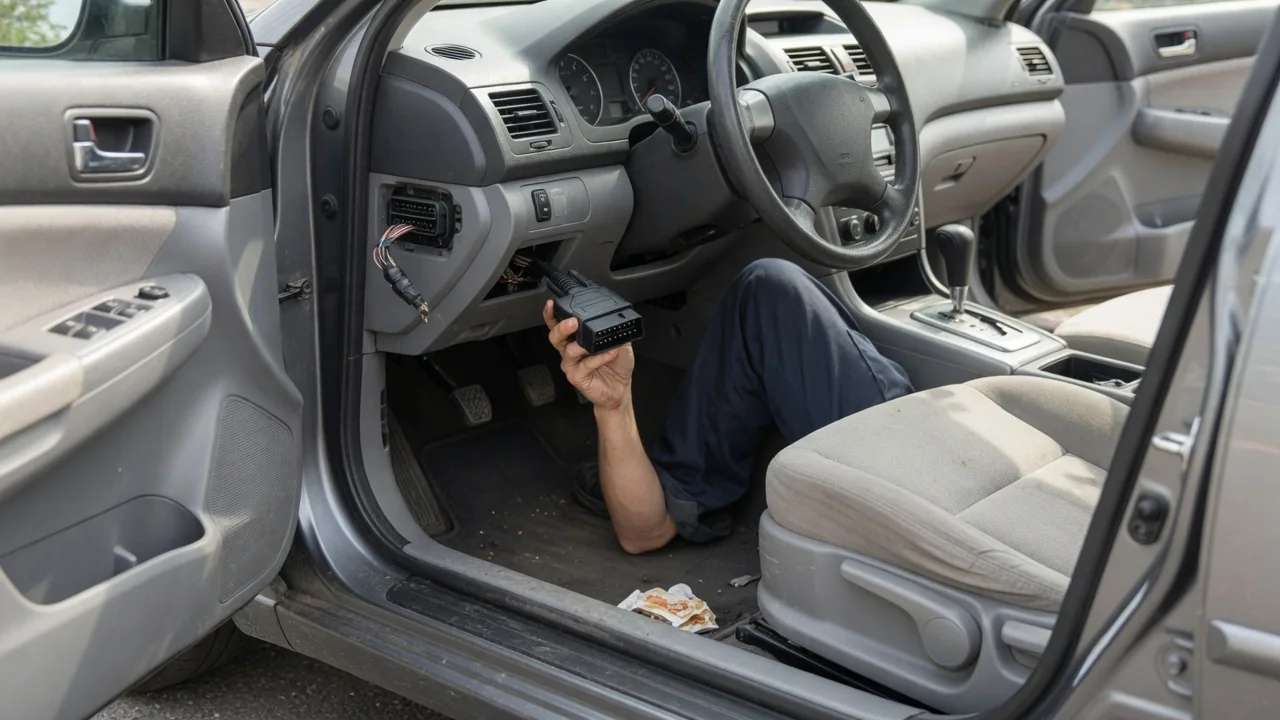
If you have ever wondered what is an OBD2 port used for, the short answer is communication. This small connector lets a scan tool talk to the computers that monitor your engine, emissions equipment and other systems. It gives owners and technicians a window into stored fault codes and live sensor data, yet it also has real limits worth understanding before you rely on it.
Port location
On most passenger vehicles, the diagnostic connector sits inside the cabin on the driver's side, usually beneath the dashboard and somewhere near the steering column. It is a trapezoid-shaped socket with two rows of pins, often black, though some manufacturers mold it in another color. You can typically spot it by crouching at the open driver's door and looking up under the lower dash panel, near the hood release or the fuse panel cover.
Placement is not identical across every make and model. Some vehicles hide the socket behind a small hinged or snap-off cover, while others position it closer to the center console or to the left of the driver's knee. If you cannot find it by sight, the owner's manual normally shows the location. Keeping the area clear matters too, because a plugged-in device that hangs near the pedals or your legs can be bumped while driving.
What codes show
When a control module notices a reading outside its expected range, or a test that fails repeatedly, it stores a diagnostic trouble code and may turn on the check engine light. A scan tool connected to the port retrieves that code, which points to a circuit, a system or a condition, such as a misfire detected on a cylinder or an oxygen sensor signal that looks implausible. Many tools also display freeze frame data, a snapshot of engine conditions at the moment the fault was recorded.
A code is evidence to interpret rather than a verdict on a part. A lean-condition code, for instance, could trace back to a vacuum leak, a fuel delivery problem, a dirty airflow sensor or an exhaust leak, and the code alone does not say which. Generic powertrain codes share common meanings across brands, but manufacturer-specific codes can be defined differently from one automaker to the next, so their meaning should be confirmed against information for your exact vehicle.
Professional diagnosis
A repair shop uses the same connector but usually with far more capable equipment. Professional scan tools can communicate with modules beyond the engine computer, including those for the transmission, anti-lock brakes, airbags and body electronics, depending on what the vehicle supports. Technicians watch live data streams, compare sensor readings against each other, and may command components such as fans or solenoids on and off to see whether the system responds as it should.
The scan is only the starting point of a diagnosis. A technician following up on a misfire code might inspect ignition parts, check fuel pressure, test wiring with a meter or perform a smoke test for intake leaks before recommending any repair. This is why a diagnostic fee often covers testing time rather than just reading a code. How much access a given tool has, and which tests are available, varies with the vehicle's make, age and software.
Everyday Use and Observations
For everyday drivers, an inexpensive code reader or a wireless adapter paired with a phone app is the most common use of the port. When the check engine light comes on, reading the code helps you judge whether the car needs prompt attention and lets you describe the issue accurately when you call a shop. Many readers also show readiness monitor status, which indicates whether the vehicle's self-tests have completed, something that matters before an emissions inspection in areas that require one.
Live data can be useful to watch as well. Coolant temperature, engine speed, fuel trim and battery voltage readings let you notice patterns, such as an engine that warms up slowly or a voltage that sags at idle. Some insurers and fleet operators use plug-in devices to log driving behavior and mileage. Which parameters appear depends on the vehicle and the tool, and a basic reader may show far fewer values than the car actually reports to dealer-level equipment.
Limits and Next Steps
The port cannot see everything. Tired suspension bushings, a noisy wheel bearing or, on many vehicles, worn brake pads may never set a code, because no sensor monitors them directly. Intermittent faults can also come and go without being stored. Clearing codes with a reader turns off the warning light but repairs nothing, and it erases freeze frame data and resets readiness monitors, which can make a later diagnosis harder and delay an emissions test.
A sensible next step after reading a code is to write it down along with any freeze frame details and the symptoms you noticed, such as rough idle, hesitation or a fuel smell. A flashing check engine light, overheating, or warnings for brakes or airbags call for professional attention rather than continued driving and guesswork. For anything beyond a simple confirmed cause, share your notes with a qualified technician, who can verify the fault against service information for your specific vehicle.