What Is an EV Charge Port Lock?
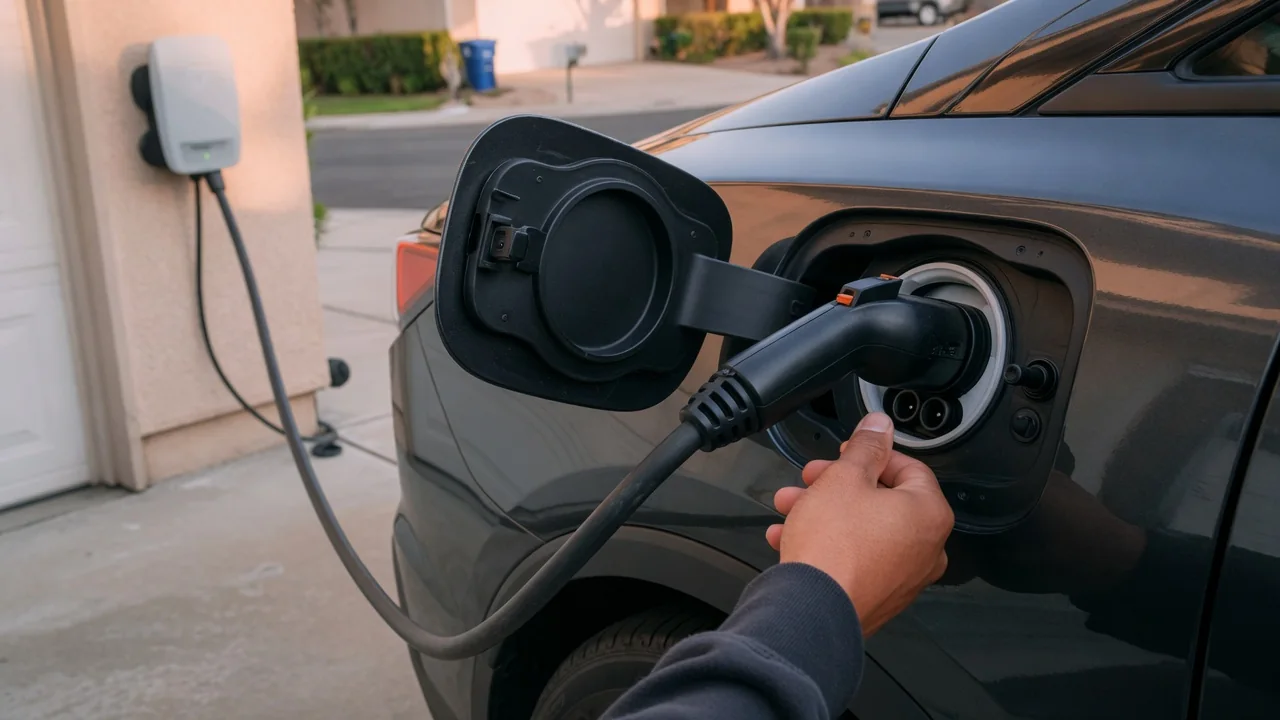
Drivers new to electric vehicles often ask what is an EV charge port lock after tugging on a connector that refuses to move. It is a small locking mechanism, usually an electrically driven pin or latch in the vehicle inlet, that holds the charging connector in place during a session. Understanding why it engages explains most cases where the connector stays latched.
Lock behavior
The lock works by moving a pin or latch into position once the connector is fully seated, so the plug cannot be pulled out while current is flowing. On many vehicles a small actuator inside the inlet does this, and you may hear a brief click or whir as it engages. Its purpose is protective: separating a connector under load can damage contacts, and keeping the cable secured also discourages someone from unplugging your car or walking off with a portable cable.
Behavior differs between vehicles and charging types. Some cars lock the connector whenever the doors are locked, others only while energy is being delivered, and some let the owner choose in a settings menu whether the cable releases automatically when charging finishes. During DC fast charging the connector generally stays locked until the session has been stopped and the voltage at the pins has dropped. Because of these differences, a connector that seems stuck is often simply following the logic programmed for that model.
Normal release
In a normal release, the vehicle first ends the charging session, then retracts the lock so the connector can slide free. The trigger varies: unlocking the car with the key fob or door handle, pressing a button near the inlet, tapping a control on the touchscreen or in a phone app, or stopping the session at the station. With connectors that have a thumb button on the handle, pressing it typically signals the car to stop drawing current before the latch lets go.
What you can observe usually confirms the sequence. Indicator lights around the port often change color or stop pulsing, the dash or screen shows that charging has ended, and the actuator makes an audible sound as it withdraws. A short delay between requesting release and being able to pull the plug is common, especially after fast charging while the system confirms it is safe. Some vehicles also relock the connector if it is not removed within a brief window, which can look like a failure.
Safe troubleshooting
When the connector stays latched, start with the simple explanations. Confirm the session has actually stopped, both on the vehicle display and at the station, then unlock the car again and wait a moment before pulling. Supporting the weight of the handle and pressing it gently inward while requesting release can help, because a heavy cable hanging on the plug may bind the pin against the connector. Cold weather is another factor, since ice or stiff seals around the inlet can slow the mechanism.
Avoid yanking, twisting hard, or prying at the inlet with tools; the port carries high-voltage hardware, and forced removal can break the latch or damage the terminals. Many vehicles provide a manual release, often a pull loop or cable reached from the cargo area or under the hood, but its location and correct use are vehicle-specific, so follow the owner's manual rather than guessing. If the station itself has frozen or shows an error, the network's support line can sometimes end the session remotely.
Everyday Use and Observations
In daily use the lock mostly goes unnoticed, yet a few habits keep it that way. Push the connector in fully until it seats, since a partly inserted plug may fail to lock or may refuse to start charging. Glance at the port light after plugging in to confirm the car has accepted the connection. Keeping the inlet clear of grit, snow, and road salt, and closing the port door or cap after use, helps the pin move freely over the long term.
Paying attention to how your own vehicle normally sounds and behaves makes changes easier to spot. A lock that used to click crisply but now hesitates, cycles repeatedly, or needs several unlock attempts is worth noting, as is a connector that suddenly releases too easily. At shared public chargers, remember that your settings decide whether another driver can unplug the cable once your battery is full, so it is worth reviewing that option if you regularly use busy stations or leave the car unattended.
Limits and Next Steps
There are limits to what an owner can diagnose at the curb. A latched connector can stem from the lock actuator, its wiring, a sensor that reports pin position, software, a worn connector on the station side, or simply a low twelve-volt battery that leaves the car unable to power the release. A warning message or stored fault code pointing at the charge port is evidence to interpret, not proof that a particular part has failed, and manufacturer-specific codes need confirmation against information for that exact vehicle.
If the problem repeats, record what happened: which charger and connector type were involved, the temperature, any messages on the screen, and whether the manual release was needed. Trying a different station helps separate a vehicle fault from an equipment fault. Persistent sticking, a lock that will not engage so charging never starts, or any visible damage to the inlet justifies an inspection by a technician qualified to work on high-voltage systems, and checking whether warranty coverage or a software update applies is a sensible first question.