Car diagnostic port locks
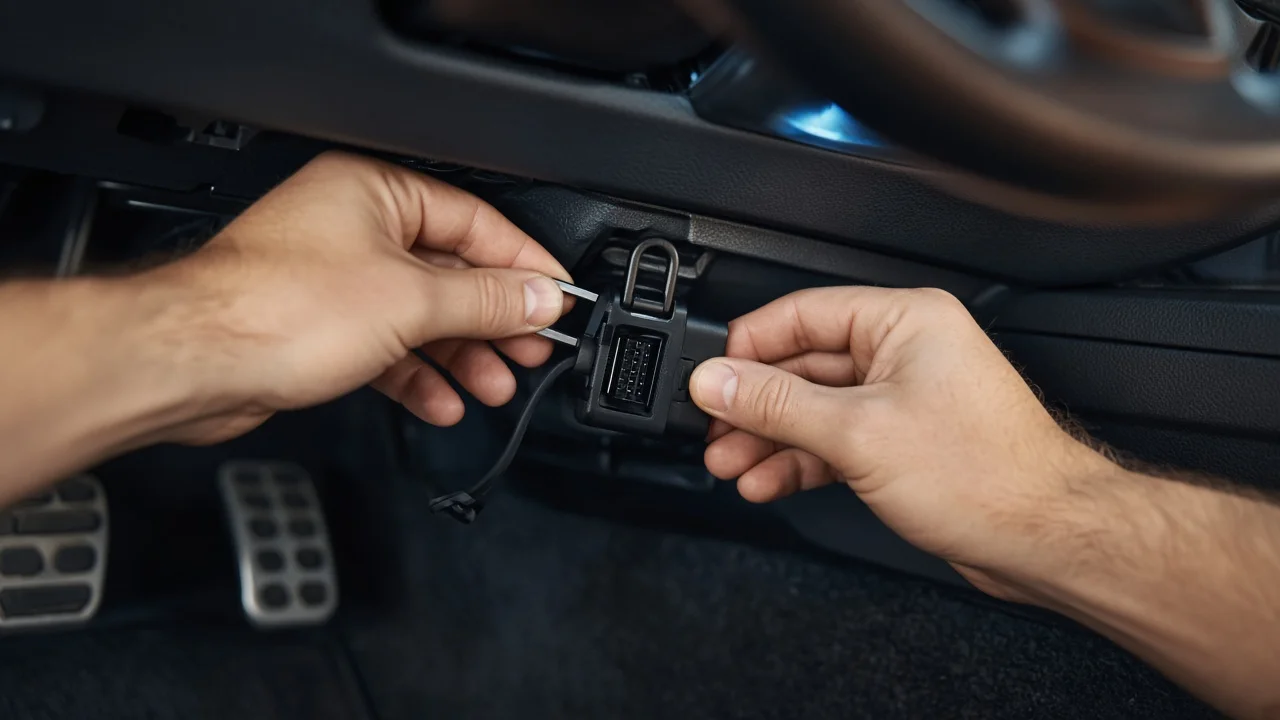
A diagnostic port lock is a physical cover or plug that blocks access to your car's OBD-II connector. OBD-II stands for on-board diagnostics, second generation. It is the standardized socket, usually under the dashboard, that technicians use to read fault codes and that some thieves use to program a new key. A port lock can slow down or discourage that kind of theft. It does not make a car theft-proof, and it is most worthwhile when your model is known to be targeted through the diagnostic port and you use it alongside other security measures.
The short answer
Buy a diagnostic port lock if your main worry is someone getting into the cabin, plugging a programming tool into the OBD-II socket and adding a key. Before buying, check three things: that the lock physically fits the space around your vehicle's port, that it is built well enough to resist quick prying or cutting, and that you can live with removing it for servicing, inspections and plug-in devices. If your car is more exposed to other methods, such as relay attacks on keyless entry or wiring tampering elsewhere in the vehicle, a port lock alone will not address those risks.
What the port is and why thieves target it
In the US, passenger vehicles from the 1996 model year onward use the OBD-II standard. The connector shape is standardized, a 16-pin trapezoid-shaped socket, and it is normally located within reach of the driver's seat, often below the steering column or near the driver's knee area. It is designed to be easy to reach so service equipment can connect without removing trim.
That easy access is also the weakness. On many vehicles, a programming tool connected to the port can communicate with the immobilizer and key systems. If a thief can get into the cabin, for example by breaking a window or defeating the door lock, they may be able to add a new key and drive away. A port lock aims to put a physical obstacle between the thief and the socket so this takes longer and draws more attention.
What a port lock can and cannot do
It can: block casual or quick access to the diagnostic socket. It can: add time and noise to a theft attempt, which may push a thief toward an easier target. It can: act as a visible deterrent if it can be seen through the window. It cannot: stop someone who cuts the wiring behind the port and connects elsewhere on the vehicle's network. It cannot: prevent relay attacks on keyless entry, which capture and extend the signal from your key fob. It cannot: stop methods that bypass the port entirely, such as tampering with wiring accessible from outside the cabin on some models. It cannot: guarantee protection against a determined, well-equipped thief.
Which methods matter most depends on your make, model and model year. Theft techniques vary by vehicle and change over time, so it is worth checking whether your specific model is commonly stolen through key programming before treating a port lock as a priority purchase.
Main types of diagnostic port locks
Type | How it works | Points to weigh; Plug-style lock | A keyed or coded plug inserts into the socket itself and locks in place | Compact, often fits more vehicles; depends on not damaging the socket pins; quality of the locking mechanism is critical; Enclosure or clamshell cover | A metal box or shell closes around the port and locks | Can be harder to defeat quickly; needs enough clear space around the port; may require mounting to nearby trim or structure; Port relocation | The socket is moved to a less obvious spot using an extension | Relies on concealment rather than strength; extra wiring work; any tampering with factory wiring carries risk if done poorly; Electronic port blocker or immobilizer add-on | A device disables communication through the port until deactivated | Not a mechanical lock; typically needs professional installation; outside the scope of a simple bolt-on accessory
What to check before buying
Fit for your specific vehicle
The socket itself is standardized, but the space around it is not. Some ports sit flush in a panel, some are recessed, some hang from a bracket and some are angled. An enclosure-style lock may not close properly if there is a trim edge, a knee panel or a bracket in the way. Fitment can differ between model years, trims and even body styles of the same nameplate, so match any compatibility claim to your exact model year, market and trim. If the seller cannot confirm fit for your configuration, look at the area around your port yourself and compare it with the product's dimensions and mounting method before ordering.
Build quality and resistance to attack
Material: hardened steel or solid metal construction is generally more resistant than plastic, which can be pried or cut quickly. Locking mechanism: look for a lock that is not easily picked or bypassed, and check whether keys are unique or shared across many units. Mounting strength: an enclosure is only as strong as what holds it; if it clips onto thin plastic trim, the whole assembly may be pulled off. Exposed edges: gaps that allow a screwdriver or pry bar to get leverage weaken the design.
No independent test results were available for this article, so specific products cannot be ranked here. When comparing options, favor sellers that describe the materials and lock mechanism clearly rather than relying on general claims about being unbreakable.
Installation and risk to the vehicle
Check whether installation needs drilling, cutting trim or modifying wiring, and decide whether you are comfortable doing that or would prefer a professional. With plug-style locks, make sure the plug does not bend or damage the socket pins, which would cause problems for future diagnostics. In the US, fitting an aftermarket accessory does not by itself void a new-vehicle warranty, but damage caused by the accessory or its installation may not be covered. Keep factory wiring intact where possible.
Day-to-day practicality
Servicing: technicians need the port for diagnostics and some repairs, so you will need to remove the lock or leave the key with the shop. Inspections: in states that use OBD-based emissions or safety inspections, the port must be accessible on the day of testing. Plug-in devices: insurance telematics dongles, fleet trackers and code readers that stay connected cannot be used while the port is locked. Some products offer a way around this, but check the details. Key management: keep the lock key separate from your car keys, and know what happens if you lose it. Comfort: a bulky enclosure near the driver's knee should not interfere with pedals, the steering column or your seating position.
Using a port lock as part of layered security
Because a diagnostic port lock covers only one route, it works best combined with other measures matched to how your model is typically stolen. Common additions include a visible steering wheel lock, a signal-blocking pouch for keyless fobs, an aftermarket immobilizer, a tracking device and checking with the manufacturer or dealer for any security software updates for your vehicle. Your insurer may also have guidance on which measures it recognizes for your model.
Gaps in the available information
No confirmed product data, prices, fitment lists or test results were available for this guide. That means this article cannot recommend specific brands, compare prices or confirm whether a given lock fits a given vehicle. Treat compatibility statements from sellers as claims to verify against your own vehicle's model year, trim and port location, and ask for return terms in case the lock does not fit.