EV Charge Port Location
Finding the charge port on an electric vehicle shapes how easily the car fits into daily routines. The location is not standardized across brands, so a driver may reach for a front fender on one model and a rear quarter panel on another. Understanding why charge port placement differs helps when parking at public stations, planning a home charger installation, or comparing EVs before purchase. It also affects cable reach, station approach angle, and everyday convenience.
Essential answer
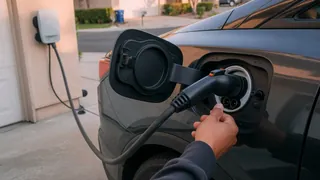
An EV charge port is the vehicle-side receptacle that accepts a charging connector, transferring electrical energy from an external source into the battery. Its location varies by manufacturer and sometimes by model or market. Common positions include the front fender ahead of the driver door, the rear quarter panel behind a wheel opening, or a section of the front fascia concealed under a badge or panel.
There is no universal standard for charge port location because vehicle architecture, crash structure, high-voltage cable routing, and design intent all influence placement. A right-front or left-rear position may be chosen to shorten internal cabling or suit a factory assembly sequence. The practical result is that drivers should identify the port on the specific vehicle rather than assume it mirrors a gasoline filler door.
Identification and location
Most EVs provide visible and tactile identification cues. The charge port is often covered by a body-color panel with a pressed edge or electronic release. On some vehicles, a lightning bolt symbol, a charging icon, or a contrasting ring marks the cover. Interior controls, key fobs, or touchscreen commands may open the door, while other models use a push-to-release panel similar to a conventional fuel door.
If the port is not immediately visible, checking both front fenders and rear quarter panels resolves most confusion. The owner’s manual and in-vehicle charging screen provide vehicle-specific confirmation, especially when manufacturer-dependent placement differs by trim, model year, or region. When navigating to a public station, consider the port side because it affects how the vehicle should be positioned relative to the dispenser and cable length. Route information and map data can assist with station entry, but the driver still must align the vehicle so the connector reaches without straining the cable.