What Is an Easy-Entry Car Seat?
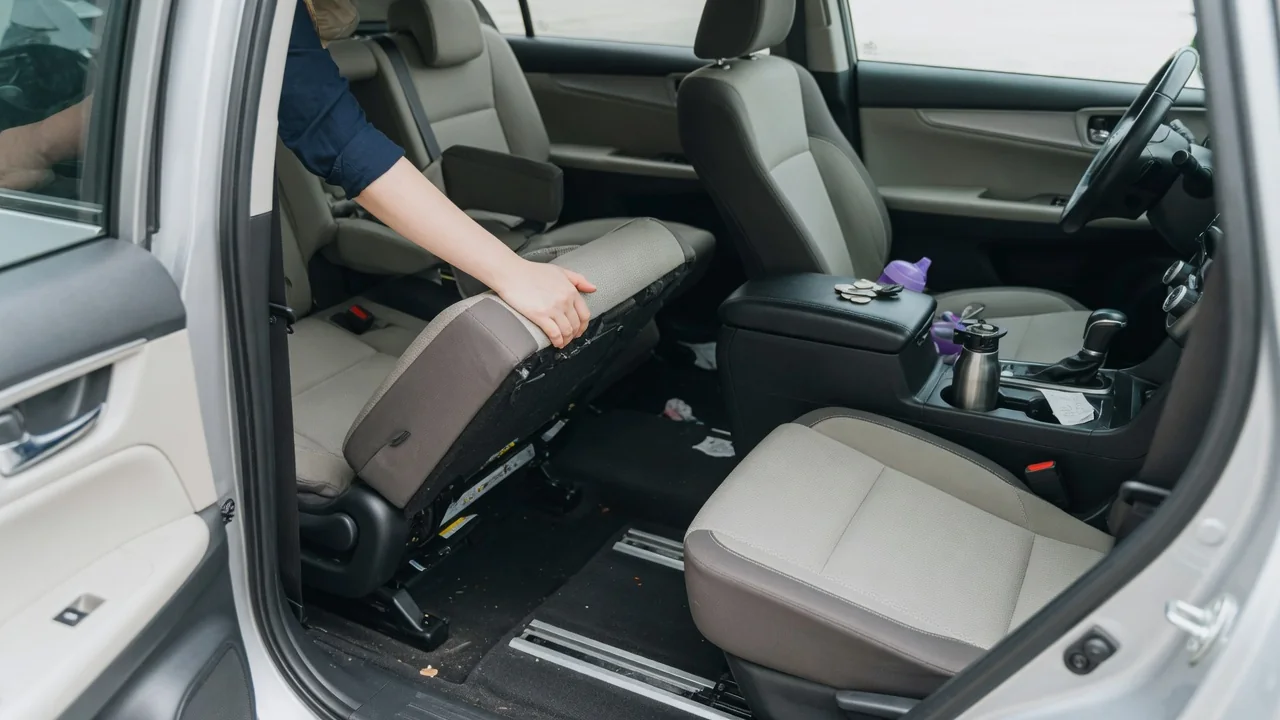
What is an easy entry car seat? It is a seat designed to move out of the way so people can get in and out with less twisting and squeezing. Depending on the vehicle, that may mean a driver's seat that glides rearward when the door opens, or a front or second-row seat that tilts and slides forward to open a path to the seats behind it.
Manual and powered motion
In a manual design, a lever or strap on the seatback shoulder or lower cushion side releases two things at once: the backrest latch and the track lock. The backrest folds forward and the whole seat slides toward the dashboard, widening the gap behind it. Two-door coupes and the second rows of many three-row SUVs and minivans use this arrangement. Some versions include a memory feature in the track so the seat returns to its earlier position, while others stop wherever they are pushed and need readjusting.
Powered versions use the same electric motors that handle normal seat adjustment. On the driver's side, the seat typically travels rearward, and sometimes the steering column rises or retracts, when the ignition is switched off or the door is opened, then returns to the stored driving position on startup. Powered rear-access seats may move forward at the press of a button on the seatback. The motion is slower than a manual release, and whether the feature exists, and how it is triggered, depends on trim level and model year.
Passenger setup
Setting up for passengers starts with knowing which seat provides the access path. In many three-row vehicles only one side of the second row tilts and slides, often the curbside, so passengers board away from traffic. In a coupe, either front seat may tip forward. Before using the release, clear the floor behind and beneath the seat, since bags, bottles and loose floor mats can block the tracks and prevent the seat from traveling fully or locking again.
Child restraints change the picture considerably. A seat with a child restraint installed generally cannot fold its backrest, although some vehicles offer a pitch-forward motion that keeps the cushion angle steady so an empty restraint can remain attached. The owner's manual states whether that is permitted, and it never applies with a child in place. After passengers are seated, push the seat rearward until it clicks, then tug the backrest and rock the base to confirm both latches have engaged.
Pinch awareness
Any seat that slides and folds creates closing gaps. The hinge between cushion and backrest, the track rails on the floor, and the space between a returning seat and the rear passenger's feet or knees are the usual places where fingers, toes and clothing get caught. Manual seats can drop back into position with real weight behind them, particularly on a slope, so it helps to guide the seat by hand rather than letting it slam.
Powered seats add a different consideration because they move without anyone pushing. A driver's seat that travels rearward on shutdown can press against the legs of a person sitting behind, or against cargo wedged on the floor. Some systems sense resistance and stop or reverse, but that protection is not universal and should not be relied upon. A brief look behind before switching off, and keeping children's hands away from the seat base while it moves, covers most of the risk.
Everyday Use and Observations
In daily driving, the feature shows itself in small ways. A driver may notice the seat easing back a short distance after parking, then returning once the vehicle is started or a memory profile is recognized. Taller drivers who already sit near the rear of the track may see almost no movement, since there is little travel left. Many vehicles let the owner switch the function on or off, or adjust it, through the infotainment settings or instrument cluster menu.
With manual tilt-and-slide seats, feel and sound are the useful cues. A healthy mechanism releases with one firm pull, glides without grinding and locks with a distinct click. Some vehicles show a red indicator at the latch when the backrest is not secured. A seat that stops short, rattles over bumps or rocks under braking deserves attention, because debris in the track or a stretched release cable can leave it partly latched even though it looks upright.
Limits and Next Steps
Easy entry has practical limits. It widens the opening but does not change the door size, roof height or step-in height, so people with reduced mobility may still find a third row or a coupe's rear bench awkward. On some vehicles the function is also inhibited under certain conditions, or has no effect when the seat is already at the end of its travel. Aftermarket seat covers and thick floor mats can interfere with levers and tracks.
If a powered seat stops moving on its own, moves to the wrong position or works only intermittently, check the settings menu and memory profiles first, since a changed setting can mimic a fault. A stored fault code points toward a circuit to test rather than proving a part has failed. Persistent problems, or a manual seat that will not lock, belong with a qualified technician, because seats anchor the belts and may house airbags and occupancy sensors. The owner's manual describes how a particular vehicle's system behaves.