What Is Adaptive Beam Shaping? Camera Inputs, Light Segments and Limits
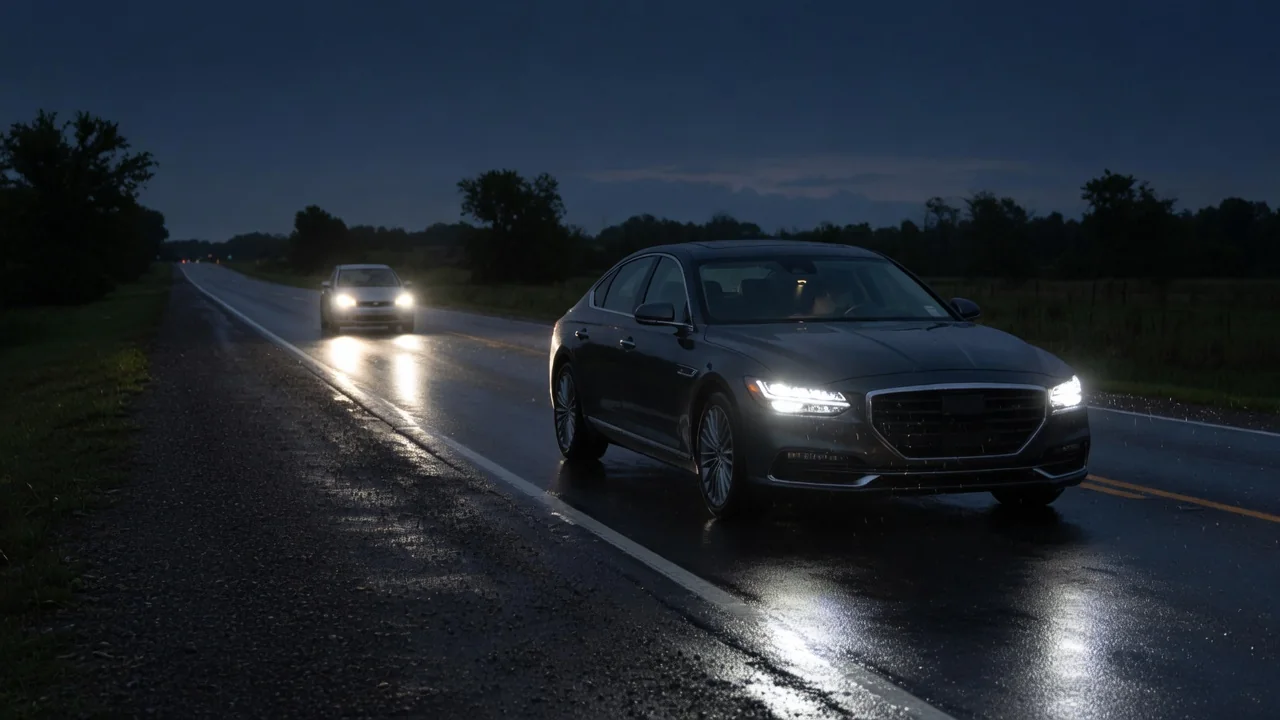
Adaptive beam shaping is a headlight function that keeps high-beam-level light on the road while creating darkened zones around other road users so they are not dazzled. Instead of switching the whole high beam on or off, the system reshapes the light pattern continuously based on what a forward-facing camera detects. Knowing what the camera looks for, how the beam is divided into controllable segments, and where the technology falls short helps owners use adaptive headlight beam shaping with realistic expectations.
Camera inputs: how the system sees the road
The main sensor is a forward-facing camera, usually mounted behind the windshield near the rear-view mirror. On many vehicles the same camera also serves driver-assistance functions such as lane keeping or automatic emergency braking. At night, the headlight logic uses the camera image to search for light sources that indicate other vehicles: pairs of white or bluish headlights from oncoming traffic and red taillights from vehicles ahead. Image processing estimates where each source sits in the field of view, how far left or right it is, and roughly how far away it might be, based on brightness, the spacing between paired lamps, and how the source moves from one frame to the next.
A key task is separating vehicles from other bright objects. Retroreflective road signs, delineator posts, streetlights, and lit buildings all appear in the image. The software uses cues such as color, shape, position relative to the road, and motion to classify them. Light reflected from a sign, for example, tends to brighten as the car approaches because the headlights themselves are illuminating it, while a vehicle lamp behaves differently. This classification is not perfect, and occasional false detections or missed targets are an inherent part of camera-based systems.
The camera is rarely the only input. Control units commonly combine it with vehicle speed, steering angle, yaw rate, and an ambient light sensor, and some designs also use navigation data to anticipate curves or built-up areas. Speed often determines whether the adaptive high beam is allowed to operate at all, and steering and yaw data help predict where a detected vehicle will be by the time the beam pattern updates. The exact set of inputs and thresholds is specific to each manufacturer and is described in the vehicle documentation rather than being universal.
Light segments: how the beam is divided
The most widespread approach divides the high beam into an array of LED segments, each responsible for one slice of the area ahead. The control unit can dim or switch off individual segments while leaving the others at full output. When a vehicle is detected, the segments that would shine on it are reduced, creating a shadow zone around that vehicle while the road shoulders, the lanes beside it, and the space beyond remain lit. The number of segments varies widely between designs, from a relatively small group to many dozens, and that count largely determines how precisely the shadow can be shaped.
Other implementations exist. Some projector modules use mechanical shutters or rotating elements to mask part of the beam. Higher-resolution pixel systems use dense LED or micro-LED arrays, or micromirror devices, to control light in much finer increments and produce sharper shadow edges. In most systems the low beam stays on as a base pattern, and the adaptive portion adds controllable light above the low-beam cutoff. Some headlamps also combine beam shaping with swiveling or cornering functions, so the adaptive pattern can follow the road through bends.
Because targets move, the shadow zone moves with them. The system typically makes the darkened area somewhat wider than the detected vehicle to leave a margin for processing delay and body pitch. The left and right headlamps must coordinate so that their patterns overlap correctly; otherwise one lamp could still dazzle a driver the other lamp is avoiding. Automatic headlight leveling, where fitted, helps keep the vertical position of the pattern consistent as load and road angle change.
Limits
Detection depends on the target emitting light the camera can recognize. A cyclist with a weak lamp, a pedestrian, or an animal is not treated the same way as a car with headlights. Those road users may remain fully illuminated, which helps the driver see them, but it also means a cyclist or pedestrian facing the car can be dazzled. Very distant or partially hidden vehicles may also be recognized later than a driver would notice them.
Environmental conditions add further constraints. Fog, heavy rain, and falling snow scatter light back toward the driver and degrade the camera image, so many systems fall back to low beam in such conditions. On hill crests and tight curves, an oncoming vehicle can appear suddenly, leaving a brief moment before the shadow forms. In well-lit urban areas the system may stay in low-beam mode entirely, and strongly reflective signs can sometimes cause the beam to dim when no vehicle is present.
Hardware sets its own boundaries. Segment resolution limits how tightly the shadow can fit around a target, so nearby areas may be darkened along with the vehicle. Bumps and sudden pitch changes can briefly move the pattern faster than the system can correct. If the camera is miscalibrated or a headlamp is misaimed, the shadow can land in the wrong place, leaving other drivers exposed to glare even though the system appears to be working normally.
Practical implications and limits for owners
Adaptive beam shaping usually has to be selected, either through a headlight switch position or a vehicle settings menu, and it operates only when its activation conditions are met. The owner's manual for the specific vehicle explains those conditions and any indicator symbols. The driver remains responsible for glare control: if another driver flashes their lights, or a road user appears to be dazzled, switching to low beam manually is the appropriate response regardless of what the automation is doing.
Maintenance has a direct effect on performance. A dirty or cracked windshield in front of the camera, worn wiper blades, or hazy headlamp lenses can reduce detection quality and beam accuracy. Windshield replacement, collision repair near the front of the vehicle, headlamp replacement, or suspension work can disturb camera or headlamp alignment, and many manufacturers specify calibration or aiming procedures afterward. Warning messages about the camera or lighting system should be checked against the service information rather than ignored.
Availability also depends on market rules. Regulations on adaptive driving beams differ between regions, and the same hardware may be configured to operate differently depending on where a vehicle is sold. Retrofitting adaptive headlamps or coding hidden functions can conflict with local requirements or fail without matching control units and sensors. Even when everything works as intended, the technology improves visibility only within its detection and optical limits, so speed should still match the distance the driver can actually see.