What Are Matrix Headlights?
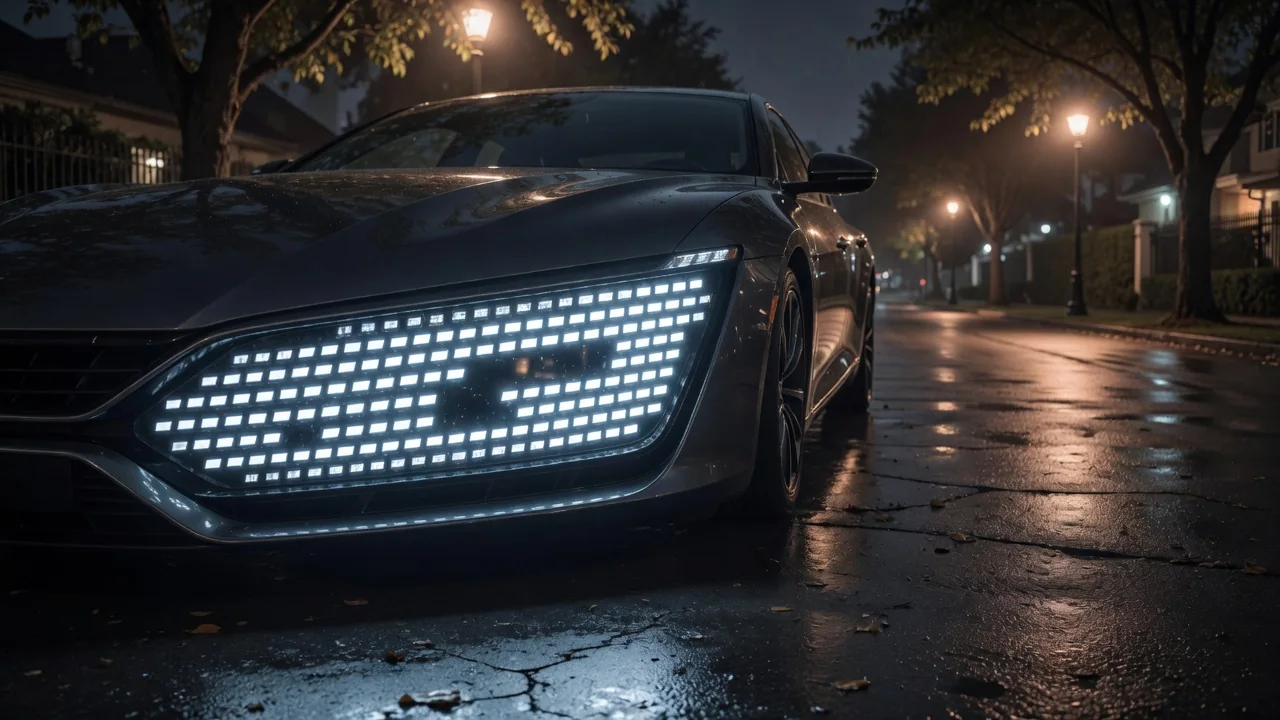
Drivers who ask what are matrix headlights are usually looking at a feature list and wondering how it differs from ordinary high beams. In simple terms, a matrix headlight divides its beam into many individually controlled portions, so the car can keep most of the road brightly lit while dimming only the part that would dazzle someone else.
Light segments
A conventional high beam is essentially one block of light: it is either on or off. A matrix headlight replaces that single block with a grid or row of separate light sources, most commonly LEDs, each aimed at its own slice of the road ahead. Because every slice can be switched or dimmed independently, the lamp can carve a dark pocket into an otherwise full beam, leaving the lanes, shoulders and roadside signs around that pocket illuminated as normal.
The number of segments differs widely between vehicles and even between trim levels of the same model. Some systems use a modest row of emitters per lamp, producing fairly broad shadow blocks, while others use much finer pixel-style arrays or micro-mirror modules that shape the beam with greater precision. If you look closely at a parked car with the lights on, you can sometimes see the individual lens elements or reflector chambers inside the housing, though the owner's manual remains the reliable guide to what is fitted.
Camera input
Segments are only useful if the car knows where to place the shadow, and that information normally comes from a forward-facing camera mounted near the top of the windshield, often behind the rearview mirror. The camera looks for the headlights of oncoming traffic and the taillights of vehicles ahead, and software estimates their position relative to the beam. A control unit then tells the headlights which segments to dim, updating the pattern continuously as the other vehicle moves across the view.
Because the system depends on what the camera can see, its behavior follows the quality of that view. A windshield that is fogged, iced, heavily streaked or cracked in the camera's field can reduce detection, and many cars will display a message or revert to standard low beams when the image is unreliable. Some manufacturers also blend in steering angle, vehicle speed or navigation data to anticipate curves and built-up areas, so the exact inputs and how the car responds to them should be confirmed for the specific vehicle.
Driver experience
From behind the wheel, the most noticeable change is that you stop flicking the stalk between low and high beam. With the automatic function active, the car holds a wide, long-reaching beam on a dark country road and quietly opens a shadow around an approaching car, then closes it again once that car has passed. Roadside reflectors, the verge and the lane beyond the other vehicle stay lit, which helps you spot pedestrians, animals or debris earlier than low beams alone would allow.
How smooth this feels depends on the hardware. On coarser systems you may see distinct blocks of light stepping on and off, a little like shutters moving across the road, while finer systems fade so gradually that the shadow seems to glide with the other vehicle. Many cars show a dedicated indicator in the instrument cluster when the adaptive function is engaged, and the way you activate it, whether through the light switch, the stalk or a settings menu, varies from one manufacturer to another.
Everyday Use and Observations
In daily driving the feature mostly works in the background. It typically becomes active only above a certain speed and when ambient light is low enough, so in well-lit city streets you may never see it do anything beyond ordinary low beams. The clearest place to watch it is an unlit two-lane road: follow another car at a distance and you can see a dark box sitting around its taillights while the trees and signs on either side remain brightly illuminated.
A few behaviors are worth knowing in advance. Highly reflective road signs can throw glare back at the driver, and some systems reduce the output of the segment pointed at a sign to soften that. Cyclists, pedestrians and vehicles with dim or dirty lamps may be picked up later than a car with bright headlights, and crests or sharp bends can reveal traffic before the camera has reacted. Whether a particular car offers selective dimming at all can depend on model year, trim and option package.
Limits and Next Steps
Matrix lighting is an assistance feature, not a replacement for attention. Heavy rain, fog, snow and spray scatter light and obscure the camera, and in those conditions the system may hold low beams or respond inconsistently. If other drivers flash you, or you can see that the shadow is not covering a vehicle properly, switching to low beam manually is the sensible response. The driver stays responsible for the beam the car is projecting, whatever the automation is doing at that moment.
If the adaptive function stops working or a headlight warning appears, treat the message and any stored fault code as a starting point for diagnosis rather than proof that a lamp module has failed. Causes can range from an obstructed camera to wiring, a control unit, a leveling sensor or calibration lost after windshield replacement or front-end repair, and codes for these systems are often manufacturer-specific. A workshop with the right scan tool and aiming equipment can confirm what applies to your vehicle; the sealed lamp units are not suited to improvised repair.